
Minister for Basic and Secondary Education Abdul Mu'ti Applauds Prabowo's Priority to Improve Teachers' Welfare
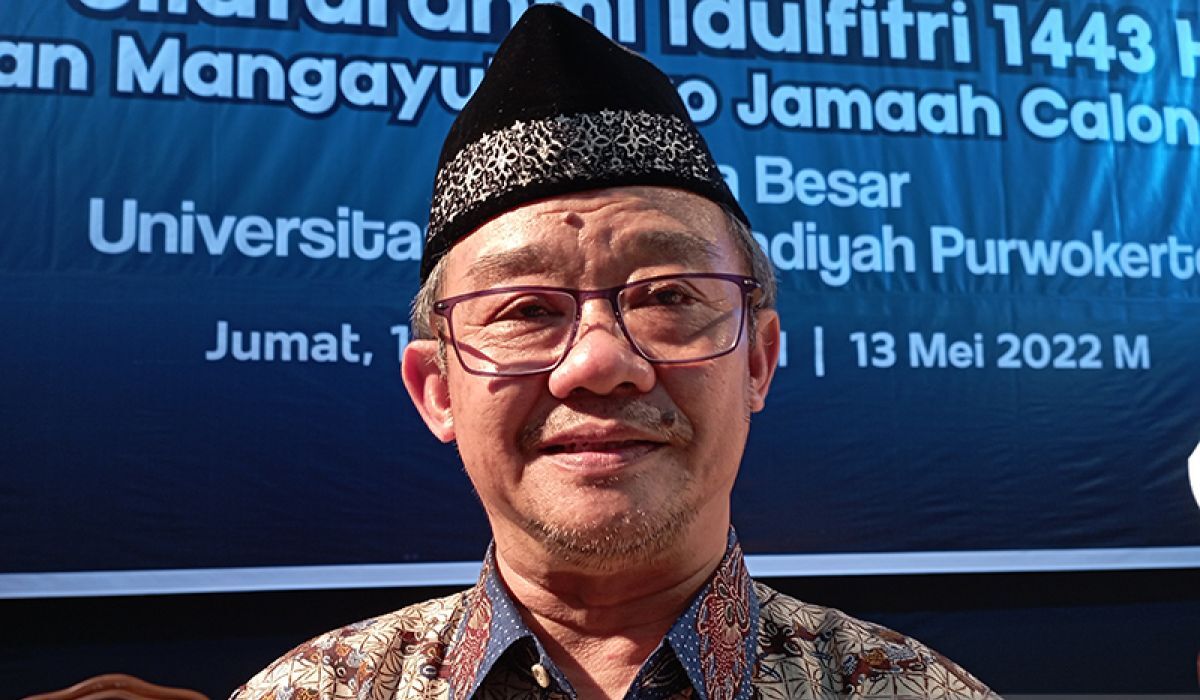
Minister for Basic and Secondary Education Abdul Mu’ti has expressed high appreciation for President Prabowo Subianto’s commitment to placing the improvement of teachers’ living conditions and welfare as a national priority. The remarks were made as the President delivered the Macro-Economic Framework and the Key Policies of Fiscal Policy and the Fiscal Balance for the RAPBN 2027.
“Alhamdulillah. We welcome it and are ready to implement the President’s policies,” Abdul Mu’ti said when contacted in Jakarta on Wednesday, 20 May.
In his address, President Prabowo Subianto stated that the future of Indonesia depends on the quality of education provided to the younger generation. He argued that quality education can only be achieved if teachers possess high capability, strong spirit, and a decent standard of living.
“Improving the living conditions of teachers must be our priority,” he asserted. He said he believes that teachers who are happy and prosperous will serve as good examples for the next generation.
The President outlined Indonesia’s economic balance sheet over the past 22 years to explain the root causes of low salaries for civil servants. Total trade gains reached USD 436 billion, but outflows of funds amounted to USD 343 billion, leaving only USD 93 billion.
He noted that the sizeable gap in funds has been a major reason why the state budget is often deemed insufficient to adequately finance teachers’ salaries, law enforcement officers’ salaries, and civil servants’ remuneration. He highlighted the practice of under-invoicing that has persisted for decades.
“That is why teachers’ salaries are small, the salaries of law enforcement officers are small, and the salaries of civil servants are small. For 34 years, what happened? What happened is what we call under-invoicing. Under-invoicing is fraud, or deception, where what is sold by businesspeople is not reported as it should be,” Prabowo said.
With the commitments set out in RAPBN 2027, the central government is determined to plug the leaking budgets and allocate the savings to strengthen the education sector, particularly to guarantee the welfare of educators across the country.
On 12 May 2026, the Ministry of Basic and Secondary Education provided revitalisation assistance to 3,084 schools with a total budget of more than Rp2.9 trillion.
JPPI also responded to Abdul Mu’ti’s assertion that non-ASN teachers remain in service under the schemes prepared.
Minister Abdul Mu’ti addressed the issue of non-ASN teachers as of 31 December 2026 who could not teach, explaining that this referred to the ASN Law.
A National Seminar at UINSA Surabaya welcomed Minister Abdul Mu’ti’s policies, from school revitalisation to the Gerakan 7 Kebiasaan Anak Indonesia Hebat.
Minister Abdul Mu’ti inaugurated the revitalisation of 576 schools in East Nusa Tenggara (NTT) with a budget of Rp589 billion to improve the quality of education and digitalisation.
He hopes the President’s direct presence was not a political tactic to placate parliament.
PDIP responded to President Prabowo’s praise of the party’s role outside government as a guardian of democracy and a check-and-balance function.
President Prabowo Subianto offered a relaxation of DHE retention in the oil and gas sector to a maximum of 30% with a shorter storage duration than the non-oil and gas sector.
He praised the PDIP’s actions as a form of political sacrifice to uphold democratic dignity, given that being outside the government means relinquishing various state facilities.
Economist Indef assessed the private sector’s strategic role in achieving the 2027 growth target around 5.8 to 6.5 percent.