
Minister: Father's Presence and Communication Key to Overcoming Fatherlessness
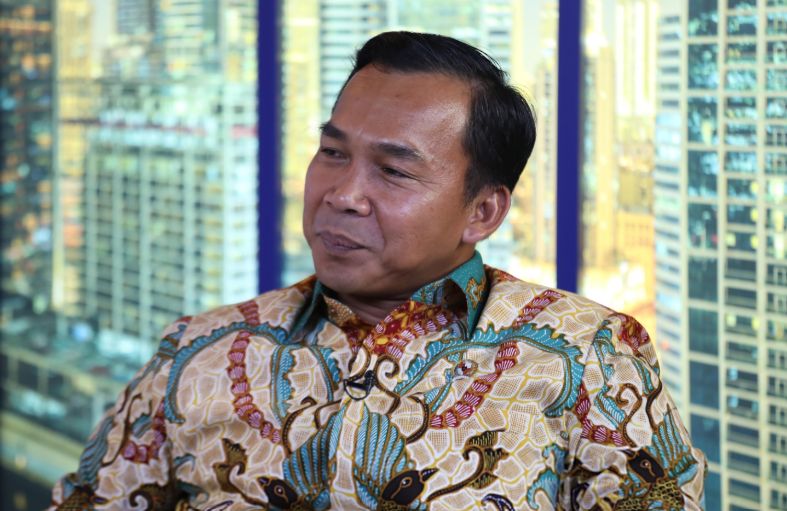
The Minister of Population and Family Development/Head of BKKBN, Wihaji, has affirmed that the Fathers Escorting Children to School movement (GAMAS) must not be interpreted merely as accompanying children to school on their first day. Beyond that, the programme is expected to serve as an entry point for strengthening communication and fathers’ presence in their children’s lives as an effort to tackle the phenomenon of fatherlessness.
According to Wihaji, the essence of GAMAS is to encourage fathers to set aside time to talk with their children. The journey to school is considered a simple yet meaningful space for interaction.
“The spirit is really one thing: how these fathers make time to chat with their children. Our message is a reminder that fathers, please, talk with your children,” said Wihaji on Monday (13 July).
He explained that for fathers who drive their children to school, the journey can become an opportunity for dialogue. Meanwhile, for those who use motorcycles, interaction can still be built before or after the trip.
Wihaji cautioned that minimal communication between parents and children will lead children to seek other places to share their stories and find answers to the various problems they face.
“If children are not engaged in conversation every day, don’t blame them if they end up talking more with their mobile phones. They will ask social media, they will ask AI. Everything is available on AI if parents are too busy. That’s why, make time, put down your phone for a while and talk with your children,” he said.
According to him, a father’s presence has a major influence on a child’s psychological development. GAMAS therefore serves as a reminder to parents that building emotional closeness does not always require grand activities; it is enough to provide time to be present and listen to their children.
Wihaji also assessed that the challenge of declining family interaction is not confined to Indonesia, but has become a global phenomenon alongside the development of digital technology.
“This is not only happening in Indonesia. This is world civilisation, a new civilisation. That is why we remind parents how important it is to be present. We are human beings — we not only have minds, but also hearts and empathy. That is what must be built in quality families,” he said.
Wihaji noted that around 25 per cent of children in Indonesia experience the phenomenon of fatherlessness, or the loss of a father figure in their daily lives. Meanwhile, only 20.9 per cent of children in Indonesia have fathers directly involved in their upbringing.
Through GAMAS, the government hopes that more fathers will not only be physically present but also actively involved in parenting through warm, quality communication. Such presence is expected to strengthen parent-child bonds while serving as one step towards preventing the phenomenon of fatherlessness in Indonesia.