
Minister: Family Planning Services Lead to Poverty Alleviation
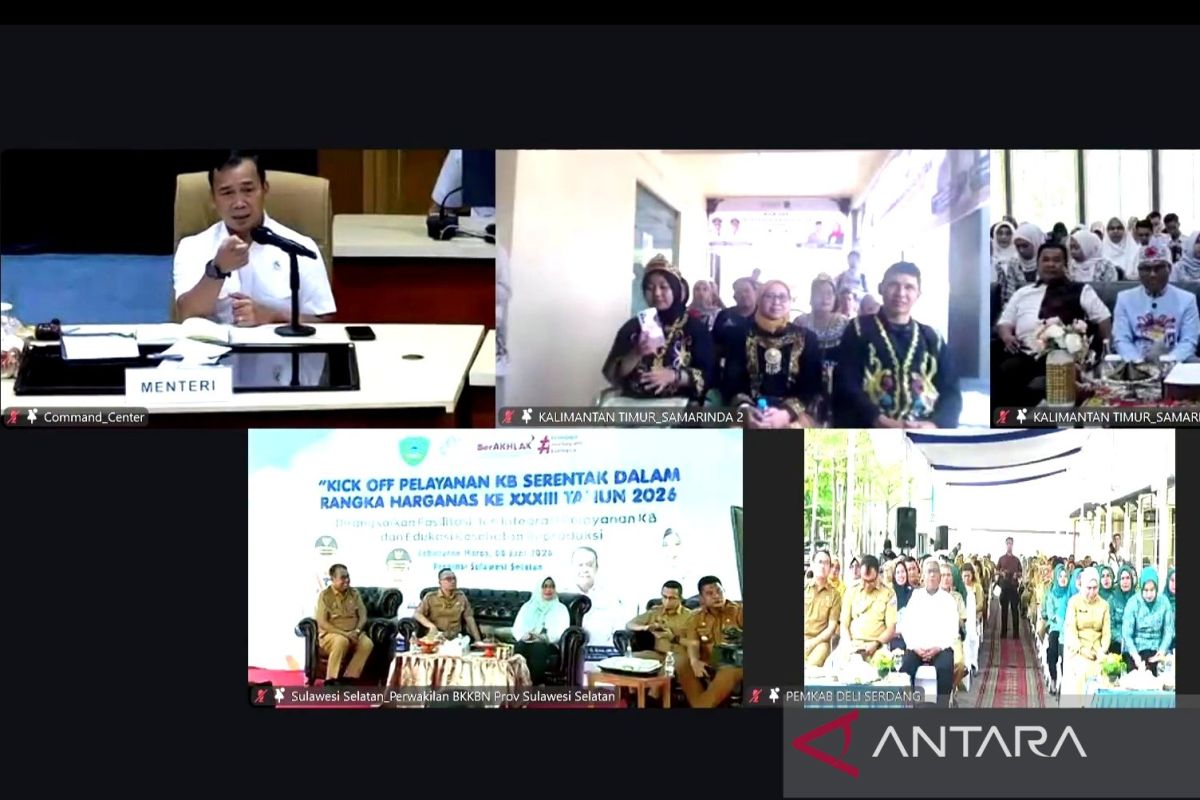
The Minister of Population and Family Development (Mendukbangga) and Head of BKKBN, Wihaji, stated that contraceptive family planning (KB) services and family development ultimately aim at poverty alleviation. “Everything we do has one ultimate goal: poverty alleviation, which is why we previously categorised the pre-prosperous into levels 1-4, now known as deciles 1-4. The spirit of family planning is to ensure that, moving forward, no Indonesian citizen lives in poverty,” he said during the Kick-Off of Simultaneous Family Planning Services for the 33rd National Family Day, held online in Jakarta on Monday.
Consequently, Wihaji continued, the government is employing a family planning approach to regulate and manage families, even though the Total Fertility Rate (TFR) in several regions of Indonesia has already fallen below one, meaning each woman of reproductive age gives birth to one child. “Some say family planning is no longer important because the TFR is at one, but that is not the perspective; this is a citizen’s right to regulate and control,” he remarked.
He explained that family planning is structured into three types of services: health, economic, and psychological services. From a health perspective, it ensures the maintenance of reproductive health by avoiding births that are too close together, too frequent, too young, or too old (the 4T principle). From an economic perspective, family planning allows families to plan and manage births to better secure livelihoods. “If managed well, children can receive maximum care, and parents can continue to work, providing opportunities for both mothers and fathers to remain active in the workforce,” Wihaji noted. Regarding psychological services, he stated that family planning benefits children by ensuring they receive balanced, high-quality, and fair parenting, which is a fundamental right for all children.