
Minister Exposes Rice Mill Fraud Costing Trillions, 36 Named Suspects
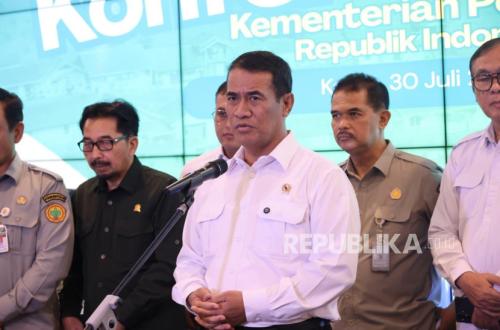
JAKARTA - Minister of Agriculture Andi Amran Sulaiman erupted in anger after uncovering deceitful practices by rice mills that defraud the public, including one with revenues of up to Rp 2 trillion per month. The finding comes from a study titled ‘Rice Mafia Emergency’, which analysed the national rice trade in depth; to date, law enforcement action has snared 36 suspects.
The National Police’s Food Task Force recorded that between 2024 and 2025 it handled 93 food mafia cases involving a total of 77 suspects. The breakdown comprises 46 rice cases, 27 fertiliser cases, 16 cooking oil cases, and 4 cases involving internal staff.
A total of 2,231 retail and distribution licences for fertiliser have also been revoked. For criminal rice cases specifically, 30 cases with 36 suspects were recorded throughout 2025, whilst entering 2026 enforcement has continued with 2 cases and 6 suspects.
“These trillions of rupiah are not legitimate business profits. This robs the people of their rights. It kills small mills,” Amran said in a written statement in Jakarta on Thursday (29/7/2026).
The Ministry of Agriculture’s findings confirm a report previously delivered by President Prabowo Subianto. “I received a report that one rice miller makes Rp 2 trillion in profit every harvest, Rp 2 trillion per month,” Prabowo said at the inauguration of the Red and White Village Cooperative in Klaten.
The President even described such practices as no longer ordinary business, but rather a new school of greed he termed ‘greedonomics’, and affirmed his readiness to seize rogue rice mills that do not comply with the national interest.
Premium Rice Breaches Quality Standards
According to the Ministry of Agriculture, monitoring shows that 39.75 per cent of all premium rice in circulation, equivalent to 12.2 million tonnes, is suspected of breaching quality standards or constituting consumer fraud. Total losses from these practices reach Rp 98 trillion, plus potential consumer losses of up to Rp 71.9 trillion per year from the circulation of fortified rice that fails to meet requirements.
Amran explained that the rice supply chain is controlled by big businesspeople or milling conglomerates. This group exploits government subsidies for commercial activities amounting to 40 per cent of its capacity, then takes excessive profits by selling above the Highest Retail Price. Of the total national paddy absorption of 65 million tonnes per year, 1,056 large-scale mills with a capacity of 20 tonnes per hour control 40 per cent of the national paddy supply, or 25 million tonnes per year.
Unequal profit distribution was also revealed in the 2025 food security budget data worth Rp 144.6 trillion. Of the national rice production valued at Rp 537 trillion, farmers only received household income of Rp 1.87 million out of an allocation of Rp 215 trillion. By contrast, milling entrepreneurs, or RMUs, received the largest share worth Rp 259 trillion, whilst the long trading chain from farmers to retailers generated middleman profits of Rp 313.08 trillion.
As a long-term solution, the government is encouraging the shortening of distribution chains through the Red and White Village or Kelurahan Cooperative scheme, which connects farmers directly with end consumers. This scheme is projected to produce fairer margins that benefit farmers.
Source: jawawa.id (https://jawawa.id/newsitem/minister-exposes-rice-mill-fraud-costing-trillions-36-named-suspects-1785412373)
Originally published by Republika (https://ekonomi.republika.co.id/berita/tizhd0368/mentan-soroti-penggilingan-beras-tipu-masyarakat-36-tersangka-dijerat), translated from Indonesian