
Minister Ensures New Airfare Price Ceiling Maintains Balance for All Parties
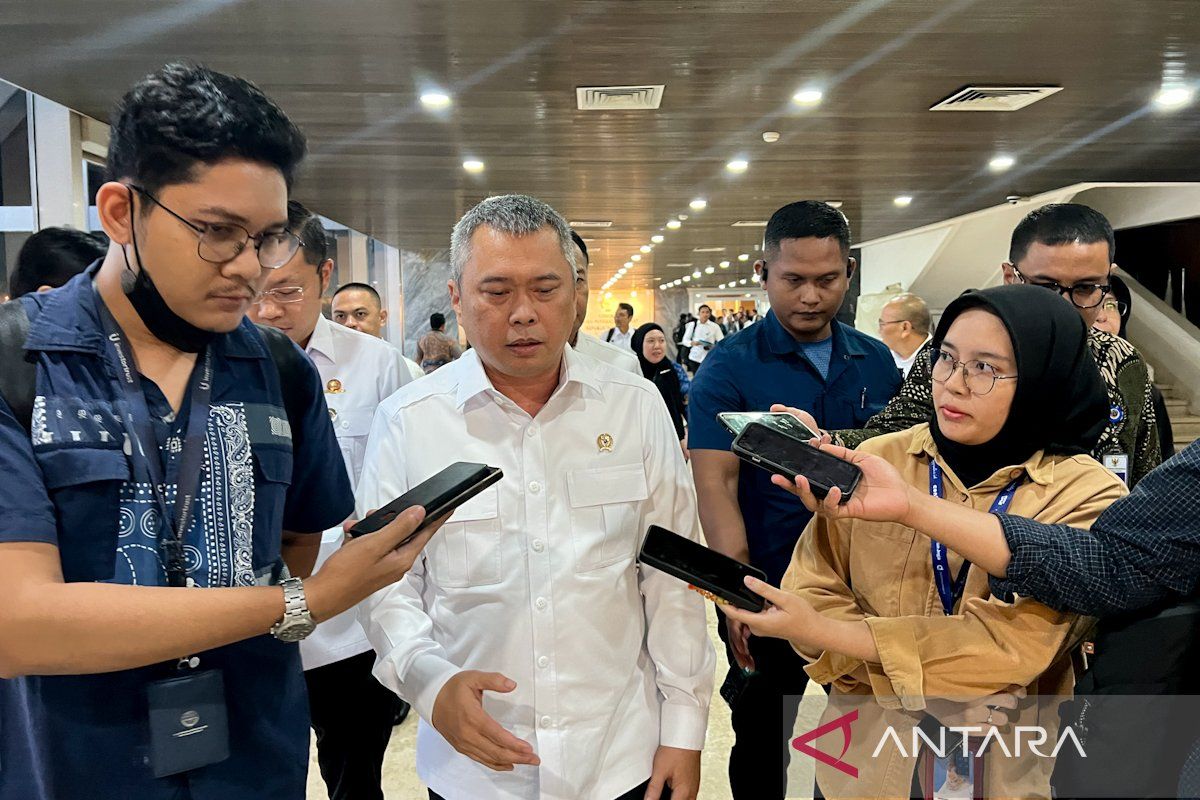
Transport Minister Dudy Purwagandhi has assured that the revision of the upper fare limit (TBA) for airline tickets is designed to maintain a balance between the interests of airlines and the public as users of air transport services. “In principle, we will maintain a balance between the airlines and the passengers or the public,” the Minister said after a Working Meeting with Commission V of the Indonesian House of Representatives (DPR RI) in Jakarta on Thursday. Dudy stated that the government understands the airlines’ need for fare adjustments, whilst simultaneously taking into account the public’s ability to access air transport services so that they remain affordable. According to him, the main principle in drafting the new TBA is to create a balance between airlines’ business sustainability and the interests of passengers. He explained that discussions regarding the TBA revision have been carried out and are currently entering advanced stages before being decided at the relevant ministerial level. “The TBA has been discussed and perhaps only a meeting at the ministerial level remains, because there is synchronisation of the TBA going forward and a new TBA will be implemented,” he said. The government is also continuously synchronising various aspects in policy formulation so that the new TBA can be implemented according to the current needs of the aviation industry. Dudy mentioned that the TBA revision is expected to answer various needs of airlines which have thus far faced challenges due to changes in global economic and operational conditions. “The hope is that it can answer what the airlines want,” he stated. He said that global condition developments are an important consideration in drafting the TBA as they have a direct impact on airlines’ operational costs. Nonetheless, the government ensures that the drafted policy is not solely oriented towards the interests of airlines, but also considers the protection of the public as service users. Under the concept being discussed, the TBA will be determined based on current economic and operational conditions as the basis for calculating domestic flight fares. In addition to TBA adjustments, the government is also considering a more flexible mechanism for adjusting the additional cost component (fuel surcharge/FS) to anticipate changes in operational costs due to aviation fuel price dynamics. This scheme is expected to provide room for adjustment in the event of spikes or declines in aircraft fuel prices that affect flight costs. Dudy explained that the exchange rate is also one of the components calculated in drafting the TBA, considering its very dynamic movement and its influence on operational costs. According to him, the determination of the reference exchange rate in the TBA will consider the latest conditions and refer to the assumptions used by the government in formulating the State Budget (APBN). “In the TBA, we also have an exchange rate that serves as a benchmark. Then there will also be an FS that can be flexible to anticipate spikes or declines in aviation fuel prices in particular. But we will also refer to the APBN regarding the exchange rate,” he said. According to him, the government wants the policy-making process to be completed as soon as possible while still paying attention to all aspects affecting the national aviation sector. “The target is as soon as possible, because we also have to look at the current global conditions, where we also need to pay attention to airlines,” the Minister said. The current provisions for the TBA of airline tickets still refer to the Minister of Transportation Decree Number 106 of 2019 on the Upper Fare Limit for Economy Class Passengers of Scheduled Domestic Commercial Air Transport.