
Minister Encourages Universities to Drive Innovation in Transmigration Areas
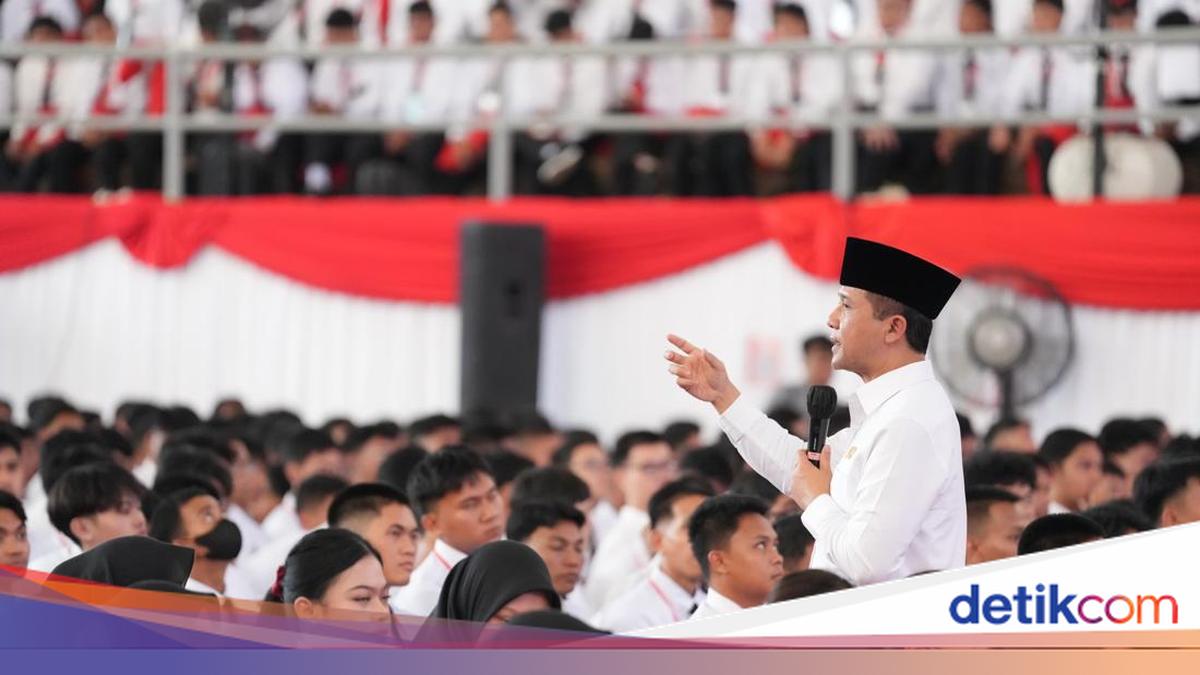
Minister of Transmigration M. Iftitah Sulaiman Suryanagara is encouraging higher education institutions to make transmigration areas a space for applying science, research, and innovation. He hopes that universities can answer real problems, develop local potential, and create new sources of income and employment for the community.
Iftitah asserted that knowledge must not stop in lecture halls, journals, or laboratories, but must be present and provide direct benefits to the community. “There is no other way but to present superior human resources in the transformation of transmigration. There must be a flood of science and technology in the development of transmigration areas,” Iftitah said in a statement on Thursday (13/8/2026). The statement was made during a public lecture at Hasanuddin University (Unhas), Makassar, on Tuesday (11/8).
To realise this idea, the Ministry of Transmigration is encouraging the development of satellite campuses by making transmigration areas living laboratories. This allows students and academics from various disciplines to conduct research, test knowledge, and produce innovations based on the real problems faced by the community. The collaboration covers various fields, ranging from agriculture, health, education, economy, technology, to the environment.
“It is not just health and medicine. We want to bring various disciplines to the transmigration areas, one of which is through the Patriot Expedition Team,” he stressed. Iftitah gave the example of developing coffee commodities. To produce high-quality, high-value coffee, the community needs science-based assistance from the nursery stage, care, and picking, to processing, packaging, and marketing.
A similar approach can be applied to other leading commodities in transmigration areas. Thus, natural wealth is not merely sold as raw materials but processed into value-added products that provide greater profits to the community. “If economic activity grows there, the ecosystem must also be built. Local people should not just be spectators when investment comes to their own land,” explained Iftitah.
Iftitah assessed that investment must go hand in hand with increasing community capacity. Local residents must be prepared to become skilled workers, business actors, suppliers, and even part of the ownership of the economic ecosystem developing in their region. Through this transformation, the community in transmigration areas is expected to experience improvements in skills, productivity, income, and the quality of basic services, while more job and business opportunities become available to local residents.
In terms of talent management, Indonesia can also learn from the brain circulation practice applied by China. Iftitah explained that students and experts there are given the opportunity to study and conduct research abroad, then return bringing knowledge, experience, and networks to build their country.
Iftitah added that the development of transmigration areas must be carried out sustainably while maintaining the environment and respecting the local community’s culture. He cited a transmigration area in Kutai Kartanegara Regency, which has now partly developed into a forest and conservation area for orangutans and sun bears, while also having the potential to be developed as a tourist destination. “Area development must be sustainable. Nothing is instant. Development must also not ignore the environment and the culture of the local community,” he said.
Iftitah explained that transmigration is no longer just about moving populations. Instead, it has been directed to become a strategy to bring together talent, science, investment, and local potential to create new economic growth centres. For universities, transmigration areas become spaces for research, innovation, and community service. For students, these areas offer a place to gain real experience while preparing for the future. For the business world, there is economic potential that can be developed in a planned manner. For the community, the transformation of transmigration opens opportunities to improve skills, get jobs, build businesses, and enjoy the benefits of economic growth in their own regions.
“Transmigration is not just a programme, but a strategy to realise an advanced Indonesia. The more knowledgeable we are, the more we are able to see potential, develop it into economic strength, and ensure that the benefits are truly felt by the community,” he concluded.