
Minister emphasises role of universities in achieving rice self-sufficiency
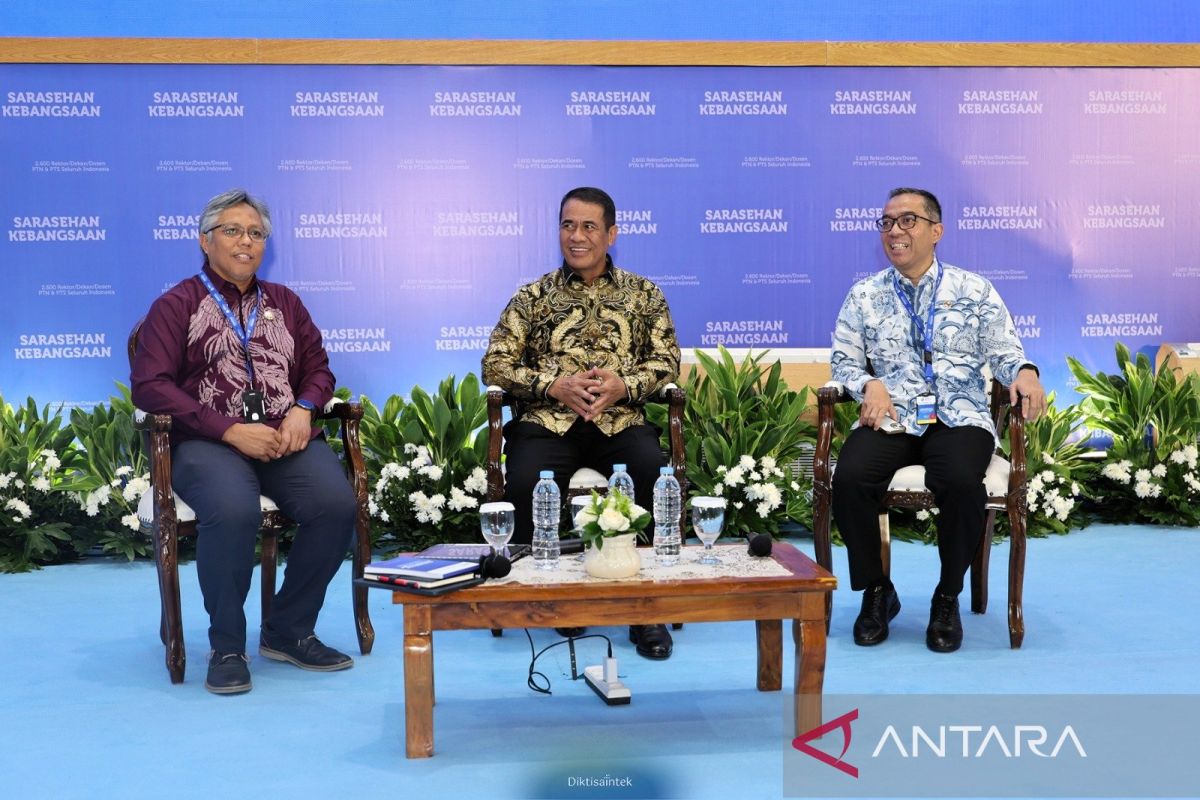
Agriculture Minister Andi Amran Sulaiman has emphasised the role of various universities as the main pillar of Indonesia’s success in achieving rice self-sufficiency. “Without the universities supporting us, we would not have achieved self-sufficiency, which was repeatedly thought impossible,” said Andi Amran Sulaiman at the National Dialogue of the 2026 Indonesian Science, Technology, and Industry Convention (KSTI) in Jakarta on Saturday. Minister Andi Amran stated that the collaboration between the Ministry of Agriculture and the Indonesian university ecosystem has resulted in achievements never before reached in the history of the Republic. The national rice stock has now reached 5.1 million tonnes, exceeding the State Logistics Agency (Bulog) warehouse capacity of 3 million tonnes. He continued that the Farmer Exchange Rate (NTP) was recorded at 127, the highest in 34 years, while farmer welfare growth reached 5.74 percent, the highest in the last 25 years based on data from the Central Statistics Agency (BPS). In terms of technology, Amran said rice cultivation innovations resulting from university research collaboration with relevant ministries recorded a productivity of 12.4 tonnes per hectare, more than double the national average of only 5.5 tonnes per hectare. This technology has been tested in 14 provinces with the lowest productivity reaching 9 tonnes per hectare. The Food and Agriculture Organization (FAO) projects Indonesia’s rice production in 2026 to reach 38.6 million tonnes. Minister Andi Amran stressed that the role of the Bogor Agricultural Institute (IPB), Hasanuddin University (Unhas), Andalas University (Unand), Gadjah Mada University (UGM), Bandung Institute of Technology (ITB), and various other universities is the main pillar for the success of the transformation towards food self-sufficiency. The Ministry of Higher Education, Science, and Technology (Kemdiktisaintek) is known to be encouraging efforts to transform traditional agriculture towards modern agriculture. The agricultural mechanisation now being implemented is able to cut production costs by up to 50 percent and increase crop yields by up to two times compared to conventional methods. Kemdiktisaintek is also encouraging the use of data- and science-based approaches in agricultural policy formulation. The reform of subsidised fertiliser distribution, which cut 145 regulations, including the requirement for signatures from 12 ministers, 38 governors, and 514 regents, is a clear example of how an evidence-based approach can produce significant efficiency.