
Minister: Downstreaming Strengthens Indonesia's Position in Global Supply Chain
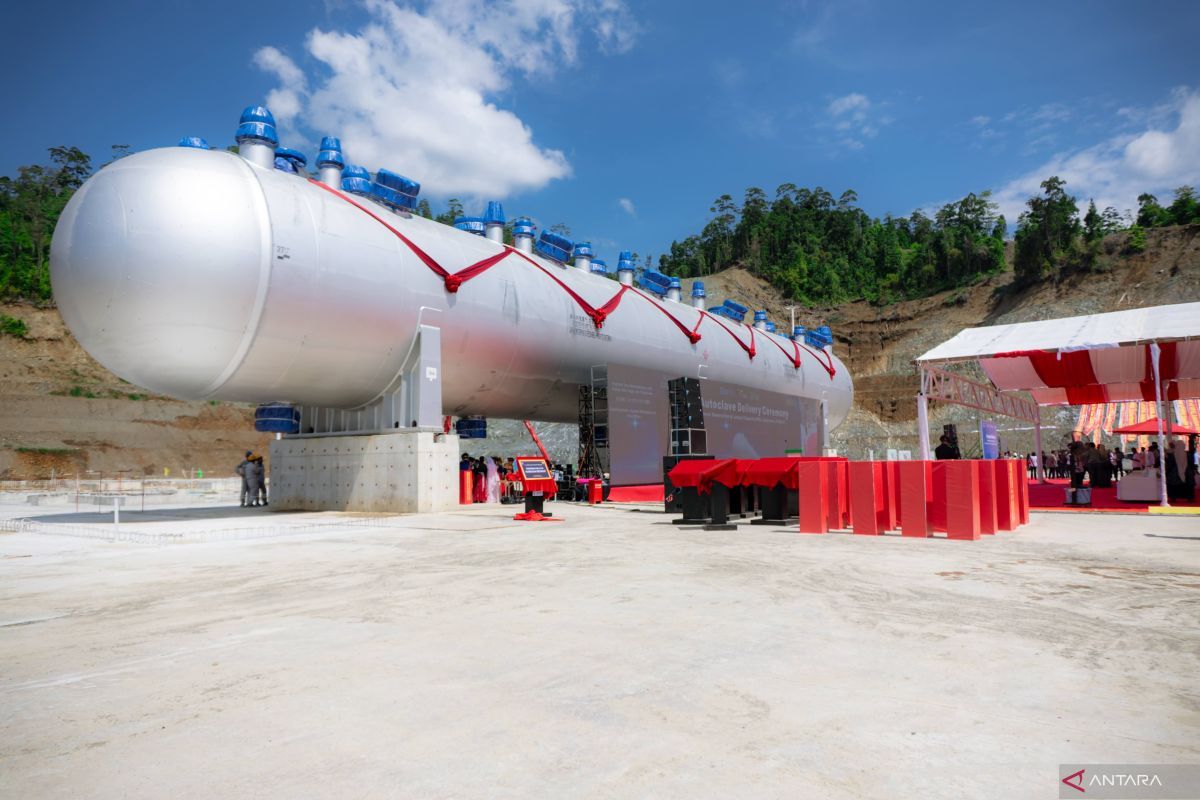
The Vale downstreaming project sets a new standard in international collaboration aligned with national interests.
Jakarta (ANTARA) - Minister of Investment and Downstreaming/Head of BKPM and Chief Executive Officer of Danantara Indonesia, Rosan Roeslani, has said that downstreaming projects strengthen Indonesia’s position in the global supply chain.
He said the downstreaming project developed by Vale demonstrates that industrial development based on natural resources can generate higher added value while reinforcing Indonesia’s position in the global supply chain.
“The Vale downstreaming project sets a new standard in international collaboration that is aligned with national interests, namely building resource sovereignty, creating jobs, and generating high added value that supports the Net Zero Emissions agenda,” Rosan said in a statement in Jakarta on Saturday.
According to him, the development of downstreaming-based industrial estates is also part of the strategy to build a national electric vehicle ecosystem capable of creating jobs, strengthening industrial self-reliance, and supporting energy transition targets.
The economic impact of the project is also expected to be increasingly felt in nickel-producing regions, particularly Central Sulawesi.
In addition to driving industrial growth, the development of industrial estates is considered capable of expanding business opportunities for micro, small, and medium enterprises (MSMEs) as well as boosting economic activity among surrounding communities.
The strengthening of the national electric vehicle industry supply chain is seen as increasingly dependent on the acceleration of nickel downstreaming through the construction of high-technology processing facilities.
This step not only increases the added value of minerals domestically, but also expands investment, creates jobs, and stimulates regional economies.
One development regarded as a marker of accelerating downstreaming is the construction progress of the Sambalagi High Pressure Acid Leaching (HPAL) facility owned by PT Vale Indonesia, a member of the Indonesian Mining Industry Holding MIND ID, in Morowali, Central Sulawesi.
The project, part of the Indonesia Growth Project (IGP) Morowali with an investment value of around US$2 billion, has entered an important phase following the arrival of the main autoclave components. The facility, being built with three production lines, is targeted to reach first mechanical completion by the end of 2026.
Mining and energy analyst Ferdy Hasiman said the construction of HPAL facilities has now become a strategic necessity for the nickel industry amid rising global demand for electric vehicle battery raw materials.
According to him, companies able to develop mineral processing facilities will have higher competitiveness compared to companies still relying on exporting raw materials or low value-added products.
“Most mining companies’ capital expenditure is currently directed towards HPAL construction because this facility will become the backbone of the electric vehicle ecosystem. So far, MIND ID through Vale is among the most aggressive in developing such projects,” Ferdy said.
He added that the government, together with Danantara Indonesia, is also continuously accelerating the downstreaming agenda through investment support for strategic projects. According to him, investment consistency is an important factor in maintaining Indonesia’s competitiveness amid global competition in the battery and electric vehicle industry.
“Some private nickel companies have indeed not been very aggressive over the past two years, possibly influenced by regulatory dynamics. Therefore, the sustainability of downstreaming projects is important to maintain investment momentum,” he said.
Beyond strengthening the mineral processing industry, downstreaming projects are also considered to have a broader economic impact through increased business activity in the regions, job creation, and the growth of local supply chains involving domestic businesses.