
Minister: Digital infrastructure must be a bridge, not a barrier
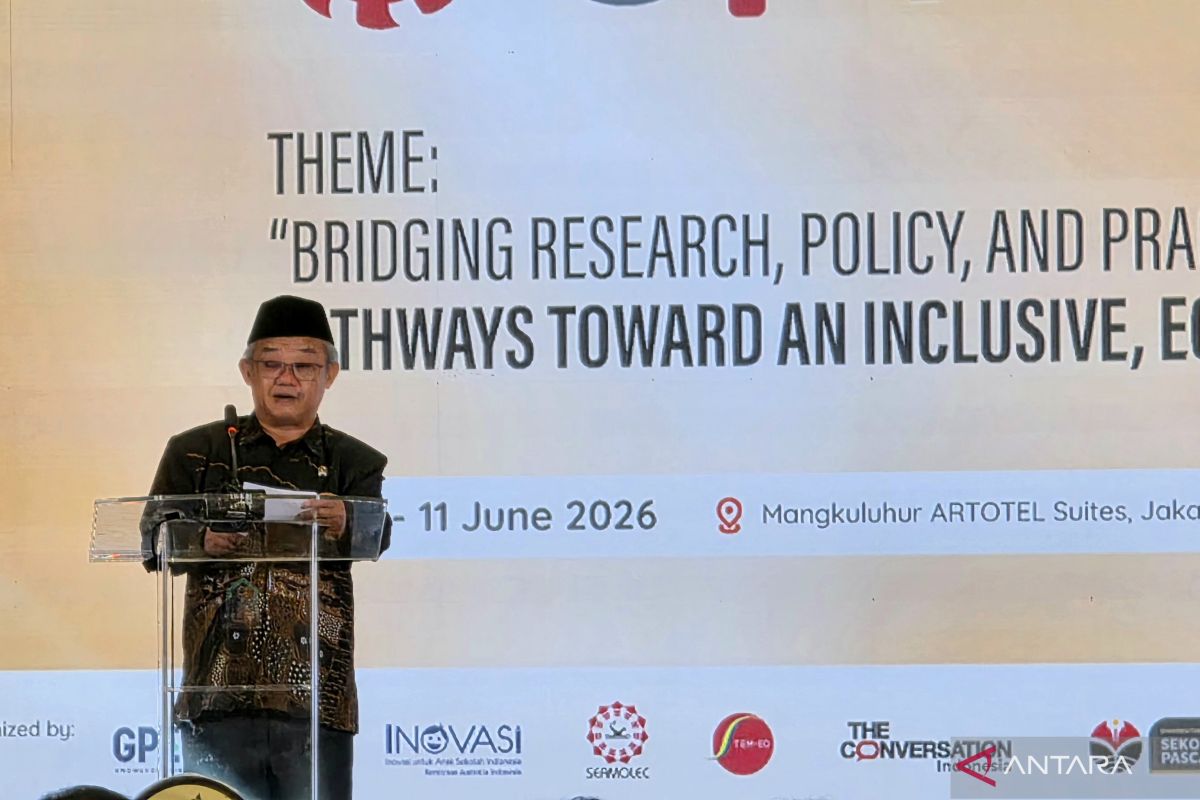
Jakarta - Minister of Primary and Secondary Education Abdul Mu’ti has reminded that advances in digital infrastructure must become a bridge, not a barrier, to obtaining inclusive and equitable education services. He assessed that the utilisation of technological advances in education still faces a number of challenges, ranging from uneven internet network connectivity and device accessibility to limited learning resources, which can affect inter-regional equity. “Some students enjoy high-quality digital infrastructure, while others still face connectivity constraints, accessibility issues, and limited learning resources. We must ensure that technological advances become a bridge, not a barrier, creating opportunities for all students,” Minister Mu’ti said in Jakarta on Tuesday. The statement was delivered at the SEAMEO Centres Policy Research Network (CPRN) Summit 2026 in South Jakarta. He therefore appreciated the convening of the forum, which brought together policymakers, researchers, academics, and practitioners directly linked to education services from 11 countries in the Southeast Asian region. According to him, solving various educational challenges requires not only government leadership but also the active participation of all stakeholders. “This spirit of collaboration becomes increasingly important as we strive to bridge research, policy, and practice to realise a more inclusive, just, and sustainable future for all learners in our region,” Mu’ti said. He added that education services must be a priority, so public policy must be based on research and continuous learning processes. Through stronger collaboration between researchers, policymakers, and practitioners at the CPRN Summit 2026, he expressed hope that innovation and practice will be translated into applicable solutions that benefit students across all Southeast Asian countries.