
Minister confirms acceleration of national railway network development
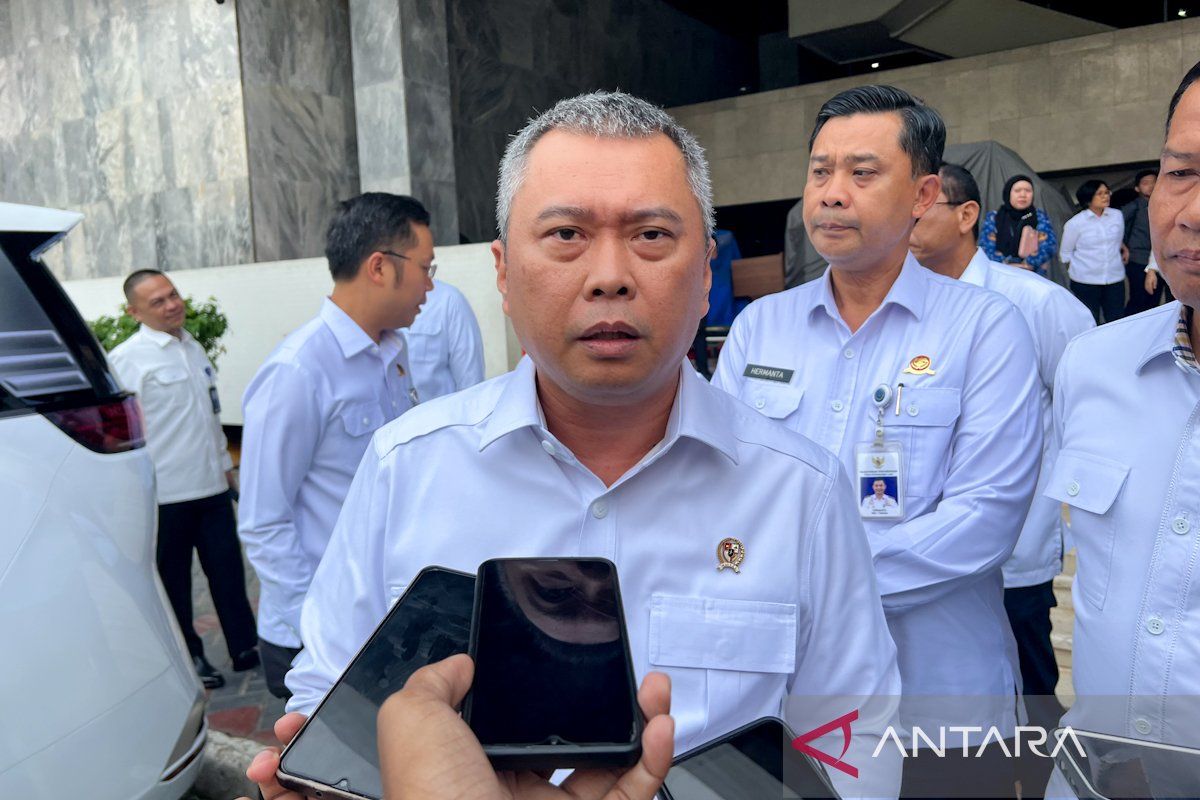
Jakarta (ANTARA) - Minister of Transportation Dudy Purwagandhi has ensured that the development of the national railway network will continue to be accelerated to strengthen inter-regional connectivity, improve transport efficiency, and encourage more equitable economic growth.
“This step is in line with the directives of President Prabowo Subianto, who places railways as a foundation for a modern society and a hallmark of a developed nation,” the Minister stated in a briefing confirmed in Jakarta on Friday.
The Minister noted that the expansion of the railway network is being undertaken to increase public mobility, strengthen the national logistics system, and provide safer, more efficient, and sustainable public transport services. These efforts are also part of the government’s strategy to lower goods distribution costs and reduce the burden on road transport.
He further explained that the development of the national railway network is not merely about transport infrastructure construction, but also an effort to provide tangible benefits to the community through better accessibility, more efficient logistics costs, and expanding economic opportunities in various regions.
The Ministry of Transportation recorded a positive trend in the number of train passengers, with an 8.8 per cent increase from 500.5 million passengers in 2024 to nearly 550 million passengers in 2025. “This increase demonstrates the growing public confidence in rail-based modes of transport,” said the Minister.
Currently, the active national railway network has reached 6,927 kilometres, spread across the islands of Java, Sumatra, Sulawesi, and Papua. Looking ahead, the Minister stated that the government targets the expansion of the railway network to reach 10,524 kilometres, including urban networks that serve as the backbone of public mobility.
Network development will be focused according to the specific characteristics of each region. In Sumatra, railways are directed to support freight transport and public mobility, while in Kalimantan, Sulawesi, and Papua, the focus is on strengthening the distribution of key commodities and supporting regional economic activities.
Several strategic projects currently being pushed include the construction of the Trans-Sumatra railway network, the development of logistics railways in Kalimantan, the completion of the Makassar-Parepare railway operations, and the development of urban rail services in various regions. In Java, development also includes increasing urban service capacity, track electrification, and the development of semi-fast and high-speed rail networks.
The Minister admitted that he had presented the development of logistics and tourist trains, including the expansion of the railway network on Sumatra Island, to President Prabowo Subianto on Thursday (11/06/2026). Logistics trains are aimed at strengthening the efficiency of goods distribution and supporting the reduction of road burdens, while tourist trains can create added economic value in various regions.
Additionally, he reported on the provision of train wagons for farmers and traders. “This programme is already underway and has been well-received by the community; these wagon services are available in Lebak, Garut, Cilacap, Jogja, Solo, Semarang, Blitar, Jember, and up to Banyuwangi,” explained the Minister.
According to the Minister, strengthening the railway network will support equitable development by connecting economic growth centres, industrial zones, agricultural areas, ports, airports, and tourism destinations. Consequently, the public can gain access to faster, more comfortable, and affordable transport.
Dudy also encouraged the involvement of local governments, business entities, operators, and all stakeholders to ensure that national railway development can proceed more rapidly and sustainably, while maintaining safety as the top priority. Through the development of the national railway network, the Minister is optimistic that railways will play an increasingly vital role as the backbone of Indonesia’s mass transport and logistics. “The presence of an expanding rail network is expected to improve the quality of life for the people, strengthen national competitiveness, and support the realisation of a more advanced and connected Indonesia,” said Dudy.