
Minister Calls for Women's Active Role in Protecting Children at Religious Educational Institutions
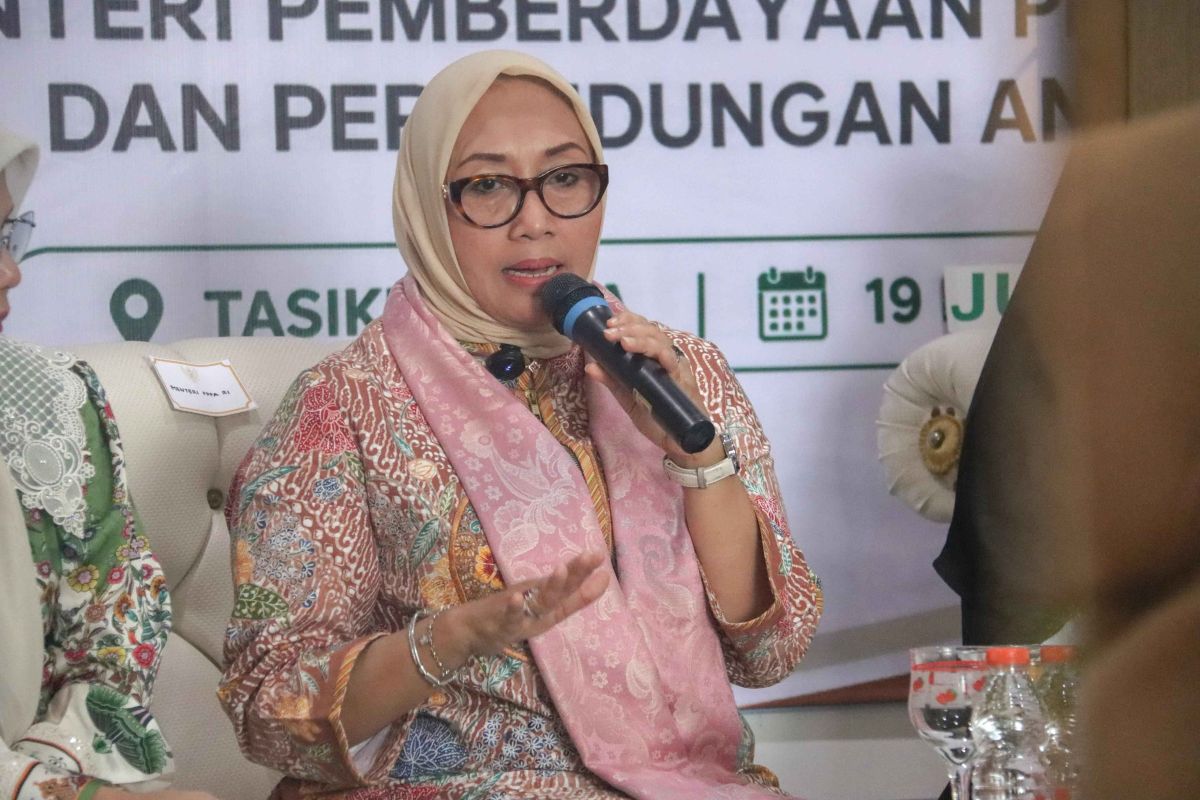
Minister of Women’s Empowerment and Child Protection (PPPA) Arifah Fauzi has called on women to play an active role in the government’s efforts to maintain safe educational environments, particularly in faith-based institutions, and to reinforce the family’s defensive barrier against all forms of violence. “Currently, faith-based educational institutions are facing significant challenges due to the number of individuals committing acts of violence, including sexual violence. This situation has the potential to create a stigma against faith-based educational institutions in general,” she said in a statement in Jakarta on Sunday. She therefore expressed hope that women would participate in restoring faith-based educational institutions as the best places to educate children. “We have signed a cooperation agreement with several ministries on how to build safe educational and family environments for women and children. The Ministry of PPPA, together with the Ministry of Religious Affairs and the Ministry of Primary and Secondary Education (Kemendikdasmen), is working on several measures, such as standard operating procedures and so forth,” she said. The PPPA Minister reminded that crimes against children often occur because of opportunity. Parental negligence in providing education and supervision can create a gap for perpetrators. Therefore, understanding of bodily rights and safe spaces must be taught to children from an early age. “If our child is touched by anyone and remains silent, it is highly likely because they do not know that part of the body should not be touched. Children need to be given the understanding that there are parts of the body that others are not allowed to touch,” she said. On the same occasion, Deputy Chairwoman II of Muslimat Nahdlatul Ulama (NU), Romlah Widiyati, explained seven principles taught by Islam as the foundation for the common good: hifzhul ’aql (preservation of intellect), hifzhun nafs (preservation of life), hifzhun nasl (preservation of progeny), hifzhul ’irdh (preservation of honour), hifzhud diin (preservation of religion), hifzhul maal (preservation of wealth), and hifzhul bi’ah (preservation of the environment). Romlah stated that implementing these values plays a crucial role in creating a safe, harmonious, and religious social order, including within the scope of family resilience. “All these religious commands are so that the balance in this world can function properly. We believe that if a nation, its people, and its society carry out good deeds, then Allah will surely bestow blessings from the heavens,” she said.