
Minister Brian Urges Indonesian Rectors to Avoid Excessive New Study Programmes to Ease Accreditation Burden
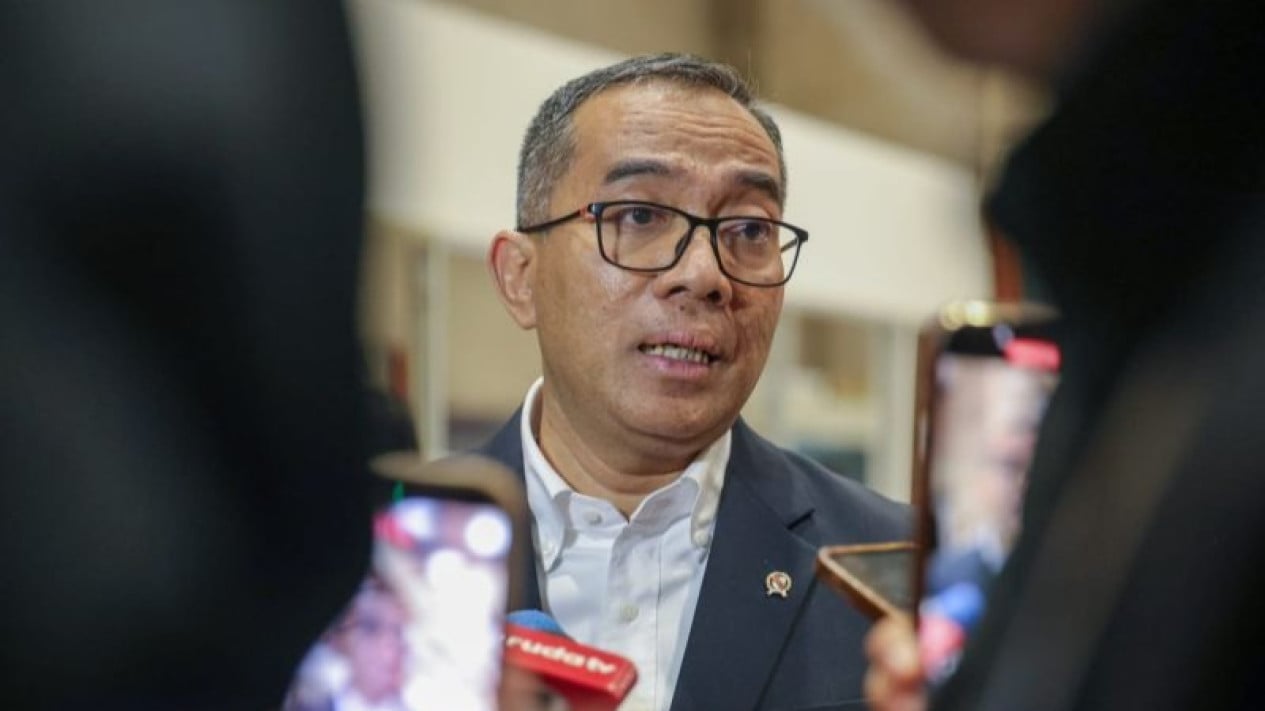
The Minister of Higher Education, Science, and Technology, Brian Yuliarto, has requested rectors across Indonesia to refrain from continuously adding new study programmes (Prodi), suggesting instead that programmes with similar scientific disciplines be merged to simplify university management.
“While the rectors are gathered, please do not create too many study programmes. It is exhausting to manage accreditation. These programmes should be combined or merged,” said Brian during the opening of the 12th Indonesian National Education Convention (Konaspi) 2026 in Nusa Dua, Badung, Bali, on Friday.
According to the Minister, merging study programmes can reduce the administrative burden and the university accreditation process without necessarily reducing student numbers. Brian provided an example where five separate programmes, each with 100 students, could be merged into a single programme with the same total number of students.
By doing so, the administrative and accreditation processes previously required for each individual programme can be simplified. “Administration becomes easier; accreditation that previously occurred five times every five years becomes just once, and management becomes simpler. It becomes more streamlined,” he stated.
He assessed that the development of science does not always have to be manifested through the opening of new study programmes. According to Brian, universities need to provide space for broader scientific development without being overly restricted by administrative boundaries.
Brian cited the evolution of electrical engineering, which has expanded into various specific fields such as telecommunications engineering, biomedical engineering, informatics engineering, and artificial intelligence engineering. He believes that scientific fields at the undergraduate level should not be too narrow, ensuring graduates have wider scope to develop competencies and enter various employment sectors.
“What needs to be developed is the science, not the study programme. The programme is merely administrative. Do not narrow down scientific knowledge with administrative barriers,” Brian said.
He urged rectors not to compete in opening new programmes simply because a specific area of expertise wishes to be developed into its own standalone programme. “So, I leave you with this message: please merge the programmes so that it is easier, administration is simpler, and accreditation is more cost-effective,” he added.
Brian stated that this simplification of study programmes aligns with the paradigm shift in higher education from an output-oriented approach towards one focused on outcomes and impact.