
Minister Brian: Energy crisis as momentum for transforming campus work culture
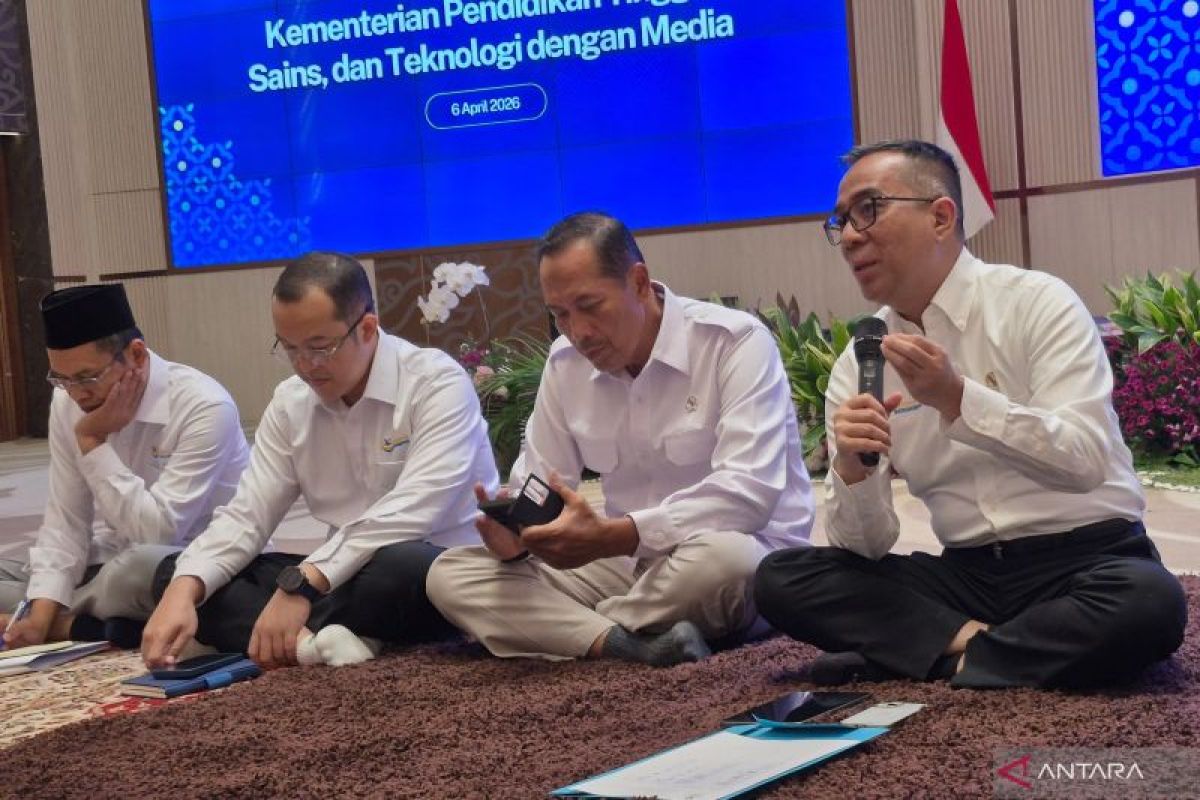
Jakarta (ANTARA) - The Minister of Higher Education, Science, and Technology (Mendiktisaintek) Brian Yuliarto has emphasised that the policy to adjust work patterns is not merely a response to the threat of an energy crisis, but a strategic opportunity to create a transformation in the work culture of higher education institutions that is more effective.
“The directive from the President (Prabowo Subianto) is for us to utilise this momentum to become far more efficient. So the context is actually not just about the energy issue, but more towards a transformation in work culture that is more efficient,” said Mendiktisaintek Brian Yuliarto in Jakarta on Monday.
In realising this transformation of work culture to become more effective and efficient, the Ministry of Higher Education, Science, and Technology is encouraging universities to optimise digital platforms and hybrid methods in academic activities.
“This includes, for example, final assignments that used to be printed five times in my time, but now it’s digital. There might still be a need for it, but actually one is enough. So things like this we support and encourage,” stated Mendiktisaintek Brian.
“Because this is the realm of education, the President also emphasised that we must not lower the quality. Do not let learning achievements or research drop. So if it’s research, perhaps they need to do experiments, they still come to campus, but when writing papers or reports, that can be done at home, something like that,” explained Mendiktisaintek Brian Yuliarto.
It is known that in the circular dated 2 April 2026, Mendiktisaintek urged universities to implement Distance Learning (PJJ) methods proportionally.
This lecture policy is specifically aimed at students from the fifth semester upwards as well as postgraduate programmes, but exceptions are given for courses that require physical face-to-face, such as laboratory work, workshops, studios, or clinics.
Various academic community activities such as thesis guidance up to dissertations, proposal seminars, and academic meetings are encouraged to be held online so that the process becomes easier and reduces mobility.
As a sustainability measure, university leaders and educational service institutions are required to conduct periodic monitoring and evaluation (monev).
This evaluation is an absolute requirement to ensure the effectiveness of public services continues to run well, while maintaining quality standards and student learning achievements do not decline.