
Minister Bahlil Targets 60 Days of Oil Reserves as Economists Say Plan Could Strengthen Indonesia’s Energy Security
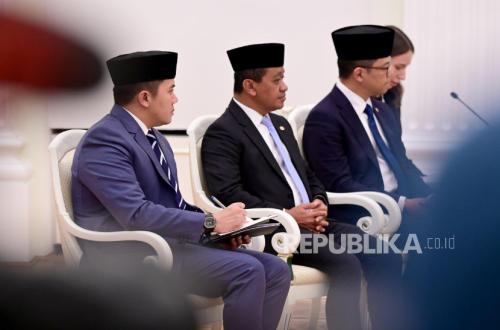
JAKARTA — Coordinating Minister for Downstreaming and Energy Transition and Energy and Mineral Resources Minister Bahlil Lahadalia said the government was preparing to build crude-oil storage facilities in several parts of Sumatra. The aim is to support supplies of up to 60 days.
The policy has received a positive response from academics. Murpin Josua Sembiring, an economist and professor at Ciputra University in Surabaya, said expanding oil storage capacity was a strategic measure to protect the national economy. Indonesia needs stronger energy reserves so that industrial and economic activity is less vulnerable to disruptions during a global oil supply crisis, he said.
“I support the government’s target of expanding oil storage capacity from around 20 days to 60 days,” Murpin said on Friday (6 November 2026).
Murpin said larger oil reserves would give the government time to respond to import disruptions, strengthen its bargaining position when buying oil and reduce the risk of industrial activity grinding to a halt. However, he cautioned that the 60-day target remained a plan and would require infrastructure readiness and optimal stock management. “Energy security is national security,” he said.
Building oil storage facilities could also generate economic benefits if the investment costs were lower than the potential losses avoided by preventing energy supply disruptions, Murpin said. The government therefore needs to calculate construction, land acquisition, stock-filling and maintenance costs, as well as how oil reserves would be released during an emergency.
Murpin also said implementation must take account of economic viability, investment transparency and accountability in the use of state funds. The government must ensure that each facility genuinely improves Indonesia’s ability to withstand an energy crisis, rather than simply adding infrastructure without adequate oil stocks, he said.
He added that the success of Bahlil’s strategy to strengthen energy reserves should be measured by Indonesia’s ability to keep economic activity going during global supply disruptions. Oil storage infrastructure and energy diversification should be accompanied by measurable targets, independent oversight and tangible public benefits, he said.
“Energy sovereignty is not measured by how many tanks are inaugurated, but by how long the economy keeps moving when the world faces turbulence,” he said.
Erdi, a public-policy expert at the Faculty of Social and Political Sciences at Tanjungpura University (Untan), also said crude-oil storage facilities in several parts of Sumatra, capable of supporting fuel stocks for up to 60 days, were needed amid geopolitical uncertainty.
“Building crude-oil storage facilities for up to 60 days is a strategy to strengthen energy security,” Erdi said.
The capacity would bring Indonesia’s energy reserves closer to those of several other ASEAN countries, Erdi said. Singapore has 50 days of oil reserves, Timor-Leste 90 days, Malaysia 30 days, Thailand 60 days, Laos 21 days, Vietnam 56 days and Brunei Darussalam 31 days. Myanmar and the Philippines have 40 and 51 days respectively. However, based on its population and daily fuel consumption, Indonesia is ASEAN’s largest fuel consumer, he said.
Erdi said Bahlil’s plan to build storage capacity for 60 days, alongside the development of B50 biodiesel and E20 to E50 bioethanol programmes, would be complementary strategies. Together, they could reduce dependence on fuel imports and strengthen the foundations of the national economy, he said.
“Developing E20–E50 and B50, together with building crude-oil storage facilities for up to 60 days, is an integrated strategy to strengthen energy security, maintain economic stability and reduce the risk of supply disruptions,” Erdi said.
Erdi, who is also the faculty’s vice-dean for student affairs and alumni, said increased oil storage capacity could provide a buffer against supply disruptions caused by geopolitical conflicts, fluctuations in global oil prices or problems in international energy distribution chains.
The policy could also have wider economic benefits, including foreign-exchange savings and increased investment, he said. More secure energy supplies would give the government greater scope to maintain price stability and limit the risk of inflation caused by volatility in global energy markets.
Bahlil previously said the government was preparing to build crude-oil storage facilities in several parts of Sumatra, with the aim of supporting stocks for up to 60 days. The storage programme is part of efforts to expand capacity and make national oil supply management more flexible.
He said the facilities would store imported crude oil, giving Indonesia more adequate storage capacity. “We will build storage facilities in several parts of Sumatra so that when we import crude, our target is to have up to 60 days’ capacity,” Bahlil said, as quoted on Wednesday (4 November 2026).
Source: jawawa.id (https://jawawa.id/newsitem/minister-bahlil-targets-60-days-of-oil-reserves-as-economists-say-plan-could-strengthen-indonesias-energy-1794023475)
Originally published by Republika (https://ekonomi.republika.co.id/berita/to3svk522/menteri-bahlil-targetkan-cadangan-minyak-60-hari-ekonom-nilai-bisa-perkuat-ketahanan-energi-ri), translated from Indonesian