
Minister Bahlil Reveals Reasons Behind Rotating Power Cuts in Several Regions
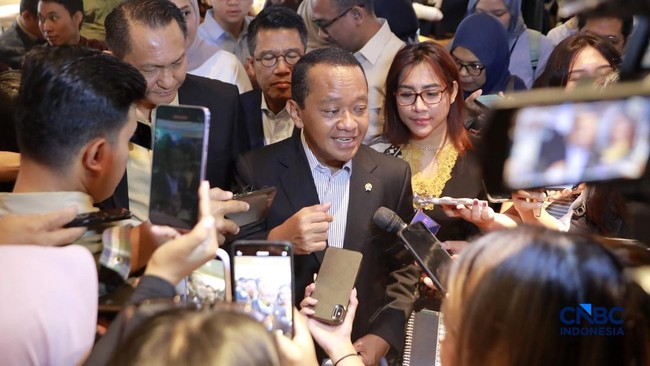
Minister of Energy and Mineral Resources (ESDM) Bahlil Lahadalia has spoken openly about the rotating power cuts that occurred in several regions of Indonesia some time ago. Bahlil made the statement at the CNBC Indonesia Energy Forum on Thursday (25/6/2026).
Following the blackouts, Bahlil convened a meeting with Attorney General ST Burhanuddin, Head of the State Intelligence Agency (BIN) Muhammad Herindra, Deputy Speaker of the House of Representatives Sufmi Dasco, Minister of State Secretariat Prasetyo Hadi, Cabinet Secretary Tedy Indrajaya, and representatives from PLN. ‘We dissected what the problem was. Because this also happened in 2022 when we banned coal exports, I questioned what was really going on,’ Bahlil explained.
He elaborated that the actual coal requirement for steam power plants (PLTU) owned by PT PLN (Persero) and private operators is 154 million tonnes. Under the 2026 Work Plan and Budget (RKAB), domestic coal supply is set at 180 million tonnes. ‘Those who have declared their willingness amount to 160-170 million tonnes, and those already under contract total 134 million tonnes, recently reaching 141 million tonnes. That means from January to June, out of the 154 million needed, only 13 million tonnes remain. How can coal run out in June? Let’s be honest, something is amiss,’ Bahlil stated.
Bahlil added that after checking, the problem was that power plants require medium-calorie coal, specifically above 5,000 kcal. ‘This is what is needed. The government’s job is to provide the Domestic Market Obligation (DMO); the technicalities are up to you, the companies. Do not wait until the water is at your neck to shout. Because of this, under the President’s direction, we do not want this to happen again. Now, things are running normally,’ Bahlil stressed.
The government has now established a Primary Energy Procurement Team involving the Development and Finance Comptroller (BPKP), the Inspectorate General of ESDM, PLN, and the Directorate General of Minerals and Coal. ‘The procurement must be transparent, and I have asked law enforcement officials to supervise so that this kind of behaviour does not keep emerging every year,’ Bahlil revealed.