
Minister Bahlil considers moratorium on semi-finished industries
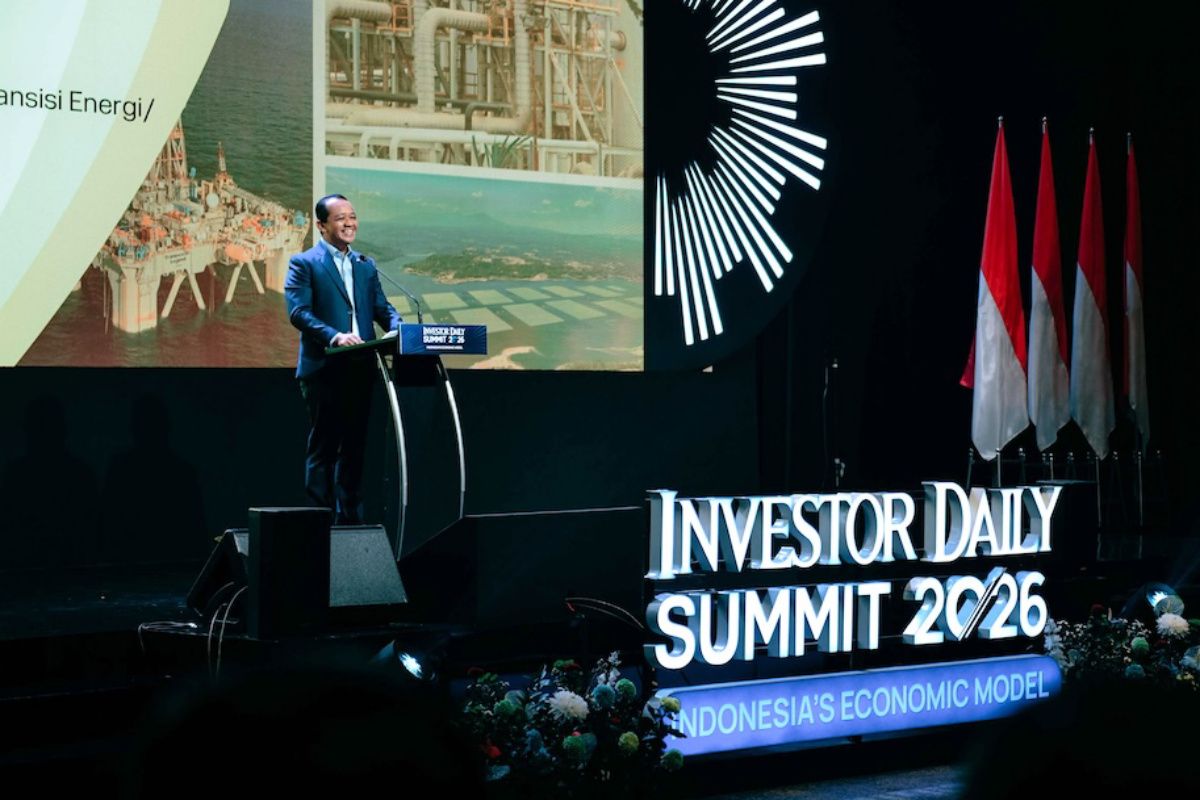
Jakarta (ANTARA) - Coordinating Minister for Downstreaming and Energy Transition Bahlil Lahadalia has said the government will synchronise cross-ministry programmes, study a moratorium on semi-finished industries, and ensure that regional entrepreneurs also benefit from the country’s natural resources.
“If we want to keep consuming, that is also good, but in the long term I think it will run into a problem of stagnant growth,” Minister Bahlil said in a statement in Jakarta on Thursday.
Bahlil said that Indonesian nickel is now processed in domestic smelters, but most of it is only turned into semi-finished products.
These products are exported, then return to the country as finished goods. It is this incomplete chain that the government wants to close.
Bahlil, who also serves as Minister of Energy and Mineral Resources, explained that the Coordinating Ministry will align the programmes of the Ministry of Investment, the Ministry of Industry, the Ministry of Energy and Mineral Resources, and other ministries so that downstreaming proceeds more quickly.
Without a change in economic structure, growth is considered at risk of stalling.
The synchronisation is based on a downstreaming roadmap covering 28 commodities in four sectors: minerals, coal and natural gas; fisheries; and agriculture, plantations and forestry.
Industry should not only be built in Java, but also in regions close to raw materials, thereby creating new economic growth centres.
Bahlil cited nickel as an example. After the export of nickel ore was halted and smelter construction was made mandatory, export value rose from US$3.3 billion in 2017-2018 to US$34 billion in 2023, and is projected to reach US$38-40 billion in 2026.
Even so, Bahlil considers these achievements insufficient, because most smelter products have not yet reached the downstream stage.
In the context of downstreaming, Bahlil, as Coordinating Minister for Downstreaming and Energy Transition, stressed that downstreaming must be equitable and sustainable.
“So that we do not manage our natural resources recklessly. We view this country as being governed for sustainability. Our children and grandchildren still need to inherit it,” he said.
On the energy transition, Bahlil said current oil lifting stands at around 600,000-610,000 barrels per day, while consumption reaches 1.6 million barrels per day.
The government is taking three steps: technology intervention on old wells, cooperation in managing idle wells, and accelerating projects whose plans of development (POD) have been approved, such as the Masela Block, which is now entering the groundbreaking stage.
The implementation of the B50 biodiesel programme, which could halt diesel imports, has prompted the government to plan a mandatory 20 per cent ethanol blend (E20) in 2027-2028 aimed at reducing petrol imports.
Meanwhile, for the coal sector, the government is maintaining the balance of supply and demand through the regulation of RKAB (work plans and budgets).
Bahlil also emphasised that, in the interest of equitable distribution, the ministry will make room for small-scale local entrepreneurs and MSME players.
“Do not let people in the regions become spectators. Make them masters in their own land,” he said.
Bahlil also responded to requests from other countries to export electricity.
He warned that there are geopolitical interests behind such requests, so Indonesia’s bargaining position must be protected.
“We may export. The important thing is that we set the price,” he added.
Bahlil also stressed that the establishment of the Coordinating Ministry would not add to the state’s financial burden, as all budgetary needs would be met from the Ministry of Energy and Mineral Resources’ budget, using a single DIPA and a single ministerial salary.
Source: jawawa.id (https://jawawa.id/newsitem/minister-bahlil-considers-moratorium-on-semi-finished-industries-1791438952)
Originally published by Antara (Indonesian) (https://www.antaranews.com/berita/5776424/menko-bahlil-kaji-moratorium-industri-setengah-jadi), translated from Indonesian