
Minister Asserts Agricultural Reform Boosts Farmer Welfare to Record High
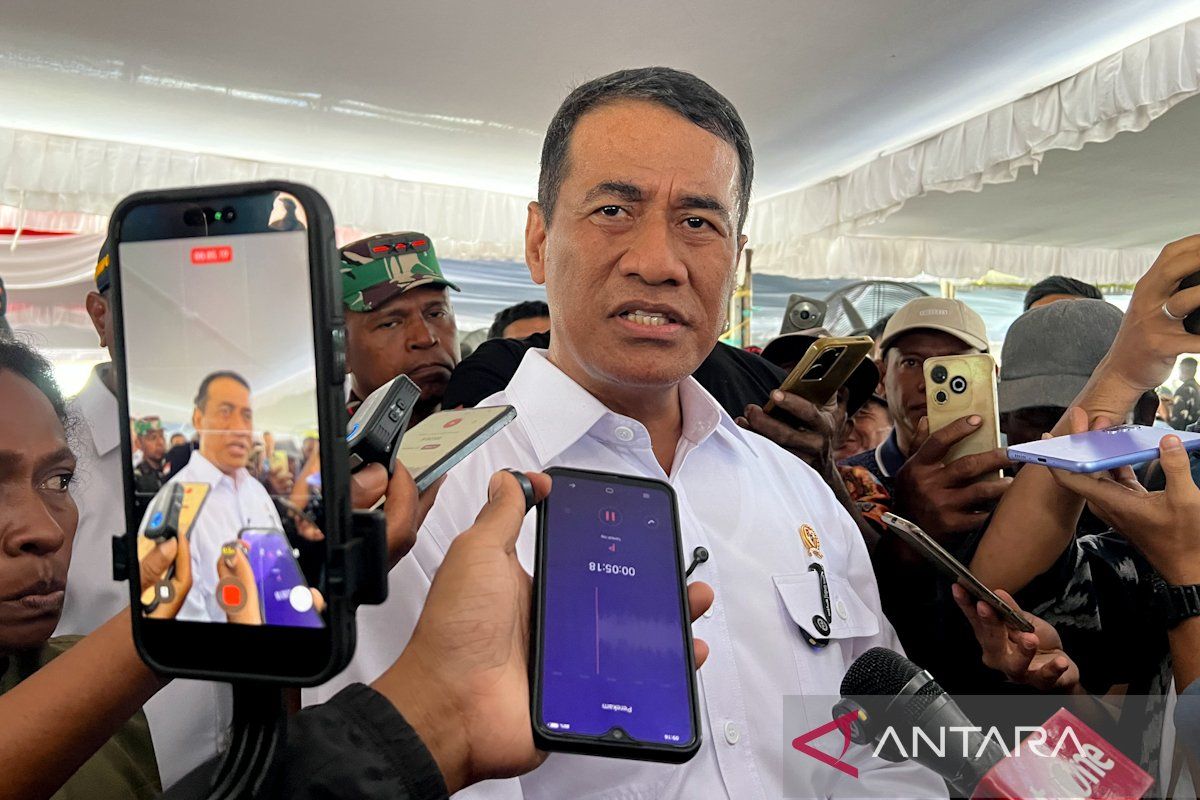
Minister of Agriculture Andi Amran Sulaiman has asserted that agricultural sector reforms have successfully improved farmer welfare, marked by the Farmers’ Terms of Trade (NTP) reaching 127.84 in July 2026, the highest in Indonesia’s history. “Self-sufficiency must bring prosperity to farmers. If farmers are prosperous, production will increase, and the public will also get food at stable prices,” the Minister said in a statement in Jakarta on Tuesday. The large-scale policy reforms in the agricultural sector implemented by the government are beginning to show tangible results. Statistics Indonesia (BPS) recorded the Farmers’ Terms of Trade (NTP) at 127.84 in July 2026, the highest since Indonesia’s independence. This record is an indicator of improving farmer welfare, while also reflecting that various pro-farmer policies have successfully increased their income and purchasing power amidst strengthening national food production. The NTP is one of the main indicators for measuring the level of farmer welfare. A higher NTP value indicates a greater ability for farmers to meet household needs and finance their farming operations. This achievement shows that the value received by farmers from production grew faster than their expenditures, so farming profits continue to increase. According to him, food self-sufficiency is not only interpreted as the ability to meet national food needs, but must also deliver real economic benefits to farmers as the main actors in agricultural development. “President Prabowo has tasked us with achieving food self-sufficiency immediately. But more importantly, that self-sufficiency must bring prosperity to farmers,” Amran said. He noted that this achievement was not obtained instantly. The government carried out comprehensive reforms from upstream to downstream through deregulation, service simplification, strengthening production facilities, building agricultural infrastructure, and protecting harvest prices. All these policies are designed to reduce production costs while increasing farmers’ income. One fundamental reform was carried out through improving the governance of subsidised fertilisers. For years, farmers faced complicated bureaucratic issues in fertiliser distribution. To address this, the government issued Presidential Regulation Number 6 of 2025 on Subsidised Fertiliser Governance, which simplifies the distribution process so that fertiliser can be received by farmers more quickly, easily, and on target. The government also lowered the Highest Retail Price (HET) of subsidised fertiliser by about 20 percent. The price of urea fertiliser was reduced from Rp2,250 to Rp1,800 per kilogram, while NPK fertiliser dropped from Rp2,300 to Rp1,840 per kilogram. On the other hand, regulatory simplification has also accelerated the distribution of various government assistance to farmers, ranging from superior seeds, agricultural tools and machinery, to other strategic programmes. Simultaneously, the government is strengthening the construction and rehabilitation of irrigation networks and pump-assisted irrigation programmes as a measure to face the challenges of climate change. Better water availability allows farmers to maintain and even increase planting intensity, thereby preserving land productivity. Reforms were also carried out on the downstream side through the Government Purchase Price (HPP) policy for dry harvested paddy at Rp6,500 per kilogram. This policy provides price and market certainty for farmers, so that harvests are no longer easily depressed during peak harvest seasons. “Farmers must earn a decent profit. The state is present from providing fertiliser, water, mechanisation, to ensuring their harvest is absorbed at a good price. If farmers profit, agriculture will continue to grow,” Amran said. He further explained that the combination of these various policies has formed an increasingly healthy agricultural ecosystem. Deregulation accelerates services to farmers, cheaper fertiliser reduces production costs, production assistance increases productivity, irrigation development strengthens farming resilience, while price protection through the HPP ensures farmers earn a decent profit. “All these efforts are then reflected in the NTP achievement for July 2026, which is the highest record in Indonesia’s history,” Amran said.