
Minister Amran to Expose More on Rice Mafia, Here's a Preview
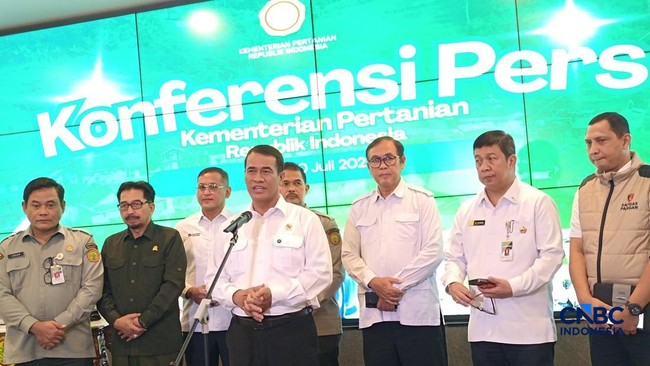
Minister of Agriculture Amran Sulaiman has signalled he will further expose alleged rice mafia practices, revealing there is still a “next chapter” to be uncovered in the case. Amran stressed he is prepared to face all risks to investigate practices deemed detrimental to farmers and the wider public. According to him, the disclosure of the rice mafia case is not yet complete and will continue in the near future.
“Yes. For that later, the next chapter. This is lengthy. I will pursue it. I am ready to stake everything for the farmers, for the 286 million people of Indonesia. We side with them,” Amran said during a press conference at his office in Jakarta on Thursday (30/7/2026). “If the risk is that my position must end, so be it. But we will pursue this. They are unrepentant… tell them there is a second chapter.”
The statement emerged amid findings of alleged irregularities in the distribution of fortified rice. Fortified rice is regulated under two Indonesian National Standards, namely SNI 9314:2024 for fortified rice kernels and SNI 9372:2025 for fortified rice. Under these regulations, every 100 grammes of fortified rice must contain specific vitamins and minerals, with a mixing ratio of fortified kernels to milled rice of at least 1%.
Results from the National Food Agency’s supervision in DKI Jakarta in June 2026, covering 15 brands of fortified rice, showed only three brands met the requirements. The remaining 12 brands were declared non-compliant, despite being sold at prices ranging from Rp17,580 to Rp42,500 per kilogramme. This finding suggests enormous consumer losses. With the highest retail price for premium rice set at Rp14,900 per kg, the average price of non-compliant fortified rice reached Rp22,665 per kg, or Rp7,765 more expensive. Assuming 30% of national premium rice consumption shifts to fortified rice, the potential public loss is estimated at Rp71.9 trillion per year.
Following these findings, Amran confirmed the government will announce the names of non-compliant fortified rice producers on Friday (31/7/2026). The business licences of the companies involved will also be revoked. A study by the Indonesian Fortification Coalition indicates the additional cost to produce fortified rice is actually only around Rp700 to Rp1,000 per kg. With medium rice priced at Rp13,500 per kg, the selling price of fortified rice should be around Rp14,500 per kg, or even cheaper than the premium rice HET of Rp14,900 per kg if produced through integrated mills. This fact strengthens suspicions that the market price of fortified rice is far above its proper level.
The fortified rice programme is mandated by Article 37 paragraph (2) of Government Regulation Number 17 of 2015 on Food Security and Nutrition. The programme aims to help meet the nutritional needs of the community, especially pregnant and breastfeeding mothers, infants, toddlers, and other vulnerable groups. The National Food Agency also emphasised that fortified rice is intended for underprivileged families and those at risk of stunting. However, the high selling price of fortified rice is seen as diverting the programme from its original purpose, as it burdens the target groups instead. “This is intended for our brothers and sisters suffering from malnutrition, the poor, those with stunting. Yet it is sold for Rp42,000 per kg, Rp20,000 per kg,” he said.
Amran also highlighted the price disparity in the rice supply chain. He noted that unhusked rice is bought from farmers at around Rp6,000 per kg and paid at Rp7,000 per kg, but the processed rice is sold at prices far exceeding reasonable limits. “This is a clear form of injustice. The perpetrators must be punished as severely as possible,” Amran stated. On the other hand, Amran assessed that the government’s policy of not importing rice over the past two years, coinciding with the achievement of self-sufficiency, has narrowed the room for manoeuvre for rice mafias. He therefore urged law enforcement officials to continue investigating rice mafia networks to their roots, while also calling on the public to report any suspected price manipulation or rice hoarding that harms farmers and consumers.