
Minister AHY: Future Civil Servants Must Be Adaptive to Social and Political Dynamics
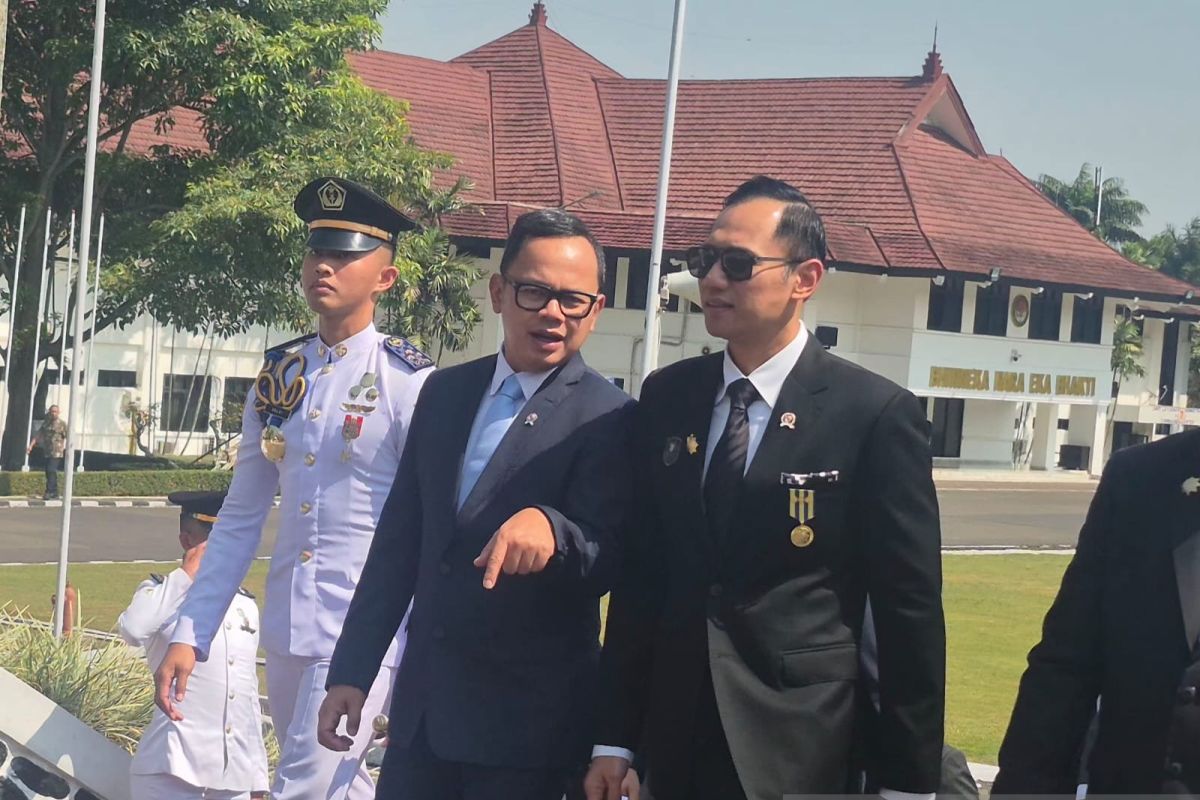
Sumedang (ANTARA) - Coordinating Minister for Infrastructure and Regional Development, Agus Harimurti Yudhoyono (AHY), has emphasised the importance of strengthening the capacity of civil servants (ASN) from their education stage to be adaptive in facing social and political dynamics in Indonesia. During a visit to Jatinangor, Sumedang, on Thursday, the Minister stated that future ASN must be able to understand the dynamics of development amidst the complex challenges of development needs in Indonesia. “Future ASN are not only required to be strong in technocracy, but also must be able to read social and political contexts so that the policies taken are right on target,” he said after a public lecture at the Institute of Domestic Governance (IPDN) Jatinangor. He stressed that understanding political dynamics within the bureaucracy does not mean taking sides, but rather the ability to analyse so that public policy remains within the corridor of state apparatus neutrality. AHY said this is important so that ASN can position themselves adaptively to resolve the challenges of development disparities between regions and have a vision of equitable development. “Political understanding is not for taking sides, but so that policies are more precise and in accordance with field conditions because we want the praja to be able to position themselves appropriately in various regions with different characteristics,” he said. He added that the field experience gained by IPDN praja is an important provision before they enter the bureaucracy in the regions. According to him, the complexity of issues in the regions requires ASN to be able to bridge central policies with the real needs of the community. “With that experience, they will be better prepared to face the reality of government,” he said. Meanwhile, Deputy Minister of Home Affairs, Bima Arya Sugiarto, assessed that IPDN praja need to have the ability to understand political dynamics wisely without abandoning bureaucratic professionalism. “The Coordinating Minister entrusted that these praja should be sufficiently capable of positioning themselves in political situations, be wise enough and able to understand the existing dynamics without relinquishing responsibility for what is their duty,” he explained. He added that this ability is important because IPDN graduates will become leaders at the regional level who are directly involved in public decision-making. “So I think in the future, these praja, in addition to having competence, also have the ability to understand and position themselves in a political context,” he added. He hopes that this adaptive capacity building and understanding can shape ASN who are not only technically competent, but also sensitive to the needs of the community and able to deliver responsive and equitable policies across all regions of Indonesia.