
Minister AHY focuses Bali's development on four key priority clusters
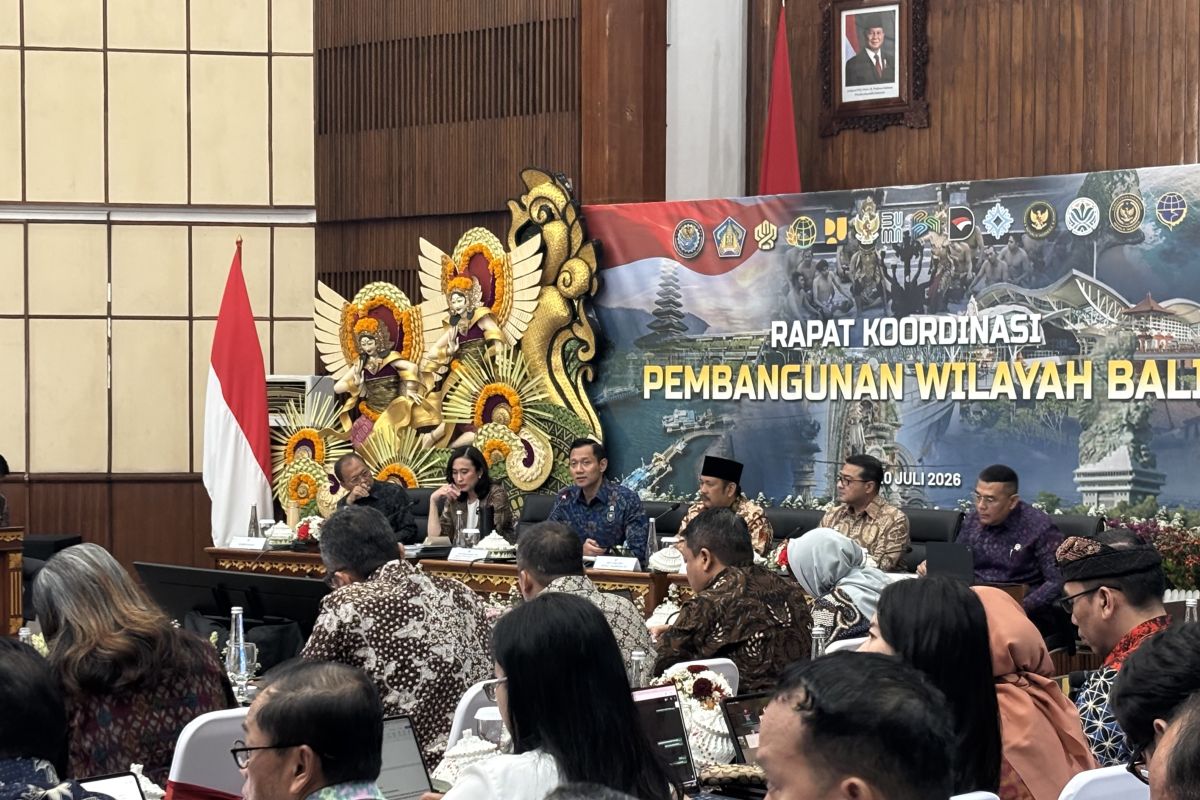
“These four clusters are Bali’s development efforts, which I hope we can oversee together,” he conveyed at the Bali Regional Development Coordination Meeting in Denpasar on Monday.
He outlined the tourism sector as the main cluster, noting the success of Bali’s tourism in generating Rp176 trillion (US$9.4 billion) of the Rp319.9 trillion (US$17.2 billion) in tourism foreign exchange.
AHY added that Bali accounted for 45.8 percent of foreign tourist arrivals to Indonesia in 2025, highlighting the need to expand tourism while safeguarding the island’s natural environment from overexploitation.
“Destinations must continue to be developed, but they cannot be concentrated in just one or two areas; it will increase the development burden and put pressure on the carrying capacity,” the minister remarked.
He then highlighted the traffic jams that frequently draw widespread public attention on the island.
Therefore, he urged various alternative solutions related to regular connectivity corridors, especially in South Bali, the center of activity, particularly during the holiday season.
Third, AHY observed a decline in environmental quality due to the large number of tourists and the problems of waste, water pollution, and coastal abrasion.
“Not to mention the abrasion that also threatens our beaches and our coastline, and the reduction of productive land, including rice fields that we must maintain,” he continued.
The fourth focus is improving spatial planning, as he emphasized that it should guide development. Without proper planning, AHY reminded that issues could escalate into disasters that disrupt tourism and connectivity.
On the same occasion, Bali Governor Wayan Koster said the four priorities reflect the provincial government’s current development needs, particularly in accelerating infrastructure development and improving inter-regional connectivity across the island.
Tourism, while bringing significant benefits, also poses challenges for the environment, communities, and culture.
“First, there are several major challenges, including rapid land conversion, mounting waste, ecosystem degradation, threats to clean water, and traffic congestion,” he noted.
He added that infrastructure and public transportation remain inadequate, contributing to severe congestion and the gradual loss of Bali’s cultural authenticity.
Therefore, his office is coordinating closely with various ministries and agencies, including those under the Coordinating Ministry for Infrastructure, to support development efforts.
“We have detailed the land infrastructure needs in Bali for connectivity between the regions. Bali is full of tourist attractions from one end to the other, but the infrastructure is inadequate. Connectivity between Denpasar and Badung, Klungkung, and Gianyar needs to be prioritized to better support Bali’s tourism sector,” he concluded.
Related news: ASEAN ministers adopt Bali Declaration on youth, sports
Related news: Govt pushes water taxi, pier development to support Bali’s tourism
Related news: Bali to serve as model for local economic development: Minister
Translator: Ni Putu Putri, Resinta Sulistiyandari