
Minister Affirms BRT Transport to Overcome Congestion and Reduce Carbon Emissions
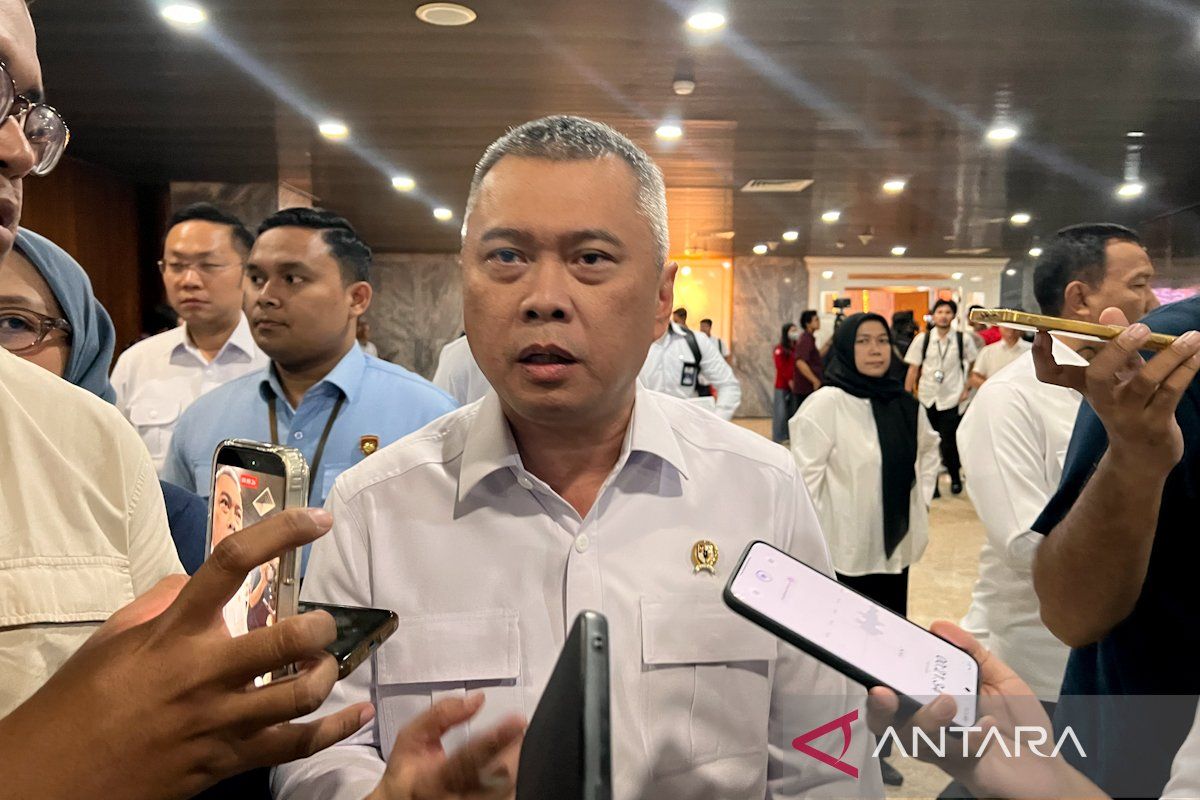
Jakarta (ANTARA) - Minister of Transportation Dudy Purwagandhi has affirmed that Bus Rapid Transit (BRT) is a solution for reducing congestion, cutting carbon emissions, improving public mobility and supporting sustainable urban transport.
“The BRT system is expected to improve inter-regional connectivity, strengthen people’s productivity, reduce congestion and carbon emissions, and deliver a modern, inclusive and sustainable public transport system for the public,” the minister said in a statement in Jakarta on Thursday.
The government continues to strengthen its commitment to building a modern, integrated and sustainable urban transport system. This commitment was marked by the groundbreaking of the Indonesia Mass Transit Project (Mastran) at the Leuwipanjang BRT Depot Site in Bandung Regency.
The occasion also marked the start of physical construction of the BRT system in the Bandung Basin area as part of the transformation of urban public transport services.
The BRT system is expected to deliver public transport services that are safe, comfortable, punctual, affordable and integrated with other transport modes.
He explained that Mastran is a strategic government programme to promote the development of a sustainable and integrated urban mass transit system.
In its initial phase, the project focuses on developing BRT systems in two metropolitan areas, namely the Bandung Basin Metropolitan Area (BBMA) and Mebidang, in order to improve accessibility, reduce travel times and strengthen urban public transport governance.
In addition to building infrastructure such as dedicated lanes, stops, depots and an Intelligent Transport System (ITS), the project is also aimed at strengthening institutional capacity and the operational readiness of regional governments.
In the Bandung Basin, the BRT system will serve five areas: Bandung City, Cimahi City, Bandung Regency, West Bandung Regency and Sumedang Regency.
During the development phase, the project includes the construction of 21 kilometres of dedicated lane corridors, supported by 34 BRT stations, 18 direct service routes, around 719 bus stops and hundreds of buses that will serve public mobility across the Bandung metropolitan area.
Through Mastran, the central government, together with the West Java Provincial Government and the regency and city governments in the Bandung Basin, is strengthening the foundations of an interconnected mass transit system.
BRT will become the backbone of services integrated with railways, feeder transport and other transport modes, so that people’s journeys become easier, more efficient and seamless from departure point to final destination.
The minister explained that the success of building a mass transit system depends not only on infrastructure construction, but also on a clear division of roles between the central and regional governments.
The central government is responsible for capacity and institutional development, designing the BRT system, building dedicated lanes, stations, depots and supporting facilities, as well as implementing the Intelligent Transport System (ITS).
Meanwhile, regional governments play a role in providing land, issuing regulations, traffic engineering, establishing a BRT management body, and ensuring that operations and maintenance of services can run sustainably.
Through collaboration between the central government, the West Java Provincial Government, the regency and city governments in the Bandung Basin, and support from the World Bank and AFD, the government hopes Mastran will become a model for urban mass transit development in Indonesia.
The minister added that according to World Bank analysis, the development of the Bandung Basin BRT is projected to increase public transport usage to around 99,000 passengers per day.
This figure is considered capable of reducing average travel times by 11 per cent, increasing people’s access to jobs by 25 per cent, and cutting carbon emissions by up to 196,000 tonnes of CO2 progressively.
The Mastran project is being implemented through collaboration between the Indonesian government, the World Bank and the Agence Francaise de Development (AFD).
The support of these two development partners comes not only in the form of financing, but also technical assistance and the sharing of international experience in developing modern, reliable and sustainable urban mass transit systems.
Overall, the Mastran programme is supported by financing of around Rp3.8 trillion, comprising a World Bank loan of 224 million US dollars and an AFD loan of 40 million US dollars, along with matching funds from the Indonesian government.
Specifically for the construction of BRT infrastructure in the Bandung Basin, the investment value reaches around Rp1.3 trillion, allocated for the construction of dedicated lanes, stops, depots, the Intelligent Transport System (ITS) and various other supporting infrastructure.
Source: jawawa.id (https://jawawa.id/newsitem/minister-affirms-brt-transport-to-overcome-congestion-and-reduce-carbon-emissions-1784800619)
Originally published by Antara (Indonesian) (https://www.antaranews.com/berita/5662520/menhub-tegaskan-angkutan-brt-atasi-macet-dan-tekan-emisi-karbon), translated from Indonesian