
Minister Abdul Mu'ti Urges Vocational Students' Learning to Continue During Internships
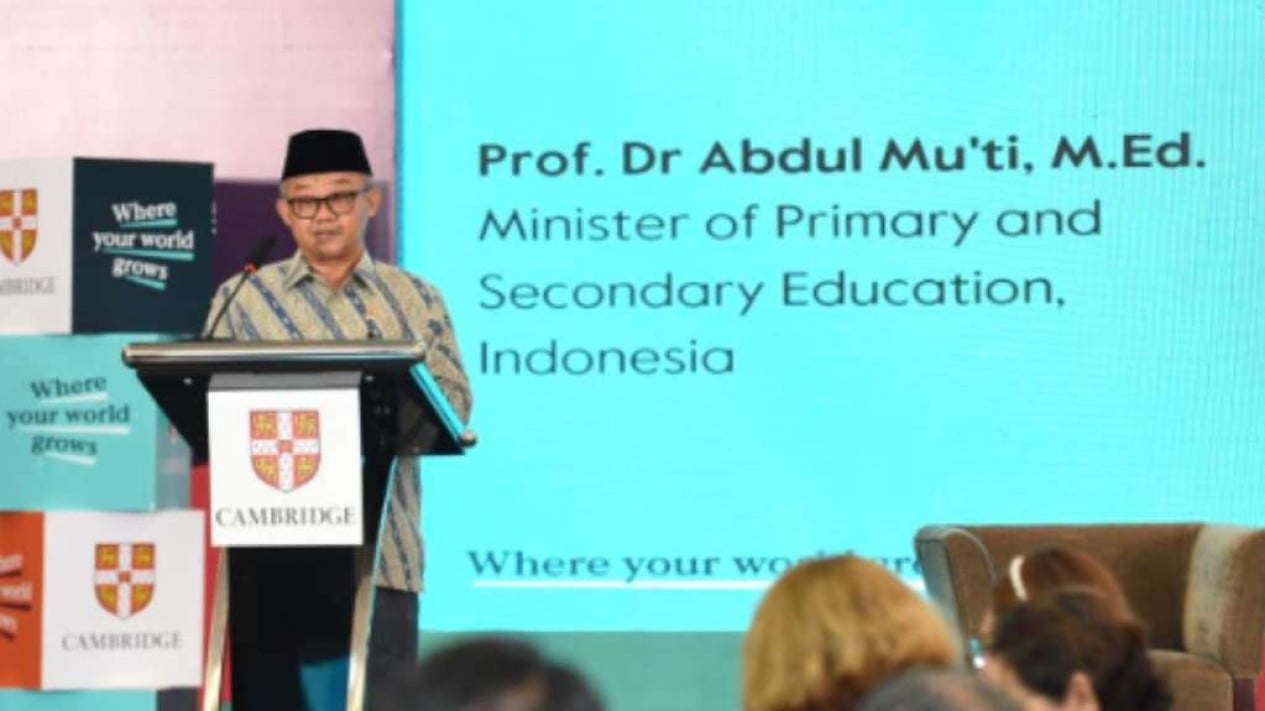
Field Work Practice (PKL) should not mean that Vocational High School (SMK) students stop learning. The government is encouraging learning to continue, particularly to strengthen students’ literacy and numeracy skills.
The Minister of Primary and Secondary Education, Abdul Mu’ti, emphasised that the experience students gain within the business and industrial sectors should actually become an integral part of the learning process.
According to the Minister, learning for Grade XII students currently undergoing PKL can be conducted flexibly. One method that can be implemented is asynchronous learning, allowing students to access materials and complete assignments without needing to follow lessons at the same time as their teachers.
“Learning does not stop when our children undertake PKL. On the contrary, experience in the working world must become part of the learning process,” said Abdul Mu’ti, as reported on Tuesday, 15 September 2026.
Abdul Mu’ti explained that PKL provides students with the opportunity to apply the knowledge and skills acquired in school within real-world work situations.
Beyond technical skills, students also learn about discipline, responsibility, professional communication, work culture, occupational safety, and the competency demands of the business and industrial worlds.
However, he reminded that this work experience must still be balanced with the reinforcement of fundamental abilities, specifically literacy and numeracy.
“Literacy and numeracy are fundamental skills. Both are required not only for academic purposes but also in daily life and the professional world,” said Abdul Mu’ti.
Literacy skills, for instance, are required when students read work procedures, understand equipment instructions, interpret technical information, prepare reports, and communicate with supervisors and colleagues.
Meanwhile, numeracy skills are utilised in various work activities, ranging from calculating material requirements, determining measurements, and reading tables and graphs, to calculating processing time, estimating costs, calculating percentages, and comparing work results.
This push to strengthen literacy and numeracy is also linked to the results of the 2025 SMK Academic Ability Test (TKA).
Based on the Circular Letter from the Director of Vocational High Schools, Number 4021/B/D2/DV.00.01/2026, the average achievement of SMK students in Mathematics was recorded at 34.84, while English was 22.69 and Indonesian was 53.68.