
Minister: 43 Million Students Have Received Free Nutritious Meals
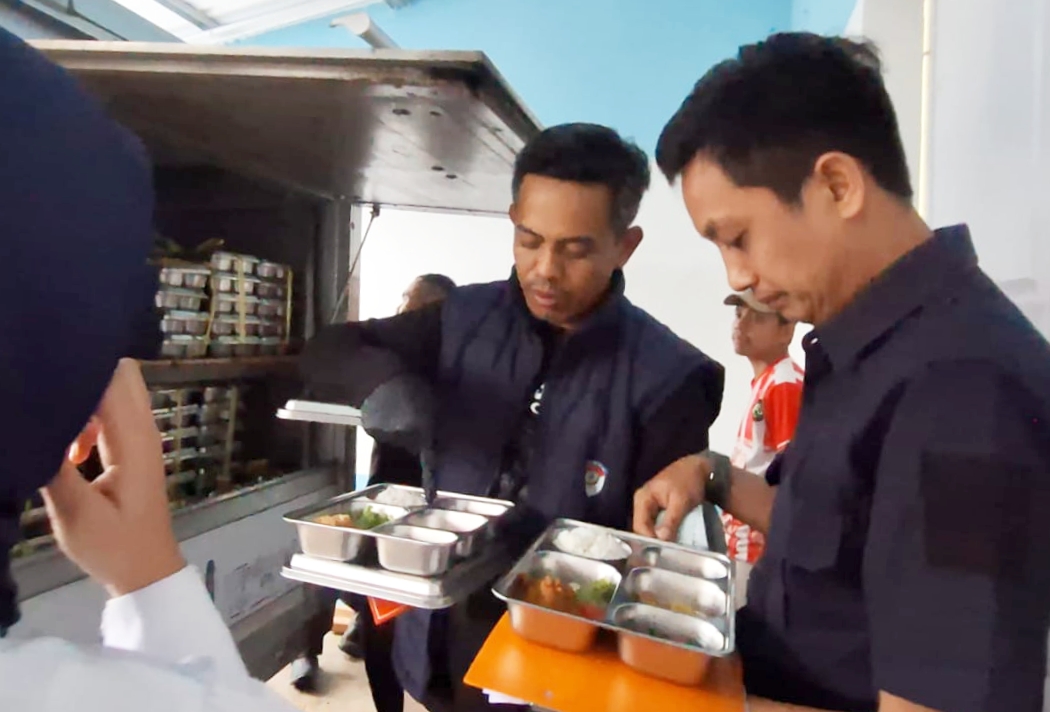
The government continues to strengthen the transformation of the national education sector through various strategic programmes, ranging from the implementation of the Free Nutritious Meal (MBG) programme to the development of Integrated National Schools. These efforts were discussed during a meeting between President Prabowo Subianto and the Minister of Primary and Secondary Education, Abdul Mu’ti, at the Merdeka Palace, Jakarta, on Thursday (11/6).
During the meeting, Abdul Mu’ti presented the progress of several educational programmes, including the implementation of the MBG programme, which is considered to support the strengthening of student character through the ‘7 Great Indonesian Children Habits’ movement (7 KAIH). According to Abdul Mu’ti, a key aspect of this movement is the application of healthy and nutritious eating patterns, now realised through the MBG programme in schools.
“As of 10 June 2026, 80.7 per cent of students have benefited from the implementation of the MBG programme. Out of approximately 53 million students in Indonesia, more than 43 million students (not teachers, as previously circulated in a video due to a slip of the tongue) have received and experienced the benefits of the programme,” said Abdul Mu’ti.
He added that survey results and various feedback from the programme’s implementation show that the majority of students hope the programme can continue. Furthermore, the Ministry of Primary and Secondary Education has prepared several supporting modules to strengthen the implementation of MBG in schools.
“Several studies conducted, including those from Labsosio – the Centre for Sociological Studies at the University of Indonesia, state that MBG has had a positive impact on learning motivation, school attendance rates, and student academic achievement,” he noted.
On the same occasion, Abdul Mu’t also reported on the progress of the Integrated National School programme, which is part of the government’s strategy to build a superior educational ecosystem. He explained that Integrated National Schools are designed as high-quality non-boarding schools with integrated educational services and learning standards.
“The government, through the Ministry of Primary and Secondary Education, plans to build 100 integrated national schools, and there are already 36 proposed schools selected that will begin construction this year,” he revealed.
In the initial stage, Abdul Mu’ti stated that five schools will begin operations by utilising existing Ministry of Primary and Secondary Education Technical Implementation Unit (UPT) buildings in various regions. Additionally, one school will be built in the Nusantara Capital City (IKN), while nine other schools will be newly constructed in designated areas.
“One school will be built in the Nusantara Capital City (IKN), and nine other schools will be newly built in designated regions,” he concluded.
The Head of the National Nutrition Agency (BGN), Nanik S. Deyang, revealed that her agency will improve the distribution of the Free Nutritious Meal (MBG) programme by refining the targeting of beneficiaries.
President Prabowo Subianto stated that the Free Nutritious Meal (MBG) programme has currently reached 60.2 million beneficiaries. President Prabowo Subianto requested that the National Nutrition Agency (BGN) emphasise the importance of not overextending resources or rushing the implementation of the MBG programme.
The Free Nutritious Meal (MBG) programme was officially re-launched in schools in 2026. President Prabowo Subianto remains optimistic that the target of reaching 82.9 million beneficiaries through the MBG programme can be achieved by the end of the year.