
Mining Royalty Increase Postponed, Purbaya Loses Over Rp200 Trillion
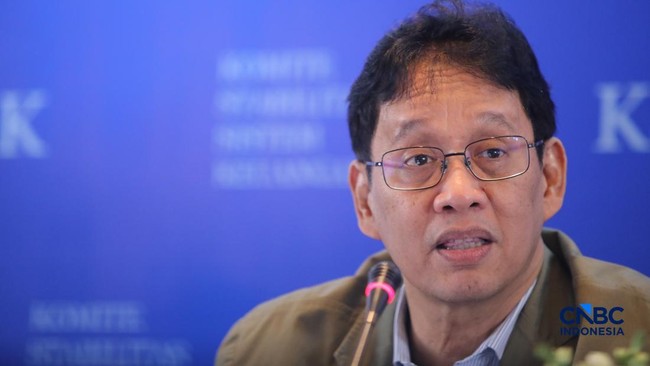
Jakarta, CNBC Indonesia - Finance Minister Purbaya Yudhi Sadewa has acknowledged that he would have received substantial potential revenue from the policy to increase royalty rates on mining commodities such as coal and nickel.
Initially, Purbaya stated that the policy would take effect in June 2026. However, Energy and Mineral Resources Minister Bahlil Lahadalia has decided to postpone the policy until an undetermined date.
“If the new rates are implemented, my income would increase significantly without causing any fuss. But it depends on Mr Bahlil’s calculations later. I’m waiting from Mr Bahlil,” said Purbaya at his office in Jakarta on Tuesday (12/5/2026).
“But our calculations are honestly higher compared to if we implement the previous steps,” he emphasised.
When asked to confirm the potential value of state non-tax revenue (PNBP) from mining commodity royalties, Purbaya said it could reach more than Rp200 trillion. “It’s said to be more,” he revealed.
Nevertheless, he stressed that the decision to postpone lies entirely with Energy and Mineral Resources Minister Bahlil Lahadalia, so the Ministry of Finance will follow suit. However, he plans to propose a new policy to compensate for the potential revenue that will not be collected.
“There are other policy steps that will strengthen revenue from the natural resources sector. We’ll just follow whatever Mr Bahlil decides later. But there will be changes that, even without (the royalty rate increase), our revenue will still rise. That’s what’s important to me,” explained Purbaya.
Previously, Bahlil admitted that in recent days, his side had indeed conducted exercises and socialisation regarding the planned royalty rate changes. This was done to gather input from business actors before the official regulations are issued.
From the socialisation, said Bahlil, the government has received various responses from entrepreneurs and the public regarding the plan. Therefore, Bahlil will re-evaluate the policy formulation so as not to burden business actors.
“And after hearing input from the public and fellow entrepreneurs, I also received input, so I think I will put this on hold to build a good formulation that is mutually beneficial. The state benefits and the entrepreneurs must benefit,” stressed Bahlil.
He also assured that the government will postpone further discussions to find a formulation deemed more appropriate for all parties. This also answers whether the regulation will be implemented in June.
“Yes, we might think about it again. Even if it does, we must find an ideal formulation that does not harm the entrepreneurs but also allows us to optimise state revenue,” stated Bahlil.