
Mining Revenue-Sharing Scheme to Be Changed Similar to Oil and Gas, Business Owners Speak Out
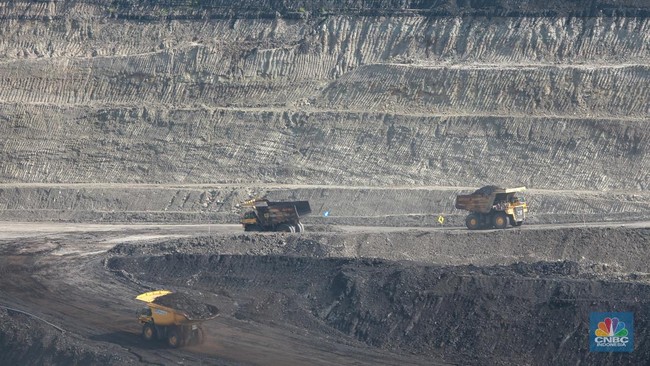
The government is examining the implementation of a revenue-sharing system similar to that in the oil and gas (migas) sector for the mineral and coal mining (minerba) industry. This is intended to ensure that natural resource management provides greater benefits to the state and public welfare.
Responding to the proposal, Chairman of the Indonesian Mining & Energy Forum (IMEF) Singgih Widagdo stated that the minerba sector has very different characteristics from the migas industry, so applying a similar scheme requires careful consideration.
“I don’t know the details of the policy yet. However, it is clear that the mineral mining industry differs from oil. In the past, there was indeed revenue sharing, royalties in the form of in-kind, but through Presidential Decree 76/1996, it was changed to cash,” said Singgih to CNBC Indonesia on Wednesday (7/5/2026).
According to him, the fundamental difference is evident in the permitting system in the minerba sector, which is far more diverse than in migas. He explained that mining business permits range from small levels like IPR to IUPK.
“If it is equated with oil, especially with cost recovery, how to supervise with 946 permit holders, this is only for coal, not yet minerals,” he said.
In addition, he highlighted the very diverse characteristics of minerba commodities. For coal, for example, there are various qualities with different market patterns. Meanwhile, minerals have hundreds of types with different processing patterns, especially since the government no longer allows the export of raw materials.
“I see the government’s aim more as increasing state revenue, amid the current financial situation. However, in the current global economic situation, it should not be rushed,” said Singgih.
He then reminded that Indonesia is not actually the world’s largest owner of minerba resources, so regulatory certainty is an important factor for new investors. According to him, business actors will still compare Indonesia’s investment attractiveness with other countries.
“We are not the world’s largest resource owner for minerba either, so for such certainty, new investors need to compare with other countries. It could backfire, and we should not just look at the policy draft details first,” said Singgih.
Previously, Minister of Energy and Mineral Resources (ESDM) Bahlil Lahadalia explained that the government wants to ensure that both old and new mines can provide maximum contributions to state revenue. One approach being considered is adopting the cooperation pattern used in the migas sector.
In the migas sector, there are at least cost recovery and gross split schemes used in cooperation contracts between the government and private parties. This model is considered a reference for application in the minerba sector.
“And we will use the example of revenue sharing from our migas management. Our migas has cost recovery, gross split, perhaps those patterns that we will try to exercise to build cooperation with private parties,” he said.
Nevertheless, Bahlil emphasised that the concession scheme will not be abolished. The government will maintain that system, but with adjustments so that the state’s revenue share can be larger and more balanced.
“Still concessions, but we will optimise for revenue to be balanced with the state, and the state should get a larger share,” said Bahlil.
Source: jawawa.id (https://jawawa.id/newsitem/mining-revenue-sharing-scheme-to-be-changed-similar-to-oil-and-gas-business-owners-speak-out-1778156535)
Originally published by CNBC Indonesia (https://www.cnbcindonesia.com/news/20260507102419-4-733009/skema-bagi-hasil-tambang-mau-diubah-mirip-migas-pengusaha-buka-suara), translated from Indonesian