
Mining Profit-Sharing Model Will Not Change, Business Owners Speak Out
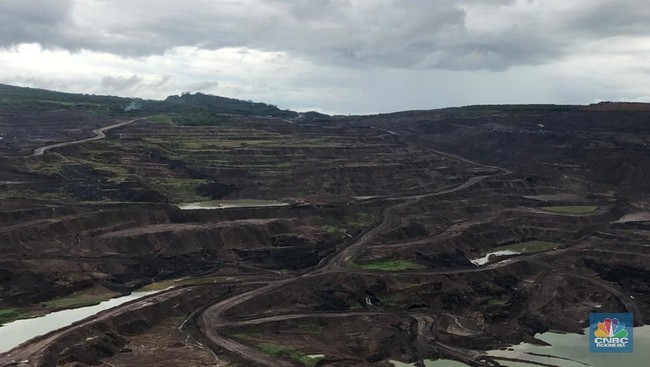
The Minister of Energy and Mineral Resources (ESDM), Bahlil Lahadalia, has ensured that there will be no change to the ‘doctrine’ regarding mining sector contracts. This clarifies previous plans regarding changes to mining profit-sharing, similar to the gross split system used in the oil and gas sector.
“First, the system within the ESDM that adopts the gross split doctrine applies only to the oil and gas sector. I repeat, based on regulations and presidential directives, the gross split is only for the oil and gas sector, while in the mineral and coal (minerba) sector, there is no change at all,” said Bahlil during a press conference at the DPR Building on Monday (8/6/2026).
“Therefore, it is important for me to state clearly that existing regulations will not change. It is my duty to ensure this remains permanent,” Bahlil emphasised.
Responding to this, the Indonesian Mining Association (API-IMA) appreciated the government’s decision to cancel the plan to apply oil and gas profit-sharing schemes to the mineral and coal mining sector. This move is considered highly appropriate and crucial to eliminate issues and plans that could disrupt investment.
Sari Esayanti, Executive Director of API-IMA, emphasised that the mineral and coal mining industry possesses business characteristics that are very different from the oil and gas industry.
“The mineral and coal mining industry has unique characteristics with varying levels of complexity for each commodity. These fundamental differences are why many countries apply royalty and fiscal systems that differ from the oil and gas sector,” said Sari.
Through this cancellation, the IMA hopes the government can achieve fiscal policy stability and financial certainty for companies to ensure the sustainability of investment and mining operations. This stability is vital as the mining industry currently faces various policy adjustments and new operational challenges, including the implementation of One-Door Export regulations, Export Proceeds (DHE), adjustments to royalties and Mineral Reference Prices (HPM), Export Duties, and the mandatory implementation of B50 biodiesel.
IMA emphasised that certainty and consistency in government policy are the primary keys to maintaining the competitiveness of Indonesia’s mining industry. “This is extremely important, especially amidst the increasing need for long-term investment to support the national downstreaming and energy transition agendas,” Sari added.