
Mining Holding MIND ID Cuts Hazardous Waste by 38 Percent Through Material Reuse
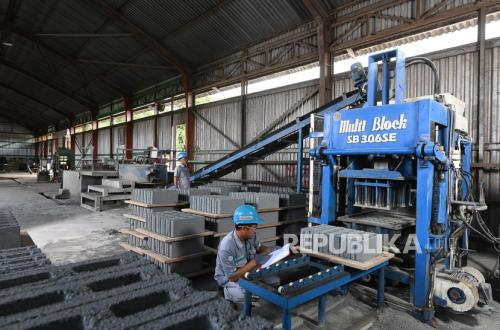
State-owned mining industry holding MIND ID continues to implement sustainable mining practices through waste reduction and the reuse of residual materials from production processes, as part of the company’s commitment to positively contribute to environmental preservation. MIND ID Division Head of Sustainability Binahidra Logiardi stated that improved management of strategic minerals for future development must be balanced with responsible management of production residues. Minerals such as aluminium, bauxite, nickel, copper, and tin are increasingly needed to support electrification, battery development, electric vehicles, and the expansion of energy networks. Consequently, MIND ID applies its group sustainability strategy framework, the Sustainability Pathway, with a primary focus on waste minimisation through operational efficiency and the reuse of materials from mining activities. MIND ID recorded that the volume of solid hazardous waste produced fell by 38 percent over two years, from 351 kilotonnes in 2023 to 279 kilotonnes in 2024, and further declined to 217 kilotonnes in 2025. Over the same period, solid non-hazardous waste decreased from 1,082 kilotonnes to 956 kilotonnes. “Both hazardous and non-hazardous waste continue to decline because operations are conducted more efficiently, resulting in less waste being generated,” Binahidra said at the Invirotech Expo 2026 in June 2026. MIND ID Group’s waste is managed both independently and in partnership with licensed third parties. Processed mining operation waste is reused to support operational activities and infrastructure development for communities surrounding operational areas. One programme that has been running sustainably comes from PT Aneka Tambang through its Kolaka Nickel Mining Business Unit, which utilises ferronickel slag to produce bricks and paving blocks. The slag material is transported from storage areas, mixed with cement and water, then moulded and dried to produce construction products with added value, achieving total annual production of 5,000 tonnes per year. PT Freeport Indonesia utilises tailings as aggregate material for paste backfill mixtures in underground mining operations, with a utilisation capacity of approximately 1,500 kilotonnes per year. Meanwhile, PT Vale Indonesia Tbk uses nickel slag for road construction, mine infrastructure, and land stabilisation, with utilisation volumes reaching 5,300 kilotonnes per year. According to Binahidra, these various initiatives demonstrate that waste management is no longer viewed merely as a compliance obligation, but has become part of the company’s value creation and risk management strategy. “The Sustainability Pathway is not just a reporting tool, but an instrument to manage impacts, mitigate risks, and create long-term added value that benefits the company, the environment, and society,” he said.