
Mining Community Development Must Build Economic Self-Reliance
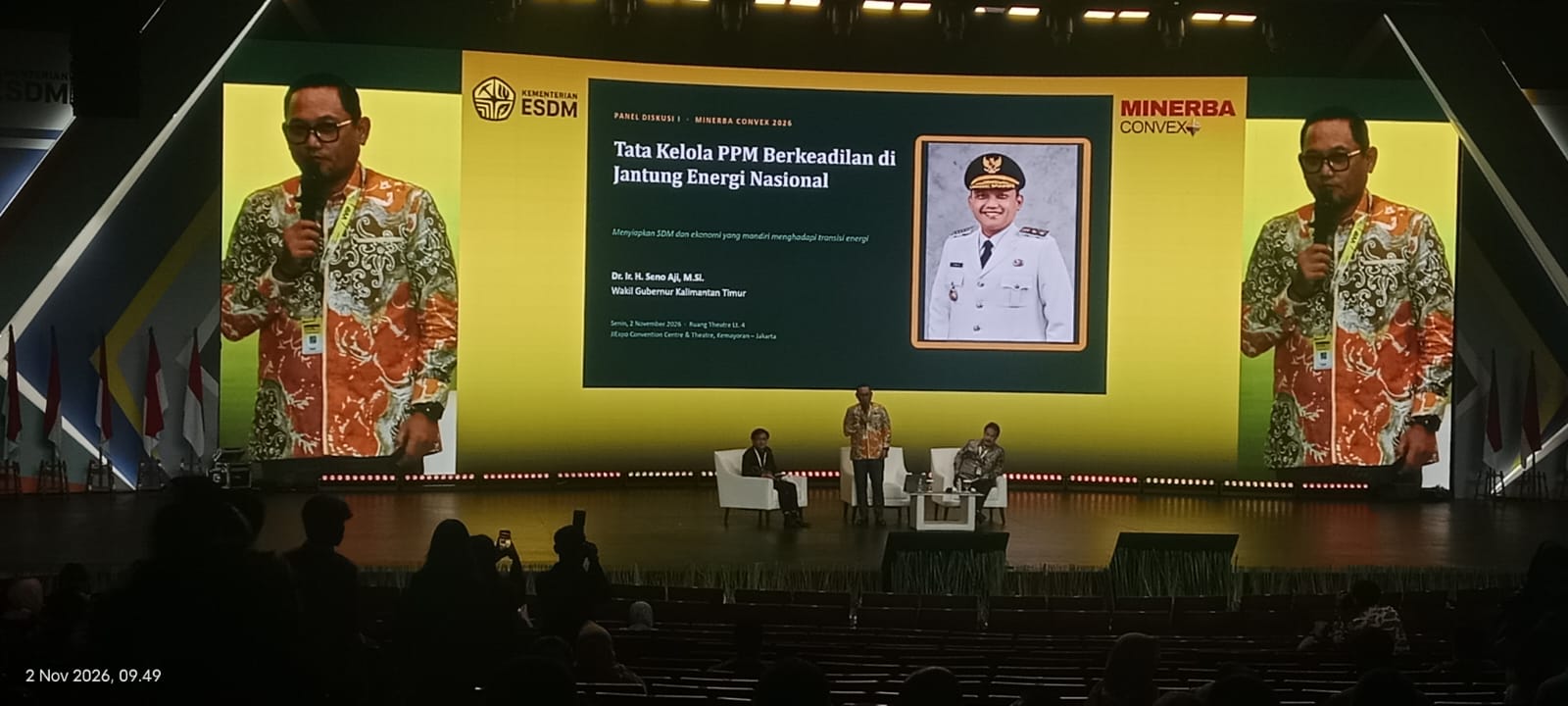
NIKEL.CO.ID, JAKARTA — East Kalimantan Deputy Governor Seno Aji has urged the mining sector to transform its Community Development and Empowerment (PPM) programmes so they do not stop at providing assistance while companies are operating. PPM should be directed towards long-term investment that builds communities’ economic self-reliance, including after mining activities end.
Seno said the mining industry should leave lasting benefits for people living around its operational areas. Mine closures must not deprive surrounding villages of their livelihoods or leave them as stagnant areas.
“Mining should sustain the surrounding communities, so that when a mine closes, people can continue living in the area around the mine,” Seno said in a presentation at the opening of Minerba Convex 2026, organised by the Ministry of Energy and Mineral Resources (ESDM) at JIExpo in Jakarta on Monday (2 November 2026).
He said PPM needed a change in focus, from charitable assistance to investment with a long-term impact. Developing human resources, improving education, healthcare services and strengthening local economic activity were all important parts of this transformation.
“There is one key message we want to convey: PPM must be repositioned, from charitable assistance to long-term investment,” he said.
Seno said PPM implementation had not yet been fully geared towards supporting regional development needs. Company programmes sometimes did not align with local government priorities, limiting the benefits communities received.
For example, a regional government might prioritise improving education from primary through to senior secondary school, while a company’s empowerment programme focused instead on another sector without adequate coordination.
“Imagine if a regional government’s vision is education. We want to improve all schools, from primary to junior and senior secondary. But then the PPM is directed towards agriculture. It makes no sense,” he said.
Seno therefore called on mining companies to work with regional governments when designing PPM programmes. Plans should be aligned with the Regional Medium-Term Development Plan (RPJMD) so that initiatives meet the needs of communities around mining sites.
He also stressed the need to strengthen healthcare, which he said had received insufficient attention in PPM implementation. Company support should reach healthcare facilities in villages near mining areas, including community health centres and other local health services.
Alongside education and healthcare, communities’ economic sustainability should be built by involving micro, small and medium-sized enterprises (MSMEs) and local cooperatives. Seno proposed that companies create greater opportunities for local businesses to participate in supply chains and economic activity around their operations.
“Please involve local MSMEs and cooperatives so they can prosper with the presence of companies in the area,” he said.
According to Seno, strengthening local economies should also reduce communities’ reliance on mining as their main source of income. While mines are still operating, residents should have opportunities to develop businesses and economic capabilities that can continue after production ends.
He proposed that PPM programmes have a blueprint with measurable indicators, including improvements in the Human Development Index (HDI), lower poverty rates, local employment, and stronger supply chains and spending involving local businesses.
Seno also called for regional governments to be involved from the planning stage through to evaluation. This would ensure that company programmes did not operate in isolation, but formed part of a coordinated and sustainable development effort in communities around mining areas.
He further proposed establishing a regional mineral and coal endowment fund. The scheme is intended to provide a long-term funding framework so that the economic benefits of mining can be passed on to future generations.
“This is a regulatory framework for an endowment fund, so that the benefits of mining can become an economic legacy for the future,” he said.
Seno stressed that transforming PPM required a shared commitment from the central government, regional governments and mining companies. Implementation should also be monitored and audited to ensure that benefits and the use of funds are accountable.
He said companies should not focus solely on maximising profits, but should also ensure that local communities receive tangible and lasting benefits. “Let companies thrive and maximise profits, but they must not forget local communities: develop and empower them in a measurable, targeted and audited way,” he concluded.
Source: jawawa.id (https://jawawa.id/newsitem/mining-community-development-must-build-economic-self-reliance-1793645419)
Originally published by nikel.co.id (https://nikel.co.id/2026/11/02/ppm-tambang-harus-mampu-membangun-kemandirian-ekonomi-masyarakat/), translated from Indonesian