
Minimal Invasive Cardiac Surgery: A Procedure for More Efficient Recovery
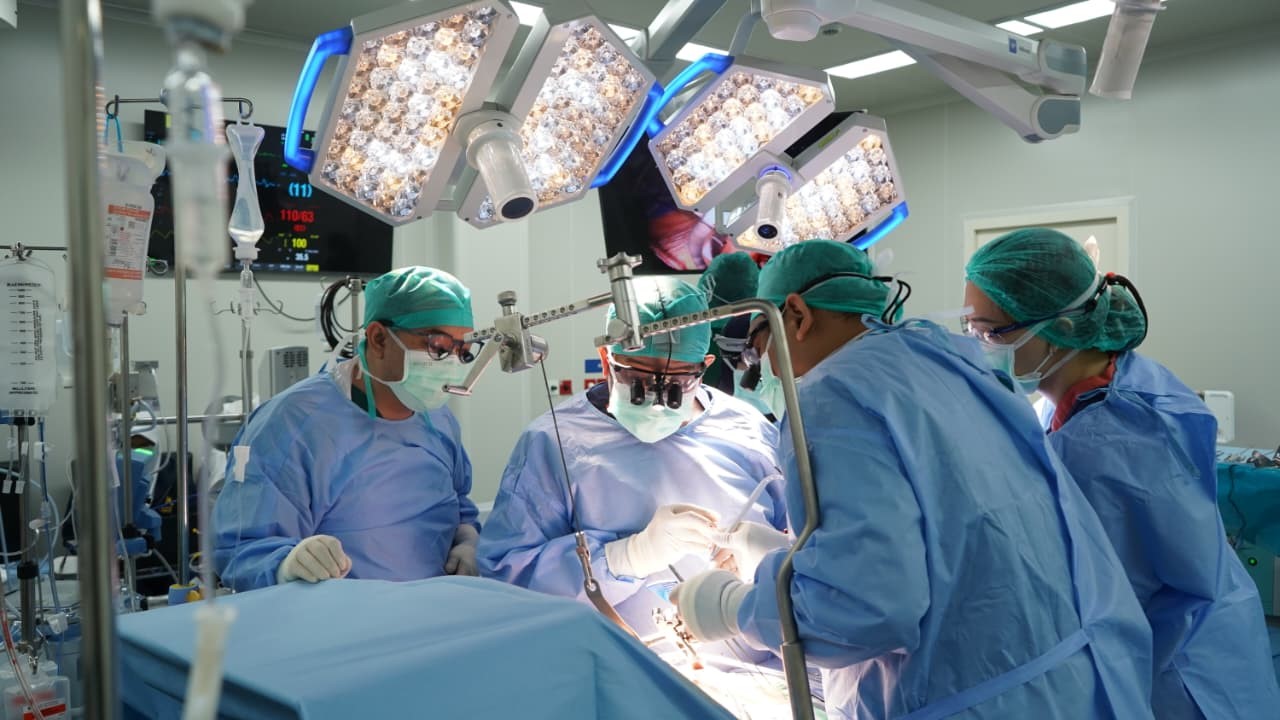
When the heart’s blood vessels become narrowed or blocked, the flow of blood and oxygen required by the heart muscle can be disrupted. If the condition is severe enough, Coronary Artery Bypass Grafting (CABG) can be one of the treatment options.
CABG is a procedure to create a new route or bypass for blood flow so that it can pass the blocked coronary blood vessels. With this route, the supply of blood and oxygen to the heart muscle can flow more effectively again.
However, bypass surgery does not always have to be performed using conventional methods. The procedure can be carried out using a Minimal Invasive Cardiac Surgery (MICS) approach through a smaller incision and without splitting the breastbone, so the healing period is relatively faster.
“In conventional surgery, the breastbone (sternum) that is split requires time to fuse and the healing process can last up to around 12 weeks. In MICS, the breastbone (sternum) remains intact. This means the patient does not need to undergo the sternal healing process, so recovery can be more efficient. In addition, the risk of complications related to the breastbone, including sternal infection, can also be lower,” said Dr Widya Trianita Suwatri, SpBTKV, Subsp. JD(K), a thoracic, cardiac, and vascular surgery specialist at Heartology Cardiovascular Hospital.
A number of studies also show promising results. A study comparing MICS CABG with conventional CABG through sternotomy in patients with multivessel disease showed that 95.5% of MICS CABG patients successfully achieved complete revascularisation, compared with 96.3% in sternotomy surgery.
This means that even though it is performed through a smaller incision, patients still receive complete revascularisation of all target blood vessels. In postoperative angiography evaluation performed before the patient was discharged, 96.2% of grafts in the MICS CABG group were reported to be good.
“To explain simply, these figures show that a smaller incision does not mean the bypass performed is less extensive or less optimal. The main goal of the operation is still achieved, namely creating a new route so that blood can pass the blocked coronary blood vessels and return to supply the heart muscle. Complete revascularisation in MICS CABG reached 95.5%, almost comparable to 96.3% in conventional surgery. So, what we minimise is the surgical incision, not the target blood vessels,” explained Dr dr Dudy Arman Hanafy, SpBTKV, SubspJD(K), MARS.
Another study in coronary heart disease patients with type II diabetes mellitus also showed that patients undergoing MICS CABG had a lower risk of intraoperative bleeding, with a median of 600 mL compared with 700 mL in conventional CABG.
This finding shows that the minimally invasive approach does not stop at wound size, but has the potential to reduce the need for blood transfusions and support the patient’s recovery process after surgery.
“For patients, these figures show that we still strive to achieve optimal bypass surgery outcomes with more minimal surgical trauma. When bleeding during surgery can be reduced and the breastbone (sternum) does not need to be split, the patient’s recovery process has the potential to be more efficient. Therefore, the success of the operation is not only about ensuring the bypass works well, but also helping the patient to recover and return to daily activities more quickly and comfortably,” added Dr dr Dudy Arman Hanafy, Sp.BTKV, Subsp.JD(K), MARS.