
Minimal Impact on People's Economy, MBG Must Be Evaluated Amid Geopolitical Turmoil
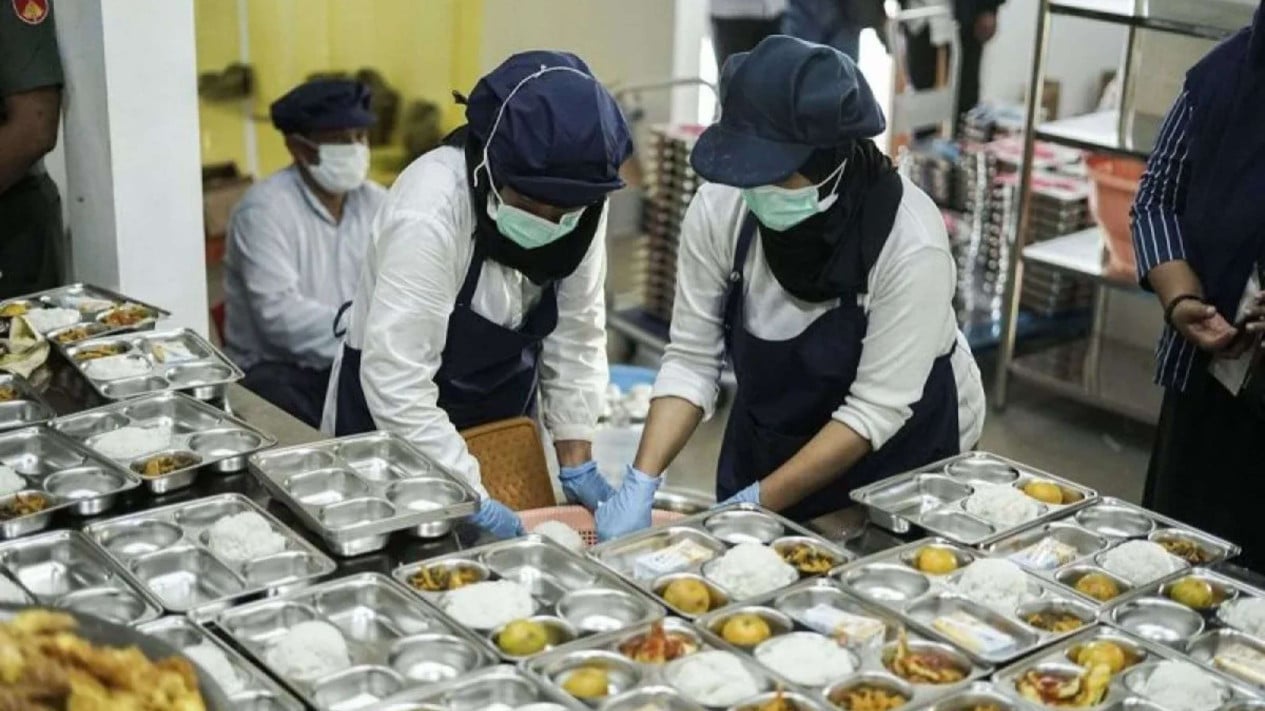
The Indonesian Student Executive Board Alliance (BEM-SI) has called on the government to carry out a major evaluation of the Free Nutritious Meals (MBG) programme. BEM-SI Coordinator Muzammil Ihsan stated that over the past nearly one year, the MBG programme has appeared to have no significant impact on improving the people’s economy. “The intention behind MBG is good. However, in practice, there are many irregularities. When the price is set at 15,000, it is pressured down. As a result, the impact on the people’s economy does not occur,” said Muzammil in his statement on Tuesday, 31 March 2026. Nevertheless, he emphasised that amid the current global geopolitical turmoil, the MBG programme should not be stopped and must continue to be implemented. This situation should instead become a momentum to improve the orientation of the economy and the management of national natural resources. “The President must take responsibility; once this programme (MBG) has been launched, it should not be cancelled. But there must be an evaluation when there is an economic downturn,” he said. According to him, if MBG is cancelled, there will be even greater losses felt by the public. “If the MBG programme stops (then) many jobs will be lost,” said Muzammil. In addition, he urged that the MBG programme going forward should involve more interest groups or stakeholders in the education sector. This is because much of the MBG programme’s budget comes from reallocations of the state budget (APBN) for the education sector. “MBG is related to education, but its impact is very minimal. People in the education sector are only objects. MBG kitchens should involve teachers and schools. Our focus is that the education sector must be considered in the circulation of the MBG programme,” he said. Meanwhile, amid the challenges of global geopolitical turmoil, the Adidaya Institute has instead asked the government to change the MBG programme model from a meal provision programme to an integrated food economy platform. Economist from the Adidaya Institute, Bramastyo B. Prastowo, assessed that the current meal provision model is no longer adequate because it is only oriented towards food distribution and budget absorption. “MBG is too simplistic if left only as a food distribution programme. MBG must be transformed into a national food economy engine,” he said.