
Minimal Economic Impact in Q1 and Middle East Geopolitics Cause Rupiah to Plunge Further to Rp 17,515
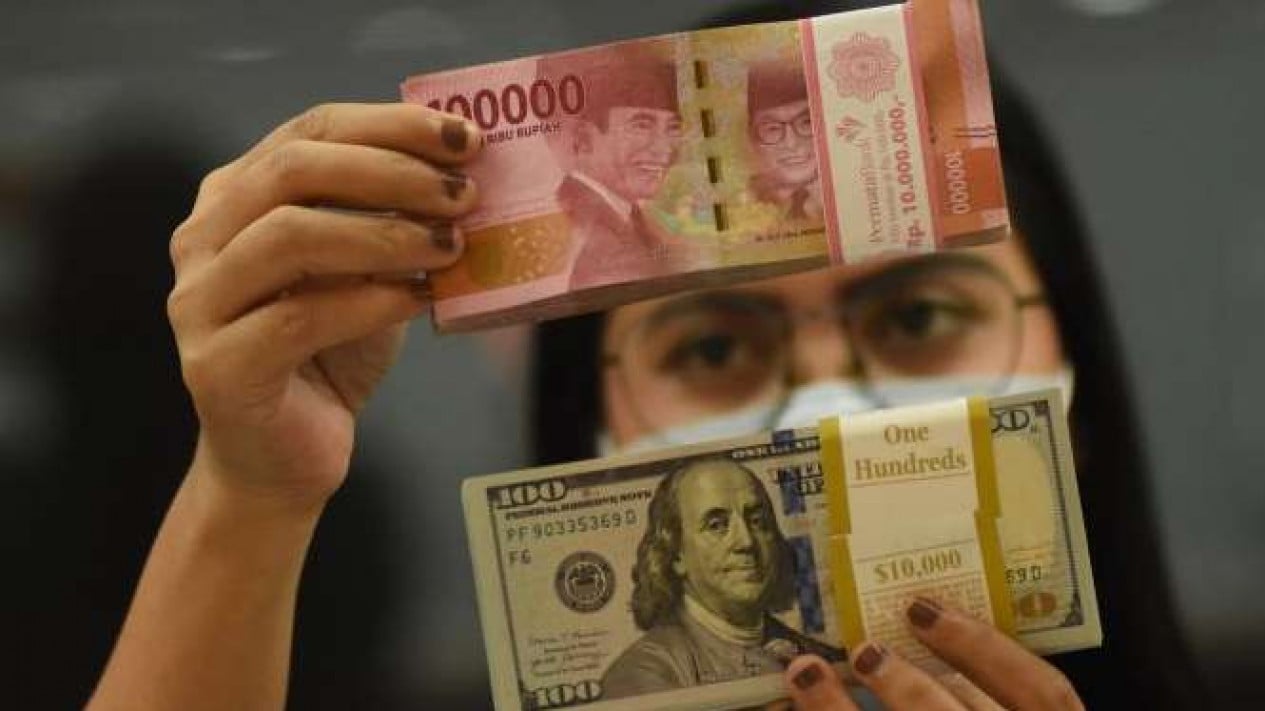
The rupiah exchange rate continued to weaken, opening at Rp 17,489 per US dollar before falling 75 points or 0.43 per cent in the morning trading session. Meanwhile, in the spot market on Tuesday, 12 May 2026, up to 10.56 WIB, the rupiah was traded at Rp 17,515 per US dollar, weakening by 101 points or 0.58 per cent from the previous level of Rp 17,414 per US dollar. Economic and money market observer Ibrahim Assuaibi predicts that the rupiah’s weakening to 17,500 per US dollar will continue to depreciate to Rp 17,550 per US dollar this week. An internal factor contributing to the rupiah’s weakening is the fact that national economic growth in the first quarter of 2026 at 5.61 per cent did not immediately improve the economy or strengthen the rupiah. “Why? The formation of first-quarter economic growth comes from household consumption and government spending. That is what makes (economic growth) have no impact on investment,” said Ibrahim to the media on Tuesday, 12 May 2026. “Even though investment experienced an increase, the percentage was very small,” he added. In addition, Ibrahim explained that the impact of the chaos in the Middle East, especially the turmoil in the Strait of Hormuz, has created its own threat to Indonesia. Because from January to April 2026, 40,000 workers in labour-intensive sectors such as textile manufacturing, garments, and electronics have already been laid off. “There is a high possibility that in the coming months, layoffs will increase significantly again,” said Ibrahim. Furthermore, Ibrahim noted that currently, most of the working population is in the non-formal sector, with nearly 87.74 million people recorded as informal workers. This means that most people in Indonesia are currently working as self-employed individuals. “What does that mean? It means that in Indonesia today, those working formally are very few compared to informal workers, numbering as many as 87.74 million workers,” he stated. From the external side, Ibrahim explained that the situation in the Middle East is heating up again after the United States (US) rejected a proposal made by Iran, mediated by Pakistan and Qatar. This rejection has created new tensions because, unexpectedly, small-scale military attacks are still occurring in the Strait of Hormuz.
Source: jawawa.id (https://jawawa.id/newsitem/minimal-economic-impact-in-q1-and-middle-east-geopolitics-cause-rupiah-to-plunge-further-to-rp-17-515-1778567923)
Originally published by VIVA.co.id (https://www.viva.co.id/bisnis/1898099-minimnya-dampak-ekonomi-kuartal-i-hingga-geopolitik-timteng-bikin-rupiah-makin-anjlok-ke-rp-17515), translated from Indonesian