
Miners Prohibited from Using Mining Services from Subsidiaries or Affiliates
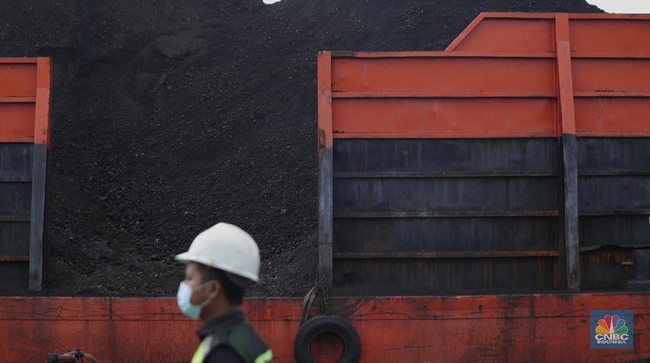
The Ministry of Energy and Mineral Resources (ESDM) has officially restricted holders of Mining Business Licences (IUP) from using their own subsidiaries or affiliated companies to execute mining projects. This move is intended to prevent operational monopolies and promote the involvement of regional entrepreneurs.
These provisions are set out in the Decree of the Minister of ESDM Number 3criptor365.K/MB.01/MEM.B/2026 regarding Technical Guidelines for the Implementation of Approval for the Use of Subsidiaries and/or Affiliates in the Mineral and Coal Mining Services Business. The regulation, signed by Minister of ESDM Bahlil Lahadalia, mandates that all mining permit holders must not arbitrarily use their own subsidiaries or affiliates without prioritising local contractors.
“Holders of Mining Business Licences or Special Mining Business Licences who use mining services in their business activities must use companies holding Mining Service Business Licences, with provisions that prioritise mining service companies within the regency/city areas surrounding the Mining Business Licence Area or Special Mining Business Licence Area,” stated the first clause of the regulation, as reported on Wednesday (30/09/2026).
The new regulation, established on 18 September 2026, limits the practice of monopolising mining service work by the business groups holding the mining licences. The government prohibits the involvement of subsidiaries or affiliates in the mineral and coal mining services sector, whether through direct share ownership or shared ultimate beneficial owners.
“Holders of Mining Business Licences or Special Mining Business Licences are prohibited from involving subsidiaries and/or affiliates in the mineral and coal mining services business without the Minister’s approval,” stated the second clause of the regulation.
Nevertheless, the government maintains an exception for the use of subsidiaries or affiliates through special approval from the Minister of ESDM for national strategic projects. Such exceptions may be granted if mining companies are undertaking government assignments, such as national strategic projects, the construction of refining facilities or smelters, and meeting domestic mineral and coal requirements.
The application process for the approval to use subsidiaries will be evaluated by the Ministry of ESDCO, with a decision timeframe of no more than 14 working days.
Director General of Mineral and Coal at the Ministry of ESDM, Tri Winarno, explained that the regulation essentially prohibits licence holders from managing all business activities independently through their subsidiaries. However, he noted that the government provides specific exceptions for projects meeting certain strategic criteria.
“The regulation does not permit affiliates, but the Ministerial Decree allows for affiliates under certain conditions,” Tri said. He added that criteria include meeting domestic needs, involvement in National Strategic Projects (PSN), and supporting downstreaming programmes.
The Indonesian Coal Mining Association (APBI) has responded to the new regulation regarding the requirement to use local contractors. Executive Director of APBI, Gita Mahyarani, stated that the association is still studying the new regulation and cannot comment extensively at this stage.
However, industry players are highlighting concerns regarding the implementation of this policy on the ground. She noted that appointing mining contractors involves complex aspects that do not solely focus on local status or corporate affiliation.
“We are still studying it. The concern is how this rule will be applied in the field,” she told CNBC Indonesia on Tuesday (29/09/2026). Gita explained that in mining operations, selecting contractor partners requires very strict and proven qualifications. Decisions must consider technical readiness, safety, equipment availability, financial capacity, productivity, and governance, risk, and compliance (GRC).
The issuance of this new policy is expected to provide regulatory clarity while maintaining the safety standards and technical capabilities of the national mining industry.