
Mineral Orchestration: A Path to High Value-Added Industrialisation
Indonesia’s comparative advantage as a mineral-rich nation is crucial capital for driving deeper downstream processing. Downstreaming should not stop at processing raw materials or semi-finished products, but must be expanded into the manufacturing sector to create greater added value.
In this context, MIND ID, as the holding company for Indonesia’s state-owned mining enterprises, has a strategic role in orchestrating upstream sector development. However, this effort also requires regulatory certainty, strengthening of the industrial ecosystem, and increased manufacturing capacity so that downstream products can be absorbed domestically and provide wider economic benefits.
Associate Principal of the Energy Shift Institute, Ahmad Zuhdi Dwi Kusuma, stated in Jakarta on Friday that downstream processing is not solely related to nickel mining, but is part of a broader industrialisation process. The development of downstream industries must be directed towards producing high value-added derivative products so that mining commodities do not stop as export-oriented semi-finished goods. The development of multi-metal-based industries needs to be carried out in an integrated and cross-sectoral manner. “We know nickel has provided a relatively successful example, at least in terms of incoming investment and output produced. However, to achieve meaningful downstream processing, we cannot rely solely on nickel, but must pursue a multi-metal approach,” he said.
Technically, nickel functions more as a complementary element in various metal products. In stainless steel, for instance, nickel content is only one component, while the majority of the material remains steel. “Therefore, if Indonesia wants to enter a deeper stage of industrialisation, development cannot rely solely on nickel. There needs to be simultaneous development of various metals, such as aluminium, copper, tin, and others,” Zuhdi added.
MIND ID’s members include PT Bukit Asam Tbk, PT Aneka Tambang Tbk, PT Freeport Indonesia, PT Indonesia Asahan Aluminium (Inalum), PT Timah Tbk, and PT Vale Indonesia Tbk, each with its own strengths. According to Zuhdi, the development of Indonesia’s metal industry needs to be more integrated, with a connecting point between the mining sector and the manufacturing industry. MIND ID has already played a role in coordinating the mining sector up to the processing stage at smelters, although the final products are still largely exported.
The development of downstream processing for all metals can be pursued through various approaches, such as using clean energy to lower emissions. In orchestrating this, the next step is to build connectivity between the mining sector and the manufacturing industry so that the resulting products have higher added value. “MIND ID can collaborate with institutions or industries that are truly on the manufacturing side, such as the automotive industry. So far, we have started with assembly and are slowly able to produce some components ourselves, albeit still supported by foreign direct investment. This condition can actually be leveraged if Indonesia has multi-metal-based downstream processing,” Zuhdi continued.
Ultimately, the main goal is to ensure that the manufacturing industry can absorb mining products and transform them into goods with much higher added value. This will be followed by job creation, environmental preservation, and other economic benefits. “Value creation is not just about volume, but also the quality of the added value produced,” he said.
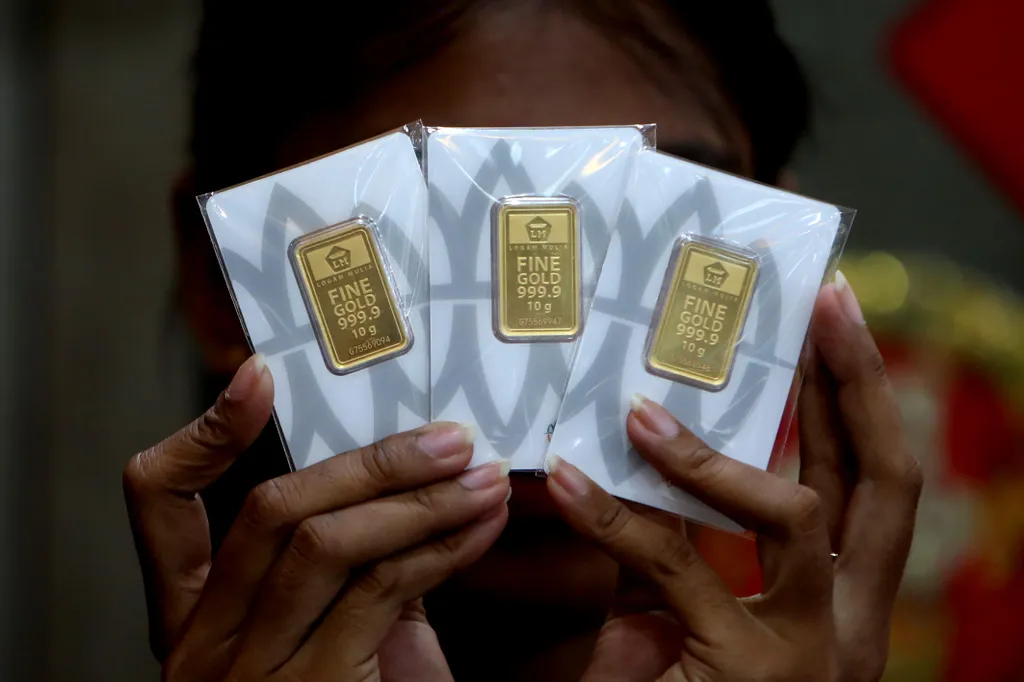
Effective orchestration must be realised through real collaboration along the mineral value chain. MIND ID serves as an example of implementing this approach through its role as a strategic driver of national downstream processing. The company achieved positive business performance, supported by synergy among holding members in building the mineral value chain. This includes collaboration between Antam and PT Freeport Indonesia in the national gold downstream supply chain, as well as synergy between Inalum, Antam, and Bukit Asam in bauxite-alumina-aluminium development. Similar synergy is also being strengthened for other strategic minerals, such as nickel, copper, and tin, including the formation of an electric vehicle battery ecosystem. In this ecosystem, Indonesia Battery Corporation will play a strategic role as the developer of a national battery project that integrates the mining industry with battery manufacturing. Consistency in executing this strategy has also boosted MIND ID’s financial performance. Throughout 2025, the company recorded revenue of Rp 159.46 trillion, growing 10 percent year-on-year. Net profit reached Rp 29.89 trillion, or 16 percent above the company’s target, while contributions to the state and stakeholders, including tax payments, were also realised.