
Mineral Downstreaming Investment Hits Rp98.3 Trillion, MIND ID Becomes Main Magnet
Mineral downstreaming is increasingly asserting its role as a driver of national investment. Throughout the first quarter of 2026, investment in the mineral downstreaming sector reached Rp98.3 trillion, representing approximately 67 per cent of the total national downstreaming investment of Rp147.5 trillion.
This substantial investment is supported by strategic commodities, most of which are within the portfolio of the MIND ID Group, ranging from nickel, copper, and tin to bauxite. This situation positions the state-owned mining industry holding company as one of the primary magnets for incoming investment into the national downstreaming sector.
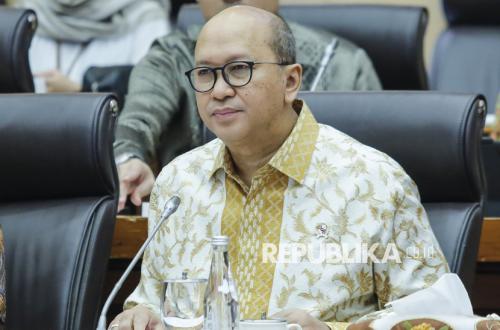
The Minister of Investment and Downstreaming/Head of BKPM, Rosan Roeslant, stated that the contribution of downstreaming to national investment continues to rise. In the first quarter of 2026, the realisation of downstreaming investment reached Rp147.5 trillion, equivalent to 29.6 per cent of the total national investment of Rp498.8 trillion.
“What we need to highlight is the natural resource downstreaming sector, whose contribution has increased to 30 per cent of the total investment realisation in the first quarter of 2026, amounting to Rp147.5 trillion,” said Rosan during a working meeting with Commission XII of the Indonesian House of Representatives (DPR RI) in Jakarta.
The mineral sector remains the largest contributor to national downstreaming investment. Out of the total mineral downstreaming investment of Rp98.3 trillion, nickel is the primary contributor with a value of Rp41.5 trillion, or approximately 42 per cent.
The next largest investments come from copper at Rp20.7 trillion, followed by iron and steel at Rp17 trillion, bauxite at Rp13.7 trillion, and tin at Rp2.5 trillion. The remainder comes from other commodities such as gold, silver, cobalt, manganese, coal, silica sand, and rare earth metals.
This composition shows that national downstreaming investment still relies on mineral commodities that are Indonesia’s primary strengths in the global market. Many of these commodities are also strategic assets managed by entities under the MIND ID Group.
ANTAM plays a vital role in developing the national nickel and bauxite value chains. In the copper sector, PT Freeport Indonesia is one of the key players supporting the downstreaming agenda, while PT Timah holds a strategic role in the development of the national tin industry.
The influx of large-scale investment into the mineral sector is also driving the growth of resource-based industrial zones in various regions. Rosan revealed that approximately 75 per cent of downstreaming investment is located outside of Java.
These investments are concentrated in several mineral-producing regions, particularly Central Sulawesi and North Maluku, which are developing into hubs for nickel processing industries and the electric vehicle battery ecosystem.
BKPM data shows that Central Sulawesi is the fifth largest investment destination nationally, with a value of Rp32.1 trillion, or 6.4 per cent of the total investment in the first quarter of 2026. North Maluku ranks sixth, with investment reaching Rp25.2 trillion, or 5 per cent of total national investment.
Both provinces serve as examples of how downstreaming can drive regional economic growth while strengthening the even distribution of investment outside of Java.
At the same time, the basic metal industry and metal goods subsector has become the largest national investment subsector, with a realisation of Rp69.4 trillion, or 14 per cent of total national investment. This value exceeds the mining sector investment, which was recorded at Rp51.9 trillion.
According to Rosan, the government will continue to expand the downstreaming programme to various strategic commodities to create greater added value for the national economy.
“We also continue to encourage the downstreaming of other strategic commodities that produce high-value-added products, such as semiconductors, bioethanol, coconut derivatives, and seaweed,” he said.
The government targets investment realisation for 2027 to reach Rp2,322 trillion, an increase of 13.8 per cent compared to the 2026 investment target of Rp2,041.3 trillion. To achieve this target, the mineral downstreaming sector is expected to remain one of the main engines of national investment growth.
The scale of investment flowing into nickel, copper, tin, and bauxite commodities demonstrates that downstreaming has evolved into a strategic instrument to attract capital, expand employment, and strengthen Indonesia’s position in the global industrial supply chain. Amidst this trend, the strategic assets managed by the MIND ID Group continue to be a major attraction for investors entering Indonesia’s mineral sector.
Source: jawawa.id (https://jawawa.id/newsitem/mineral-downstreaming-investment-hits-rp98-3-trillion-mind-id-becomes-main-magnet-1781672023)
Originally published by Republika (https://ekonomi.republika.co.id/berita/tgrcyt522/investasi-hilirisasi-mineral-tembus-rp983-triliun-mind-id-jadi-magnet-utama), translated from Indonesian