
Mineral Downstreaming Becomes a Key Pillar of Indonesia’s Economic Strategy
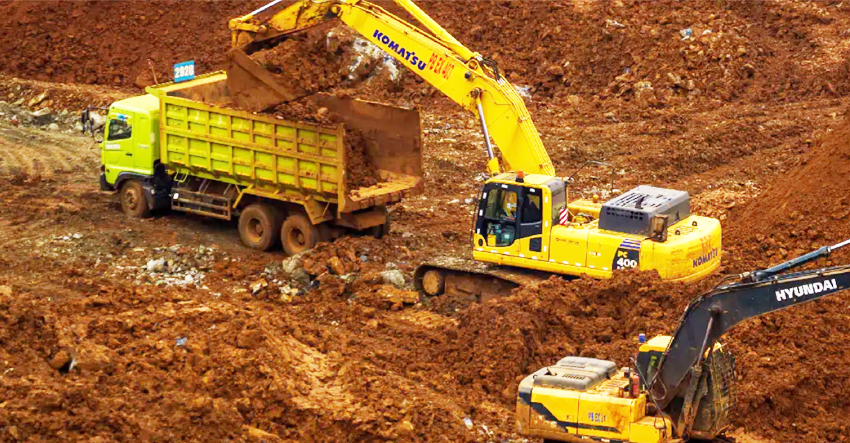
JAKARTA — Mineral downstreaming has become one of the main drivers of investment and a key government strategy to strengthen the foundations of the national industry. Through this policy, the government is seeking to reduce dependence on raw-material exports by developing integrated mineral value chains, from mining through to processing into higher-value products.
Investment and Downstreaming Minister and Head of the Investment Coordinating Board (BKPM) Rosan Perkasa Roeslani said mineral downstreaming was one of the sectors contributing to national investment. It could account for 30% of Indonesia’s total investment.
“We are home to some of the world’s most important reserves of nickel, bauxite, copper and other strategic critical minerals. Our goal is to build industry. That is why downstreaming remains a key pillar of our economic strategy,” Rosan said in a statement on Tuesday (20 October 2026).
He said three areas stood out, one of which was electrification, spanning the entire industrial chain, from mining and battery-cell production to electric vehicles.
“There are three prominent areas. First is electrification, from mines to battery cells to electric cars. Indonesia is now producing battery cells at two major plants, in partnership with Hyundai and with CATL and our state-owned company IBC, which began operating in stages in August,” he said.
Indonesia’s downstreaming policy is no longer limited to building mineral-processing facilities; it also focuses on developing an integrated industrial ecosystem. This ecosystem spans mining, processing, manufacturing, clean energy and technology, with the aim of maximising the added value of mineral resources.
One company developing these strategic mineral value chains is the MIND ID Group. Its downstreaming strategy covers key commodities including nickel, bauxite, alumina, aluminium and copper.
Under this strategy, mineral processing is not intended to stop at mining or the production of semi-finished materials. Instead, industrial development is being directed towards generating greater added value domestically. This also includes preparing the recycling industry as part of a commitment to building a circular industrial ecosystem in Indonesia.
For nickel, downstreaming is focused on supporting the development of a national electric-vehicle ecosystem. Through Indonesia Battery Corporation (IBC), MIND ID Group is also helping to build an electric-vehicle battery supply chain that connects domestic mineral resources with the battery industry and electric-vehicle manufacturing.
The value chain for bauxite and aluminium is also being strengthened through the development of integrated processing industries. This production chain covers the processing of bauxite into alumina and then aluminium, which can serve the needs of Indonesia’s manufacturing industry. Copper downstreaming, meanwhile, is intended to increase the use of strategic minerals in sectors including electricity, electronics and manufacturing. In this way, downstreaming is expected to broaden the use of mineral resources while strengthening the national industrial base.
Source: jawawa.id (https://jawawa.id/newsitem/mineral-downstreaming-becomes-a-key-pillar-of-indonesias-economic-strategy-1792587021)
Originally published by nikel.co.id (https://nikel.co.id/2026/10/21/hilirisasi-mineral-jadi-pilar-utama-strategi-ekonomi-indonesia/), translated from Indonesian