
Mineral Commodities Containing Radioactive Elements Can Be Exported, With Conditions
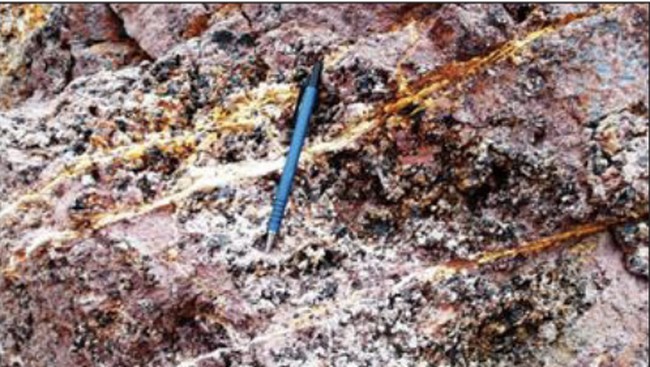
Jakarta - The Presidential Staff Office (KSP) has confirmed that mining products containing naturally occurring radioactive materials can still be exported. This decision also aligns with the allowance for the export of mineral commodities containing associated rare earth elements (LTJ).
Chief of Presidential Staff, Dudung Abdurachman, stated that the export of minerals containing these naturally occurring radioactive elements is permitted as long as the content is classified as Naturally Occurring Radioactive Material (NORM) and meets safety testing requirements. “Mining products containing naturally occurring radioactive elements can still be exported as long as the content is classified as NORM and meets safety testing and supervision requirements in accordance with regulations,” he said during a press conference in Jakarta on Monday (3/8/2026).
Dudung emphasised that the government is harmonising regulations regarding the trade of associated minerals containing LTJ and radioactive elements. “Relevant ministries and agencies will also accelerate the refinement of rules regarding LTJ and radioactive elements,” he stated. He noted that legal certainty is needed so that exporters, surveyors, and Customs officials have a common understanding during the commodity shipping process.
The policy provides certainty for PT Sucofindo (Persero) to issue 85 surveyor reports that were previously delayed due to indications of associated mineral content. This delay had previously hampered the departure of over 100 export vessels, which was assessed to potentially impact national economic stability. “Yesterday there were about more than a hundred ships that were delayed. But now they can proceed,” Dudung explained.
The majority of the delayed export reports came from companies exporting alumina, copper cathodes, and nickel derivative products. He stressed that the export ban only applies if LTJ is the main product, not when it is an associated element in very small quantities. “So, the export of LTJ as a main product is indeed prohibited. It does not automatically apply to LTJ content found as an associated element in main mining products and their derivatives,” he added.
Currently, the government is formulating content thresholds for each element and laboratory testing methods through cross-ministerial coordination. This effort is being carried out in parallel with the revision of a Ministerial Regulation to ensure that business actors are not disadvantaged by differing interpretations of the rules. He confirmed that business actors have been allowed to resume exporting their mineral commodities, which had been held up for the past two weeks. “Yesterday, they could already export again. Starting yesterday, if I’m not mistaken, it was already possible. In parallel, the Ministerial Regulation is being revised,” he concluded.
Previously, mining sector business actors had urged the government to immediately reopen the export of mineral products held up due to inspections for rare earth elements (LTJ) content. The lack of regulatory certainty regarding LTJ as an associated mineral had hampered exports and caused significant losses for the industry. Chairman of the Indonesian Nickel Industry Forum (FINI), Arif Perdanakusumah, said the LTJ issue has recently become a major concern for business actors because the governance rules are still unclear. “We see that this LTJ issue has been very intensively discussed by business actors recently. This is part of governance, but there is still little regulation, so it ends up being confusing,” Arif said at a CNBC Indonesia Coffee Morning event on Thursday (30/7/2026).
He then revealed that the nickel industry is currently facing multiple pressures, ranging from the impact of Middle East geopolitics triggering spikes in energy and logistics costs, to domestic issues such as royalty tariff increases, limited ore supply due to work plan and budget (RKAB) approvals, and policies related to LTJ. “We are bleeding. From the Middle East geopolitics, we are tremendously impacted. The geopolitics happening there directly impacts the industry’s cost of production,” he said. According to Arif, around 80 per cent of Indonesia’s sulphur needs in 2025 originate from the Middle East. When the price of sulphur soared from around US$220 per tonne to US$1,200 per tonne, the production costs for the nickel industry rose sharply. “In 2025, approximately 6 million tonnes of sulphur were imported, and the majority is needed by the nickel industry. So, besides the scarcity, the price has risen tremendously. In 2025, the price of sulphur was US$220 per tonne; recently, the price was already US$1,200 per tonne and has already consumed 50 per cent of costs,” he said. Meanwhile, the policy regarding LTJ has also disrupted export activities. According to the latest data, around 120 ships were unable to sail because they could not leave the port.