
Mineral and Coal Production Controlled, Non-Tax State Revenue Deemed Optimal
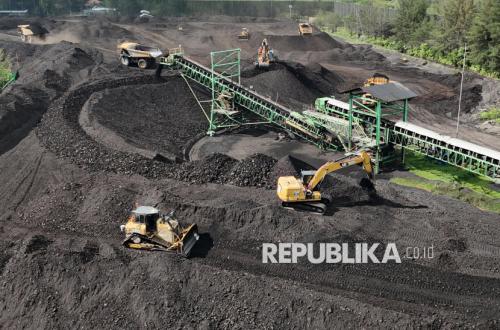
Coal production, which has experienced a decline, is being viewed alongside rising state revenue as evidence of a changing approach to managing the mineral and coal (minerba) sector. Abdul Rahman Farisi, Secretary of Economic Policy for the Golkar Party, noted that the increase in non-tax state revenue (PNBP) should be viewed in conjunction with more measured production policies and commodity price conditions.
According to data from the Ministry of Energy and Mineral Resources (ESDM), coal PNBP reached Rp66 trillion as of 31 August 2026, up from Rp59 trillion during the same period the previous year. Concurrently, average monthly coal production fell from approximately 68 million tonnes in 2025 to around 60 million tonnes in 2026.
Nickel PNBP also rose to Rp21 trillion as of 31 August 2026, compared to Rp10 trillion during the same period last year. Meanwhile, total revenue from all mining sub-sectors reached Rp108 trillion by the end of August 2026.
Abdul Rahman stated that this increase in revenue is a key indicator for assessing mineral and coal governance. “I appreciate the Minister of Energy and Mineral Resources’ governance policies in the mineral, coal, and oil and gas sectors. One indicator is visible through state revenue, including mineral and coal PNBP, which shows an increase,” Abdul Rahman said on Thursday (17/9/2026).
According to Abdul Rahman, the restructuring of the Work Plan and Budget (RKAB) can serve as an instrument to maintain the balance between production, market demand, state revenue, and the sustainability of natural resource reserves. He argued that the success of natural resource management should not be measured solely by production volume.
“Production has undergone adjustments, yet state revenue has actually increased. This demonstrates that the success of natural resource management should not only be measured by how much is mined, but also by the economic value received by the state,” he said.
Fluctuations in commodity prices are also a factor to consider regarding the rise in revenue. The Indonesian Mining Experts Association (Perhapi) noted that global coal prices between January and August 2026 ranged from US$122 to US$150 per tonne, higher than the US$100 to US$120 range during the same period in 2025.
Abdul Rahman noted that this price increase is not solely influenced by Indonesia’s production policies. International market demand, geopolitical conditions, exchange rates, and global energy price developments also influence commodity price movements.
“Therefore, the government must be able to read market momentum. Indonesia is one of the world’s important suppliers of mineral and coal commodities. Production does not need to be pursued at maximum capacity if, through more measured governance, we can optimise revenue while simultaneously protecting natural resource reserves,” he said.
According to Abdul Rahman, the decline in production should also be linked to the importance of preserving natural resource reserves for the long term. He believes that mineral and coal management must consider current development needs alongside the availability of resources for future generations.
“More measured mineral and coal production reflects wisdom in managing natural resources and a form of intergenerational justice. Future generations also need the mineral and coal reserves present in Indonesia’s earth for their own development needs,” he said.
He believes this approach needs to shift the orientation of natural resource management from merely chasing production volumes towards maximising the economic value received by the state.
“If we extract fewer resources but the economic benefit to the state increases, we achieve two benefits at once: more optimal state revenue and better-preserved natural resource reserves for future generations,” he added.
Abdul Rahman stated that this policy direction must continue to align with national interests, transparency, downstreaming, domestic needs, and environmental sustainability. He emphasised that mineral and coal management must ensure that mined resources provide optimal economic value without neglecting the availability of reserves.
“Indonesia should not merely chase volume and act as a large-scale commodity supplier. Natural resources must be managed with the principle of added value: measured production, optimal state revenue, guaranteed domestic needs, progressing downstreaming, and maintained reserves. This is the direction of governance that needs to be continuously strengthened,” he concluded.
Source: jawawa.id (https://jawawa.id/newsitem/mineral-and-coal-production-controlled-non-tax-state-revenue-deemed-optimal-1789661761)
Originally published by Republika (https://ekonomi.republika.co.id/berita/tlijap416/produksi-minerba-dikendalikan-pnbp-dinilai-tetap-optimal), translated from Indonesian