
MIND ID Strengthens Group Decarbonisation Through Emission Cuts and Renewable Energy Boost
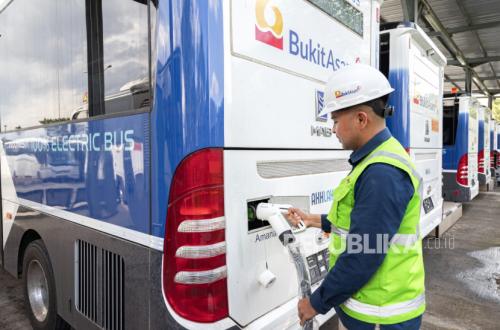
The Indonesian mining industry holding company, MIND ID, continues to strengthen decarbonisation amidst the acceleration of the national mineral downstreaming programme. This effort is being undertaken through the reduction of greenhouse gas (GHG) emissions, the utilisation of new and renewable energy (NRE), and the transition towards low-carbon energy to ensure that industrial expansion remains aligned with sustainability targets.
Amidst the development of various downstreaming projects, MIND ID targets a 15.5 per cent reduction in GHG emissions, equivalent to approximately 2 million tonnes of carbon dioxide equivalent (CO2e) by 2030. This target is set despite the group’s operational energy needs being projected to nearly double within the next five years.
According to company projections, the energy requirements of the MIND ID Group will increase from approximately 149,000 terajoules (TJ) in 2026 to 293,000 TJ by 2030, representing an increase of over 90 per cent. Without intervention, GHG emissions are expected to rise from 6,100 kilotonnes of CO2e to 12,900 kilotonnes of CO2e during the same period.
This increase in energy demand coincides with the development of several strategic projects, ranging from new mines in Kalimantan, the construction of an electric vehicle battery ecosystem in East Halmahera, the expansion of aluminium facilities, the construction of smelters, to undersea mining projects.
To suppress emissions, MIND ID is executing several decarbonisation strategies. The first step involves transitioning to low-carbon fuels, starting with increasing the use of biodiesel from B3_5 to B40, replacing High Speed Diesel (HSD) with liquefied natural gas (LNG), and optimising the use of electricity from the PLN national grid.
At the operational level, PT Bukit Asam Tbk has utilised Bucket Wheel Excavators (BWE) for coal handling at the Tanjung Enim Mining Unit to replace fossil-fuel-powered dump trucks. This initiative reduces emissions by approximately 5,200 tonnes of CO2e per year.
Meanwhile, PT Indonesia Asahan Aluminium has performed a fuel conversion from HSD to LNG at its baking plant, resulting in an emission reduction of approximately 3,700 tonnes of CO2e while simultaneously increasing operational energy efficiency.
Strengthening decarbonisation is also being achieved through the use of new and renewable energy. PT Indonesia Chemical Alumina is implementing biomass co-firing using palm kernel shells as a partial replacement for coal, which is capable of reducing emissions by approximately 560 tonnes of CO2e.
Furthermore, PT Timah Tbk operates a solar power plant (PLTS) with a capacity of 300 kilowatt peak (kWp), which can reduce emissions by approximately 300 tonnes of CO2e while increasing the use of clean energy within the industrial area.
In addition to direct emission reductions, MIND ID is developing carbon offset schemes through nature-based solutions, the utilisation of Renewable Energy Certificates (REC), and participation in carbon trading.
A member of Commission XII of the House of Representatives (DPR), Eddy Soeparno, noted that MIND ID’s decarbonisation efforts deserve appreciation as they are being carried out comprehensively, from strengthening the renewable energy mix to improving operational efficiency.
“What MIND ID is doing today, in my opinion, deserves appreciation in three contexts: mitigation, adaptation, and efficiency. They are increasing the renewable energy mix as part of mitigation. Additionally, they are driving efficiency,” said Eddy, as quoted on Thursday (2/7/2026).
According to Eddy, increasing the use of renewable energy is a vital step, particularly for the mineral processing and refining industry, which possesses high emission levels.
“I believe it is very positive. The utilisation of NRE is crucial, especially in sectors with high carbon emission levels, such as smelters. Smelters fall into the category of hard-to-abate industries, which are industries that indeed find it difficult to lower their carbon emissions,” he added.