
MIND ID strengthens downstream processing to retain economic value in Indonesia
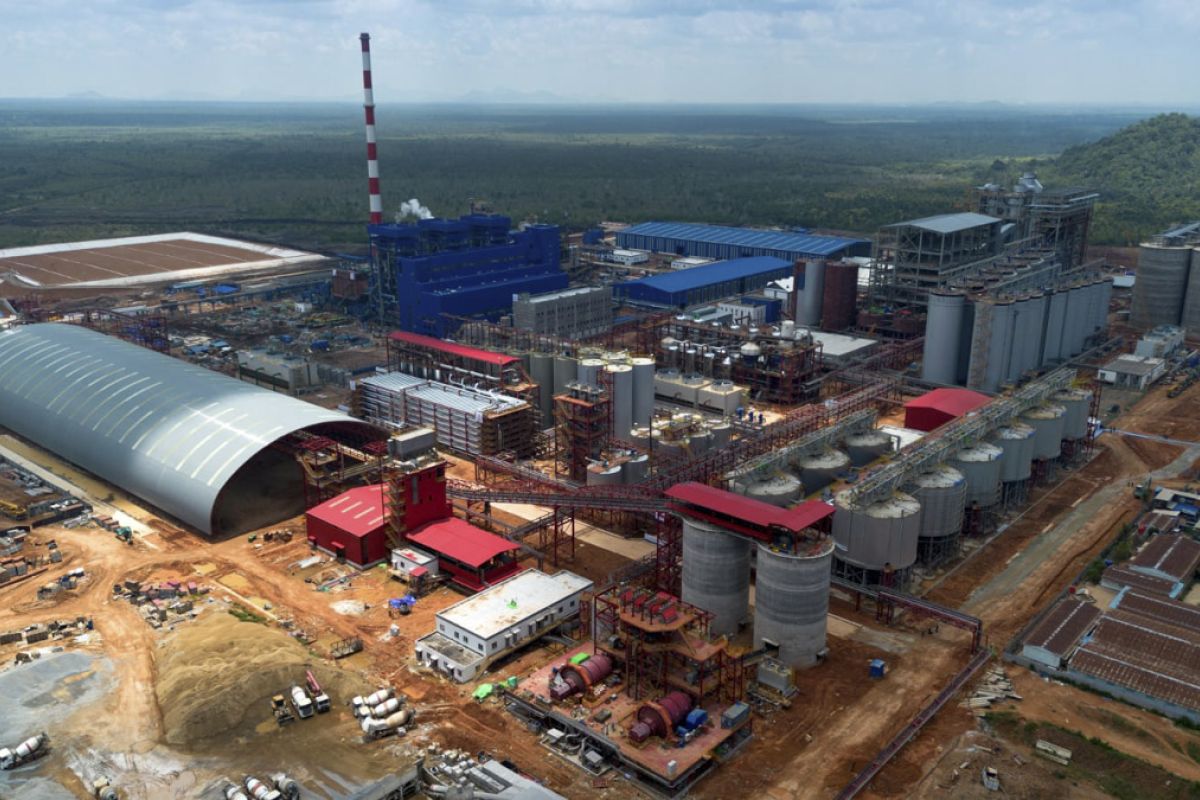
With policy support from all stakeholders, MIND ID is committed to strengthening its contribution to the country through increasingly integrated natural-resource management, expanded downstream processing and the development of value-added industries.
Jakarta (ANTARA) – MIND ID, Indonesia’s mining industry holding company, is strengthening downstream processing and industrialisation to retain more economic value in the country.
MIND ID President Director Maroef Sjamsoeddin stressed the importance of policy support and cooperation among all stakeholders in increasing the mining industry’s contribution to the country.
“With policy support from all stakeholders, MIND ID is committed to strengthening its contribution to the country through increasingly integrated natural-resource management, expanded downstream processing and the development of value-added industries,” Maroef said in a statement issued in Jakarta on Wednesday.
For years, exports of commodities such as nickel, bauxite, copper, tin, gold and coal have generated revenue for the state. However, much of the associated value added, industrial employment and technological expertise has continued to develop overseas.
Downstream processing is therefore a strategic step towards changing this pattern by retaining more economic value in Indonesia, while broadening the benefits of natural wealth for the economy and the public.
As Indonesia’s mining industry holding company, MIND ID carries out the state’s mandate to manage mineral and coal reserves optimally and sustainably. It does so by strengthening downstream processing and industrialisation, and developing industries intended to improve Indonesia’s position in strategic mineral markets.
The strategy is reflected in the development of several industrial zones. In West Kalimantan, a bauxite, alumina and aluminium ecosystem is being developed to strengthen the supply of raw materials for the national manufacturing industry.
Meanwhile, copper and precious-metal processing facilities in Gresik are intended to meet the needs of industries including cables, electronics, energy and defence. The development of electric-vehicle battery supply chains in Maluku and Karawang is also part of efforts to strengthen Indonesia’s position in the global electric-vehicle industry.
This industrial development is proceeding alongside a cross-sector strategic investment agenda involving Danantara. The programme covers 26 strategic projects, with total investment of around Rp225 trillion and projected employment of 37,833 people.
As an arm of the state, MIND ID is developing a mining industry roadmap covering alumina facilities, copper and precious-metal refining, and battery cells, as well as nickel HPAL projects, aluminium smelters and coal processing into methanol and dimethyl ether (DME).
Downstream processing offers opportunities to increase value through the development of derivative products. For bauxite, processing into alumina, aluminium and aluminium wire is associated with value multipliers of 10, 80 and 90 times respectively.
For nickel, the value multiplier reaches 10 times for nickel pig iron and ferronickel, 19 times for stainless steel and 45 times for electric-vehicle batteries. For copper, the multipliers are 9.5 times for copper concentrate, 10 times for copper cathodes and 25 times for copper wire.
Other commodities also have potential for value growth. For gold, the value multiplier is nine times for anode slime and 10 times for gold bars. For tin, it is 2.3 times for tin concentrate, 5.7 times for tin ingots, and six times for solder and tin chemicals.
Investment and Downstream Processing Minister and Danantara chief executive Rosan Roeslani said processing state assets would act as a catalyst for national economic transformation, delivering the greatest possible benefit to the Indonesian people.