
MIND ID Group Cuts Solid Waste by 11.3% Through Circular Economy Initiatives
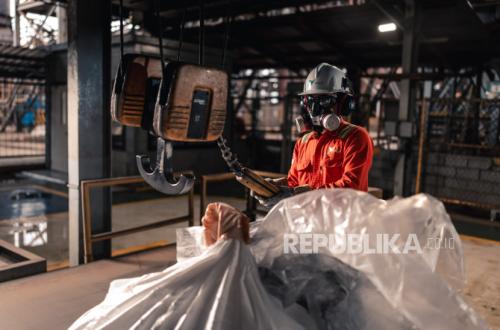
The MIND ID Group is strengthening the implementation of a circular economy within the mining sector by utilising more than 1 million tonnes of waste material through reuse, recycling, and recovery schemes. This move has also driven an 11.3 per cent year-on-year reduction in solid waste generation. According to the MIND ID 2025 Sustainability Report, 82,876 tonnes of hazardous and toxic (B3) solid waste and 946,733 tonnes of non-B3 solid waste were successfully diverted from landfills through various repurposing schemes.
The total amount of waste material utilised throughout the year reached over 1 million tonnes. As the utilisation of such materials increased, the total solid waste generation of the MIND ID Group fell from 1,306,835.91 tonnes in 2024 to 1,159,049.16 tonnes in 2025. This decline occurred across two main categories: B3 solid waste dropped from 270,478.08 tonnes to 208,441.10 tonnes, while non-B3 solid waste decreased from 1,036,357.83 tonnes to 950,608.06 tonnes.
This downward trend in waste generation has been consistent over the last three years, with total solid waste recorded at 1,396,034.05 tonnes in 2023, 1,306,835.91 tonnes in 2024, and 1,159,049.16 tonnes in 2025. In addition to solid waste, the report noted that B3 liquid waste generation totalled 4,764.52 tonnes during 2025, comprising used oil, waste oil, oil sludge, used diesel, used grease, and expired chemicals.
Eko Adhi Setiawan, an Energy Expert from the Department of Energy Systems Engineering at the Faculty of Engineering, University of Indonesia, stated that this achievement demonstrates the importance of structured waste management systems as a foundation for good mining practices. “In my view, a structured waste management system is crucial because, in mining operations, the greatest risk is not just the volume of waste, but the breakdown of the management chain,” Eko said on Tuesday.
According to Eko, every type of waste—whether B3, liquid waste, process residue, sludge, used oil, chemical packaging, or large volumes of non-B3 waste—requires a clear management trail. This trail must cover the origin of the waste, storage, transport, processing, and final disposal evidence. He noted that the approach to utilising waste material shows that management is no longer solely focused on final disposal but is beginning to optimise materials that still hold economic value.
“Waste is not only viewed as a toxicity issue that must be secured, but also as a material stream that needs to be classified,” he added. Eko argued that classification is necessary to distinguish between materials that must be strictly controlled, those that can be reused, recycled, or recovered, and those that must be disposed of as a last resort.
This approach is reflected in various initiatives undertaken by MIND ID member entities to support circular economy practices. For instance, PT Aneka Tambang Tbk (ANTAM) utilises nickel slag from pyrometallurgy processes as construction material for Pomalaa Beton (POTON) for use in road bases, yard bases, and internal construction. ANTAM also processes gold tailings into Green Fine Aggregate (GFA), while Fly Ash and Bottom Ash (FABA) is used alongside nickel slag as raw material for Pomalaa Beton.
At PT Indonesia Asahan Aluminium (INALUM), internal scrap from the aluminium smelting and casting process is reused to support production, thereby reducing the need for primary raw materials such as alumina. Meanwhile, PT TIMAH Tbk manages Processing Residues (SHP) using physical methods such as gravity, magnetism, and electrical conductivity. In 2025, SHP reached 1,506.06 tonnes of ore and still holds potential for recovery through further processing (tin gain). “Some waste materials can have value as secondary raw materials, material substitutes, or inputs for other industries,” Eko concluded.