
Milk, Rice, Pork: The World's 40 Most Valuable Food Commodities
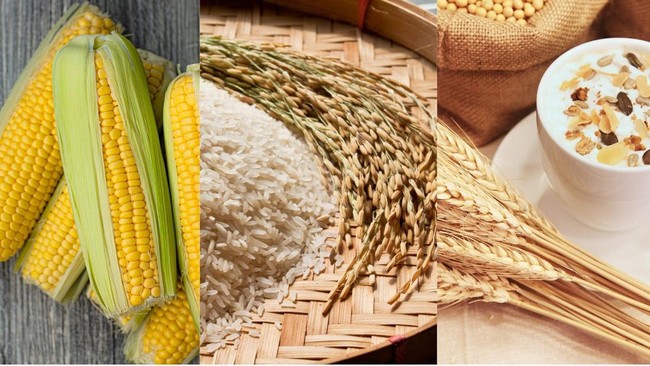
Milk, not rice, wheat, or maize, was the food commodity with the largest production value globally in 2024. The total production value of the 40 commodities on the list reached approximately US$4.3 trillion in 2024, with milk contributing US$379 billion, slightly ahead of rice at US$362 billion. The data comes from the Food and Agriculture Organization (FAO) and covers various commodities, from staple foods, meat, and dairy products to fruits, vegetables, and plantation crops.
Milk topped the list with a production value of US$379 billion, though its lead over the next two commodities was not substantial. Rice was in second place at US$362 billion, while pig meat reached US$355 billion, meaning there was only a US$24 billion gap between milk and pig meat. Combined, the top three commodities generated a production value of around US$1.1 trillion, illustrating the enormous economic scale behind everyday foods. Milk’s position is also tied to its vast global production, with the FAO recording world milk output at 985 million tonnes in 2024, of which cows contributed roughly 81%.
Animal products dominated the top of the list. Five meat commodities—pig, cattle, chicken, sheep, and goat—had a combined production value of approximately US$1.02 trillion. Pig meat was the largest at US$355 billion, followed by beef at US$306 billion and chicken at US$264 billion, while sheep and goat meat were valued at US$61 billion and US$38 billion respectively. Global meat production reached 374 million tonnes in 2024, an increase of about 7 million tonnes from the previous year. Livestock production is projected to grow by 15% through to 2035, expected to outpace crop production as rising incomes in middle-income countries drive a dietary shift towards more animal products.
Beyond animal products and staples, several fruits and vegetables also hold significant economic scale. Tomatoes were the highest-value agricultural crop in this group, reaching US$136 billion and placing tenth overall. Potatoes followed at US$122 billion, then apples at US$112 billion, grapes at US$97 billion, and sweet potatoes at US$89 billion. The total value of all agricultural crops on the list exceeded US$1.2 trillion. Unlike meat, which is concentrated in a few major commodities, the production value in this group is spread across a wider variety of foods.
Not all high-value commodities are those typically dominating discussions on global trade or food security. Mushrooms, for instance, ranked 22nd with a production value of US$61 billion, higher than bananas at US$52 billion. Watermelons generated US$53 billion, while cassava and chillies reached US$52 billion and US$51 billion respectively. Further down the list were onions at US$48 billion and mangoes at US$45 billion.
Although not the largest, rice remains a giant commodity. With a production value of US$362 billion, it was the second most valuable food commodity on the list. Maize and wheat also placed in the top five, with production values of US$270 billion and US$209 billion respectively. Soybeans ranked ninth at US$142 billion, while palm oil, a commodity closely linked to Indonesia, was 20th with a production value of US$67 billion. From milk to spinach, the 40 commodities on the list generated around US$4.3 trillion in 2024, demonstrating the breadth of the global food economy where value is not only concentrated in staples but also spread across meat, dairy, fruits, vegetables, and crops like mushrooms, watermelons, cassava, and chillies.