
Military Cites Potential for 'Pesta Babi' Film to Disrupt Papua's Stability, Is it Banned?
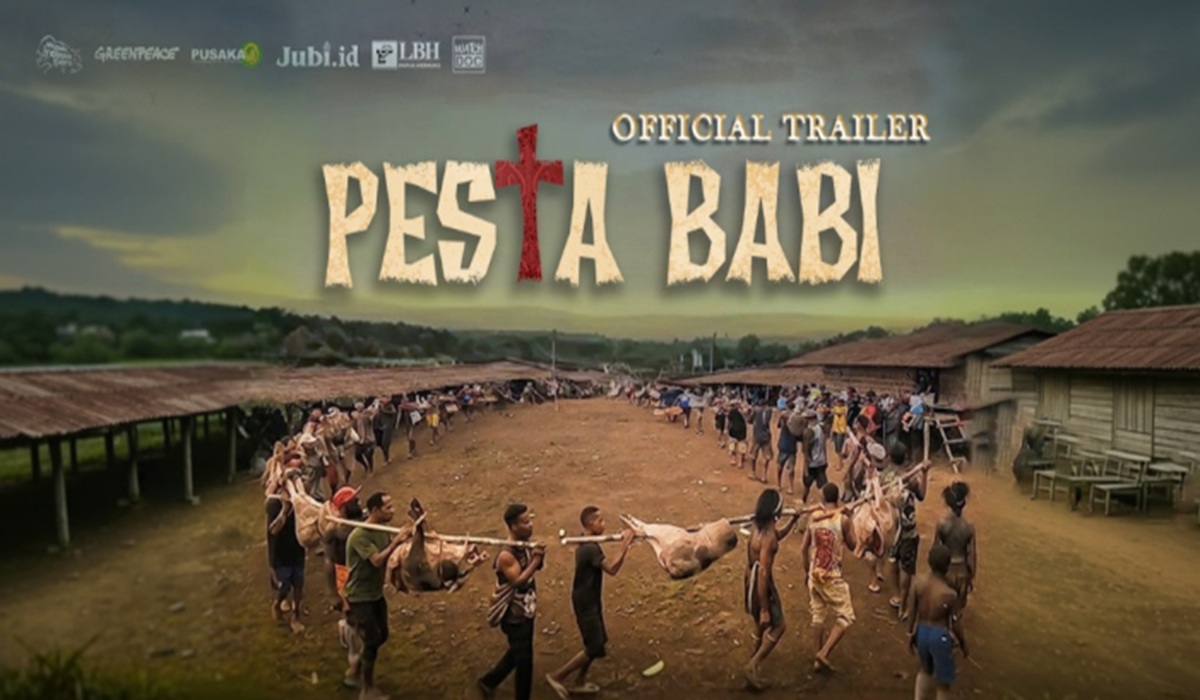
The Indonesian military (TNI) has expressed concerns that the film ‘Pesta Babi’ contains content that could potentially disrupt social harmony and stability in Papua. The TNI highlighted that the film’s portrayal could lead to misperceptions among the public, potentially exacerbating security and public order in the region.
The TNI emphasized that maintaining harmony in Papua requires cooperation from all parties, including those in the creative industry. Narratives that are biased or not based on in-depth cultural research are feared to be counterproductive to government programs aimed at improving the welfare and health of the people of Papua.
“It is important that one-sided narratives do not pit the community against government programs that are actually aimed at improving welfare in Papua,” said the Head of Information for the Cenderawasih Military Command, quoted on Saturday (May 16).
He added that any film shown widely to the public must comply with Law Number 33 of 2009 concerning Film, including having a Certificate of Film Censorship (SLS) from the Film Censorship Board (LSF).
“Content that does not go through the official censorship process is feared to carry unbalanced narratives and potentially trigger distorted information among the public,” said Tri.
According to him, the security situation in Papua must be maintained. He said that the Cenderawasih Military Command requested that discussions about issues in Papua be conducted through constructive forums.
“We urge that discussion forums be shifted to more educational, legal, and constructive forums,” said Tri.
Separately, the Coordinating Minister for Legal, Human Rights, Immigration, and Prison Affairs, Yusril Ihza Mahendra, stated that the government has not issued any directives or bans on screenings of the film ‘Pesta Babi: Colonialism in Our Time’.
He explained that the cancellation of screenings of the film ‘Pesta Babi’ in several areas, namely at the University of Mataram and the UIN Mataram, West Nusa Tenggara (NTB), was due to administrative issues.
“Meanwhile, in other campuses in Bandung and Sukabumi, the screenings of the film went smoothly without any obstacles,” said Yusril, Thursday (May 14).
The film ‘Pesta Babi: Colonialism in Our Time’ is an investigative documentary resulting from a collaboration between directors Dandhy Dwi Laksono and Cypri Paju Dale.
The film ‘Pesta Babi’ was intentionally not released through commercial cinemas or mainstream streaming services. However, there are two ways the public can watch the film.
According to information from the organizers, Ekspedisi Indonesia Baru, the public can watch the film ‘Pesta Babi’ by joining group screenings organized by organizations or community groups in various regions.
The other way is to organize independent screenings. Those interested are required to register their events through the official form on the Ekspedisi Indonesia Baru website. (Medcom.id/H-4)
He regretted the reduction of the problem, which places the state solely as a force of plunder and the indigenous community only as victims without agency.
Minister Yusril Ihza Mahendra affirmed that the government does not prohibit screenings of the film ‘Pesta Babi’. He said that criticism of the PSN Papua Selatan is normal.
The National Commission on Human Rights (Komnas HAM) highlighted the polemic of the prohibition and disbandment of screenings of the film ‘Pesta Babi’ in several areas.