
Military Analyst: Papua Development, OPM, and the Sense of Justice
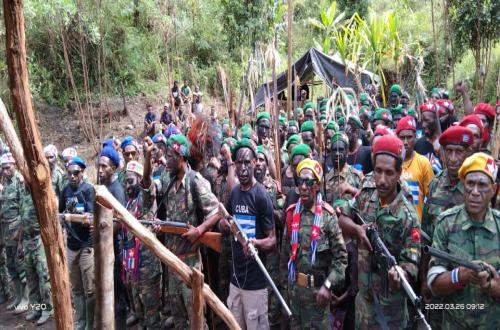
The land of Papua remains one of the most complex arenas for political narrative competition in Indonesia. On one hand, the state continues to demonstrate its commitment through large-scale development, the allocation of trillions of rupiah, infrastructure projects, healthcare, education, and the strengthening of the local economy. On the other hand, negative narratives regarding Papua continue to grow, often ignoring the fact that the state is working hard to develop Indonesia’s easternmost region. “From a national political perspective, Papua is not merely a security issue, but also a matter of state legitimacy,” said Selamat Ginting, a political and military analyst from the National University (Unas), in Jakarta on Monday.
Therefore, he stated, the development of Papua is essentially part of a national geopolitical strategy to ensure the state’s presence is felt by the community in border areas and strategic regions. Government data shows that from 2002 to 2026, the total Special Autonomy (Otsus) funds and Additional Infrastructure Funds (DTI) allocated to Papua reached approximately Rp 192.55 trillion. “That figure demonstrates that Papua receives significant attention from the state,” said Ginturing. According to him, these funds are used for education, health, community economic empowerment, and the construction of infrastructure such as roads, bridges, airports, electricity, telecommunications, sanitation, and providing access to remote areas.
He explained that the presence of the Trans-Papua Highway, the construction of pioneer airports, healthcare facilities, schools, and community empowerment programmes serve as concrete evidence that the state has not abandoned Papua. Through the Papua Special Autonomy Law, Ginting continued, the government has provided extensive space for the Papuan people to determine the direction of their own regional development. “Special Autonomy is not just an administrative instrument, but also a form of the state’s political reconciliation regarding various historical development inequalities,” said Ginting. He acknowledged that for many years, criticism had emerged that Indonesia’s development was too Java-centric. As a result, eastern Indonesia, including Papua, experienced development delays compared to other regions. “The government is now attempting to correct that inequality by accelerating massive development in Papua,” Ginting explained.
Nevertheless, he noted that the issue in Papua is not as simple as physical development alone. The greatest challenges lie in security factors and local political governance. On the ground, Papua’s development faces serious threats from the Free Papua Movement (OPM). The tragedy involving the murder of PT Istaka Karya workers in Nduga in 2018 serves as one of the most brutal examples. Dozens of Trans-Papua highway project workers were killed while the state was working to end the isolation of Papua’s hinterlands. “Attacks on teachers, healthcare workers, the burning of schools and churches, as well as the murder of civilian pilots, show that the Papua conflict has targeted symbols of public service and humanity,” said Ginting.