
Military Academy in 'Sekolah Rakyat': Blurring the Lines Between Civil and Military Spheres
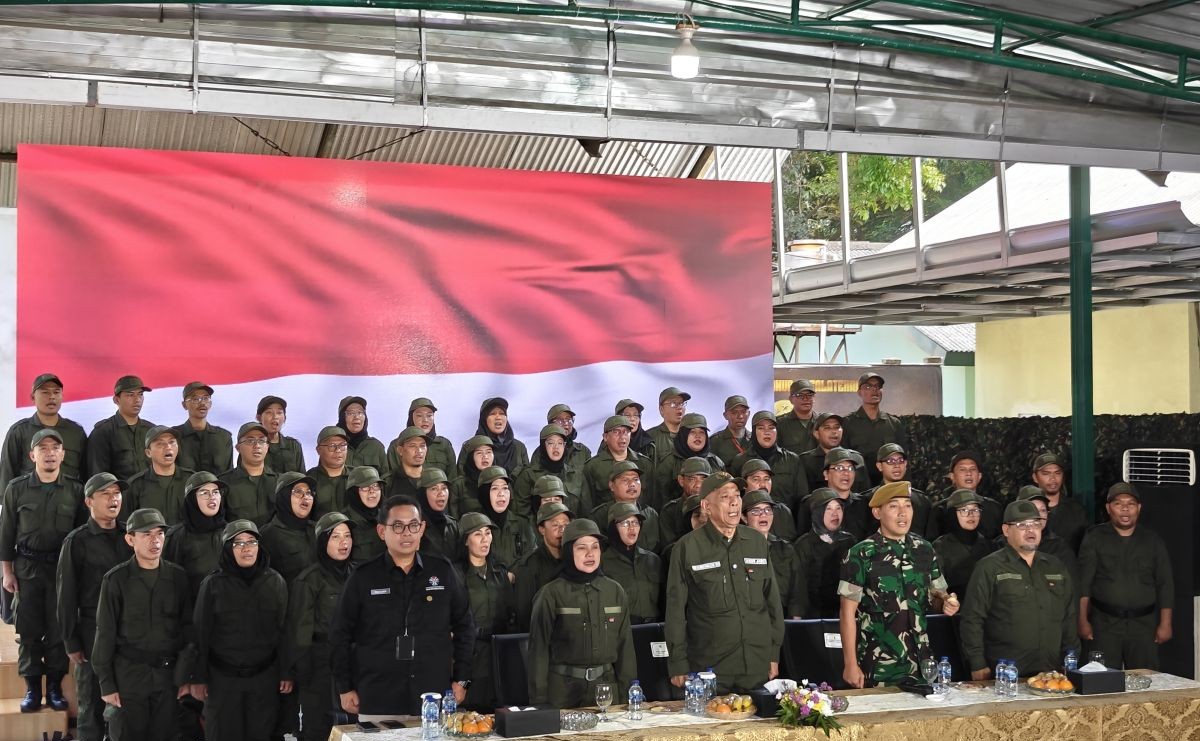
The Chairman of the National Institute for Equality (Setara Institute), Hendardi, has criticised the involvement of Military Academy (Akmil) cadets in training participants of the ‘Sekolah Rakyat’ (People’s School) programme. According to him, this policy is not merely a technical educational issue, but reflects the increasingly blurred boundary between the civilian and military spheres. He believes the government is instead turning military institutions into instruments for shaping the character of citizens, rather than strengthening civilian institutions that hold the mandate in the field of education.
“The assignment of Military Academy (Akmil) cadets to train participants of Sekolah Rakyat is not just a technical matter of educational implementation. This policy reflects a state viewpoint that is increasingly blurring the boundaries between the civilian and military spheres,” said Hendardi on Tuesday (30/6).
He noted that Sekolah Rakyat is an educational affirmative programme aimed at communities facing social and economic vulnerabilities. Therefore, the required approach should be based on pedagogical, humanistic, and participatory aspects, involving educators, psychologists, social workers, and community empowerment elements.
He emphasised that there is no objective need that justifies the involvement of military cadets in this process. While discipline is important in education, it cannot be equated with militarism. Similarly, nationalism and patriotism, according to him, are not the monopoly of military institutions.
“Discipline is indeed an important value in education, but discipline is not identical to militarism. The nationalism and patriotism of citizens are important. However, both do not belong solely to the military,” he stated.
Hendardi believes that in a professional democracy, military professionalism is measured by the ability to perform national defence functions effectively, not by the extent of involvement in various civilian affairs. Therefore, the main issue in the involvement of Akmil cadets lies not in the capacity of the individual cadets, but in the direction of state policy that continues to expand the military’s role beyond its constitutional mandate. He believes this practice has the potential to build a perception that every civilian problem requires a military solution.
He also highlighted a growing trend: the placement of the TNI (Indonesian National Armed Forces) in various civilian sectors, ranging from food security, cooperative management, and public services to education, legitimised by the TNI Law. If this trend continues, Hendardi warned, the boundary between defence functions and civilian functions—established through security sector reform—will become increasingly blurred. He even assessed that the state is normalising the multi-functionality of the TNI, rather than just its ‘dwifungintsi’ (dual function).
Hendardi reminded that one of the most important mandates of the 1998 Reformation was to end the practice of ABRI’s dual function, which for decades placed the military as a dominant actor in political and governmental life. The Reformation, he continued, gave birth to the principles of civilian supremacy, TNI professionalism, and a clear separation between defence functions and civilian governance. Therefore, he views any policy that reopens space for military intervention in the civilian realm as a regression of the Reformation.
He also rejected the notion that the involvement of Akmil cadets could be justified simply because it is temporary or aims to instil discipline and nationalism.
“The government must not argue that the involvement of Akmil cadets is only temporary or merely to instil discipline and nationalism. The main issue is not the duration of the assignment, but the legitimacy of using military institutions to perform functions that are entirely within the civilian domain,” said Hendardi.
He believes that strengthening the character of students should be the responsibility of professional civilian educational institutions using approaches that respect human dignity, freedom of thought, and democratic values. The government is also encouraged to strengthen the capacity of teachers, lecturers, social workers, psychologists, and educational personnel, rather than handing over civilian functions to military institutions. He emphasised that the failure to strengthen civilian institutions cannot be used as an excuse to expand the military’s role in non-defence affairs.
“Civilian supremacy is not a concept that can be negotiated according to the political whims of the rulers. It is the foundation of a democratic state that was fought for with great sacrifice during the 1998 Reformation. Therefore, the government must stop every practice that normalises military involvement in civilian affairs, including the administration of Sekolah Rakyat,” concluded Hendardi.
Source: jawawa.id (https://jawawa.id/newsitem/military-academy-in-sekolah-rakyat-blurring-the-lines-between-civil-and-military-spheres-1782809448)
Originally published by Media Indonesia (https://mediaindonesia.com/politik-dan-hukum/905815/akmil-di-sekolah-rakyat-batas-sipil-dan-militer-kian-kabur), translated from Indonesian