
Mikael Saragih: The Challenge for Law Graduates Is No Longer a Shortage of Laws
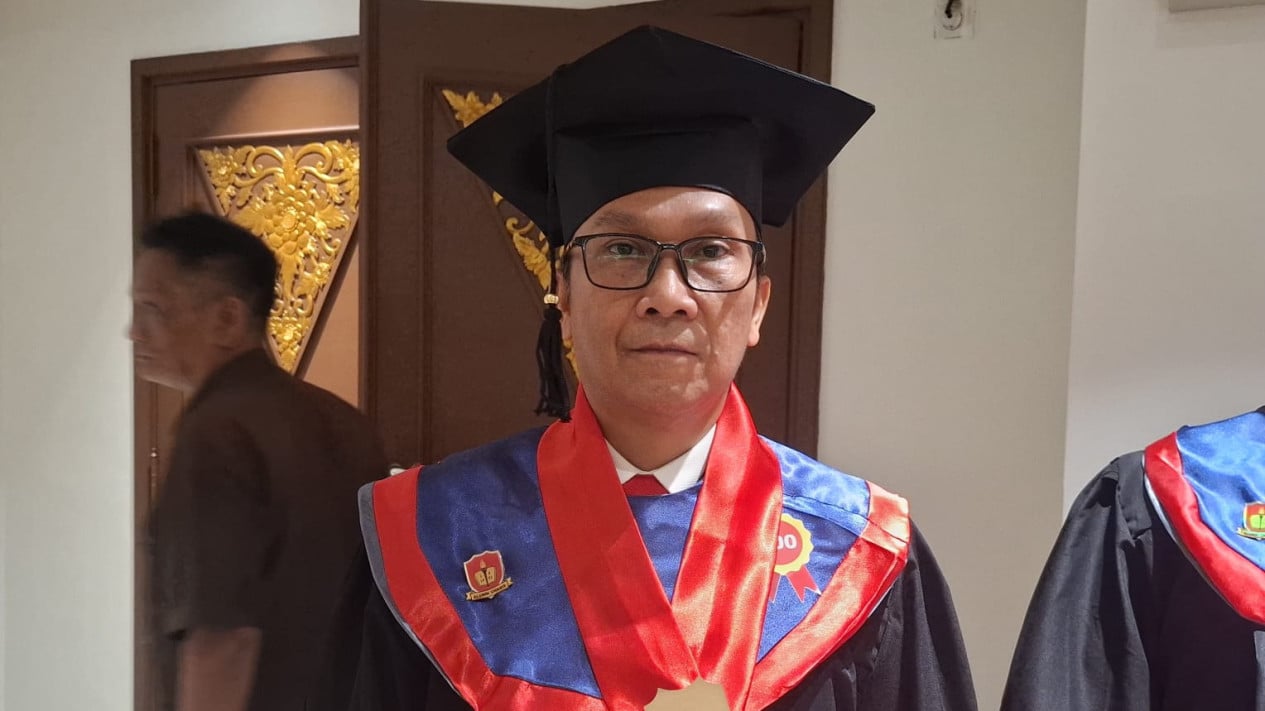
Legal academic and recent Master of Laws graduate from Krisnadwipayana University, Nasib Mikael Saragih, believes Indonesia faces unique challenges, particularly in the legal field. Mikael stressed that the challenge for postgraduate law scholars is no longer a shortage of laws. According to him, Indonesia has undergone many changes, but its laws have not kept up. “We used to think Indonesia’s legal challenge was a ‘lack of laws’. Now I realise the challenge is actually too much change, but the law is lagging behind,” Mikael said after the graduation ceremony for law masters at Krisnadwipayana University at the Jakarta International Convention Centre (JICC), Jakarta, on Thursday, 23 July 2026. Mikael outlined four key legal challenges facing Indonesia in the future. First, digitalisation has become part of the legal landscape in Indonesia. However, he noted that the security of citizens’ data is at stake. “The law is chasing technology. Now everything is online. Marriage registrations, court hearings, buying and selling, even peer-to-peer lending uses AI. The problem is, when cases of online fraud, data leaks, or AI misuse occur, the articles we use are still revolving around the ITE Law and the national Criminal Code,” he said. Mikael stated that Indonesia needs flexible laws. “Going forward, we need laws that are flexible but still have guardrails. Innovation must not be killed by regulation, but the people must not become victims because there are no rules,” he added. Secondly, Mikael hopes that digitalisation does not create new gaps within society. He noted that many elderly citizens do not understand digitalisation. “The government is enthusiastic about digitalising services, which is good. But try asking the traders in the market, the small business owners, or friends with disabilities. Can they access it? Do they understand it? If laws and services can only be accessed by urban residents, young people, and those who are tech-savvy, then we are creating a new injustice,” Mikael said. Thirdly, the evolving systems in the workplace are also impacting society. He cited examples of systems already being used to assess employee performance. “This is what will give us a headache in the next five years. An HR department could terminate an employee based on an app’s score. A bank could reject a loan because a system deems the applicant unworthy. If the system turns out to be discriminatory or the data is wrong, who do we sue? The mobile phone? Indonesia does not yet have clear rules regarding AI and algorithms,” Mikael stated.