
Middle Powers Strategise Ahead of US-China Meeting
Last week, German and Chinese business leaders met for an economic dialogue in Dusseldorf, Germany. While the discussions focused on trade and investment between China and Europe, the ongoing US-China rivalry remained a central theme of the forum.
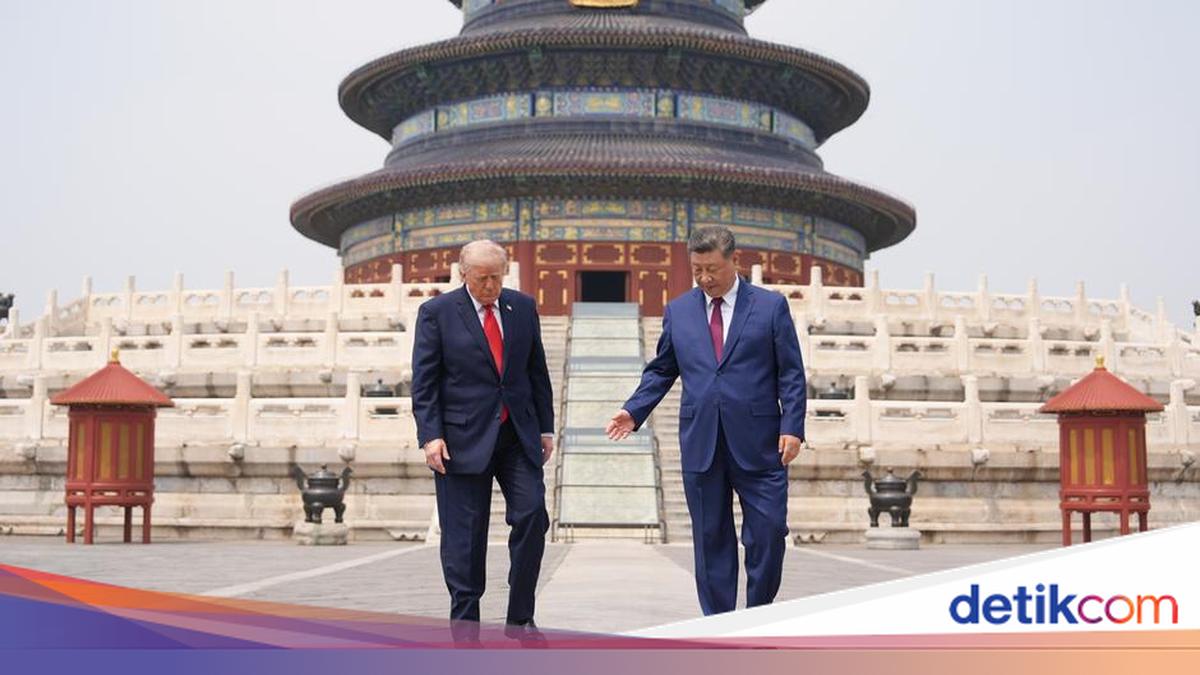
With Chinese President Xi Jinping and US President Donald Trump scheduled to meet in Washington this week, there are hopes that the meeting could bring progress in easing the trade war initiated by Trump. Their previous meeting in Beijing last May failed to produce concrete results.
“The assumption in Beijing, which also forms the basis of their actions, is that China and the US will continue to restrict each other’s movements for some time to come,” said Mikko Huotari, director of the Berlin-based China research institute MERICS, during a policy presentation last week.
“Xi does not actually need a breakthrough in Washington. He needs more time. Washington does as well. Therefore, we are in a situation of strategic deadlock, which I believe is the most accurate description of the current condition.”
A deal with China could benefit Trump’s Republican Party ahead of the US mid-term elections in November. However, the likelihood of reaching an agreement remains uncertain.
“We will discuss everything,” Trump said regarding Xi’s visit to the White House.
Opportunities for AI Cooperation
The US-China rivalry spans various sectors, with the competition in artificial intelligence (AI) being one of the most decisive. The US government has banned the export of high-performance chips to China, while Beijing has responded by limiting the export of rare earth elements essential for semiconductor production.
Amid concerns regarding the dangers of unregulated AI, there is hope that Xi and Trump will discuss safety guardrails during their meeting. Xi has called for international cooperation in AI development, whereas Trump views AI regulation as a threat to the US’s position as a global leader in the field.
Following a meeting with Chinese Vice Premier He Lifeng in New York on Sunday, US Treasury Secretary Scott Bessent stated that officials from both nations discussed establishing a “notification mechanism” to share information regarding AI-related security incidents.
Europe Shaken by Chinese Industry
For Europe, both China and the US are becoming increasingly difficult partners to navigate. In her annual State of the European Union address last week, European Commission President Ursula von der Leyen stated that a second wave of “China shock” is already occurring in Europe.
The term “China shock” originally referred to the impact of China’s entry into the World Trade Organisation (WTO) approximately 25 years ago, when low-cost “Made in China” products began flooding global markets. This second wave is now driven by China’s technological advancements in industries such as batteries, green energy, and transportation.
“This is visible within our societies and across various factories throughout the European Union. It is causing deindustrialisation in Europe’s key industrial regions. This is not sustainable,” von der Leyen said in her speech.
The European Union aims for a rapid transition to electric vehicles and seeks to drastically reduce CO2 emissions from road transport. Simultaneously, the EU is calling for additional tariffs on cheap Chinese electric vehicles, arguing that lower prices and significant government subsidies give China an unfair advantage. China denies having an unfair advantage, while German automakers Volkswagen (VW) and BMW oppose the tariffs, fearing Chinese retaliatory measures could reduce their revenues.
A Chinese participant in the Dusseldorf economic dialogue, speaking to DW on condition of anonymity, noted that China’s domestic consumption is unable to absorb its industrial output.
“The Chinese economy is weak. Companies are worried about their business continuity and desperately need access to overseas markets,” said the executive, who previously worked for a Chinese state-owned enterprise branch in Europe.
Trump Pressures Europe on China, Trade, and Security
“Amid the increasing strategic competition between the US and China, the US continues to urge its allies to tighten restrictions on China regarding technology, supply chains, and security,” said Yang Xiepu, director of the China-Germany Cooperation Centre at the Chinese Academy of Social Sciences (CASS).
At the same time, Trump frequently threatens Europe with tariffs and creates instability within the NATO alliance. When the European Union offered “associate member” status to Canada last week, Trump suggested the possibility of imposing new sanctions. Canadian Prime Minister Mark Carney expressed interest in the offer, but Trump dismissed the idea as “ridiculous.”
“If I assess it as a hostile act, I will impose very high tariffs or halt trade on various goods with Europe,” Trump stated, without specifying which aspect of the EU-Canada relationship he deemed “hostile.”
Examining Canada’s ‘Middle’ Approach
Facing volatility caused by the tariff policies and harsh rhetoric of the Trump administration, Canadian Prime Minister Mark Carney is openly seeking to expand Canada’s partnerships on the global stage.
“We know the old order will not return. We do not need to mourn it,” he stated at the World Economic Forum (WEF) in Davos in January 2026. At that time, US allies were shaken by Trump’s threats to annex Greenland from Denmark.
According to Carney, while superpowers “can still function independently for now,” middle powers must strengthen cooperation. “When we only negotiate bilaterally with those who dominate, our position…”
Source: jawawa.id (https://jawawa.id/newsitem/middle-powers-strategise-ahead-of-us-china-meeting-1790078169)
Originally published by detikcom (https://news.detik.com/dw/d-8674436/jelang-pertemuan-as-china-negara-kekuatan-tengah-bersiasat), translated from Indonesian