
Middle East War Intensifies as US and Iran Engage in Unrestrained Attacks
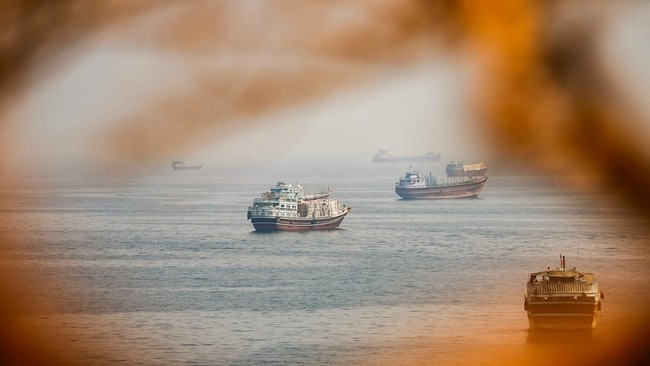
The war in the Middle East is heating up again after Iran and the United States (US) launched mutual attacks against tanker ships around the Strait of Hormulus. This escalation represents one of the largest waves of attacks on shipping since the conflict began six months ago.
On Wednesday (9/9/2026), Iran claimed to have attacked 10 ships around the Strait of Hormuz in retaliation after Washington destroyed five Iranian oil tankers. The attacks resulted in at least one sailor being killed and another reported missing.
This situation has immediately shaken global energy markets. Brent crude oil futures have breached US$100 per barrel for the first time since July, while disruptions to shipping traffic threaten a route that previously carried approximately one-fifth of the world’s oil supply.
The US stated that its military operations were conducted after the Iranian Revolutionary Guard twice targeted US warships using ballistic missiles. US Secretary of State Marco Rubio stated that Washington has established a policy to attack Iranian tankers in response whenever US warships are threatened.
“Iran continues to attempt to attack US naval vessels, and every time they do or attempt to do so, they will lose tankers,” Rubio told reporters in Colombia, as quoted by Reuters on Thursday (10/9/2026).
Amidst this escalation, US President Donald Trump accused Tehran of attempting to influence the US midterm elections in November, which will determine the future of Republican control in Congress.
“I believe the war will end soon after the general election because they will not be able to sustain it much longer. They are very ambitious to influence the election results,” Trump told reporters.
Iran subsequently stated it had fired upon two US military vessels and eight tankers in retaliation. The Iranian Revolutionary Guard Corps also threatened to drastically increase its response and immediately implement a new no-go zone at sea, expanded to the Chabahar region near the Pakistani coast.
The escalation has spread to several other points. A sailor on the oil product tanker Hercules Star was killed while the ship was anchored off the coast of Dubai, while the tanker New Andros, carrying approximately 2 million barrels of fuel oil, caught fire after being hit by a drone in Iraqi waters. The United Kingdom Maritime Trade Operations (UKMTO) also reported that several merchant vessels were hit by attacks in the northern Gulf and Gulf of Oman regions.
Pressure on energy supplies is increasing as oil flows through the Strait of Hormuz have plummeted. Claudio Galimberti, Chief Economist at Rystad Energy, stated that oil flow volumes have now dropped to approximately 2 million barrels per day, down from the 8 million to 9 million barrels per day seen before fighting resumed on 30 August.
The impact is already being felt in fuel prices, with average retail diesel prices in the United States hitting a record US5.94, orapproximatelyRp104, 544pergallon, assuminganexchangerateofRp17, 600/US.