
Middle East Turmoil Viewed as Test of National Resilience
Prof Bahrullah Akbar, Chairman of the National Leadership Board of the Indonesian Student Regiment Alumni Association (IARMI), has assessed that escalating geopolitical conflict in the Middle East represents a serious challenge to global stability and simultaneously tests the national resilience of various countries, including Indonesia.
He conveyed this assessment during his remarks at a National Dialogue titled “Challenges of National Sovereignty Amid Middle East Geopolitical Turmoil”, held at the Auditorium of the Ministry of Village, Development of Disadvantaged Regions (Kemendes PDT), Kalibata, Jakarta, on Thursday, 12 March 2026.
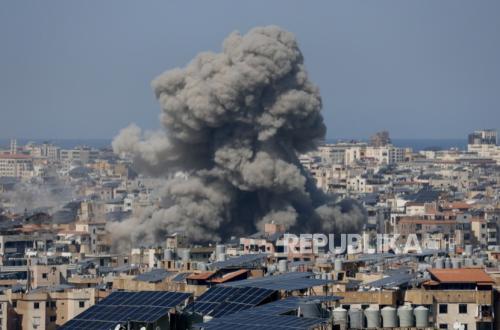
According to him, the conflict involving Israel, the United States and its allies with Iran demonstrates that geopolitical dynamics in the Middle East have shifted from limited tensions towards potential open confrontation with high strategic risk.
“This situation shows how power politics has again become the dominant factor in international relations. Military escalation is moving very rapidly and frequently exceeds the pace of diplomacy,” Bahrullah stated.
He explained that the character of modern warfare is now not merely military in nature, but also impacts public psychology, global economic stability, and international political perceptions.
“Although Indonesia is not directly involved in this conflict, its impacts can still be felt due to the interconnectedness of the global economic system and world energy stability,” he elaborated.
He cited the example that the Middle East is one of the world’s major energy system hubs. Should strategic routes such as the Strait of Hormuz be disrupted, this could potentially trigger surges in oil and gas prices, increased logistics costs, and pressure on the economic stability of energy-importing nations, including Indonesia.
“This means that state sovereignty today is not only tested by direct military threats, but also by dependence on a global system that is being shaken,” he said.
Furthermore, Bahrullah also warned of the threat of information warfare that exploits disinformation and identity narratives to trigger social polarisation in various countries.
In this context, he assessed that the Student Regiment alumni (IARMI) and Menwa cadets possess a strategic role in strengthening national resilience amid global geopolitical dynamics. According to him, Menwa and IARMI have since their inception been educated with values of national defence, discipline, and strong national awareness, making them relevant to maintaining national stability.
Bahrullah stressed that amid international conflict dynamics such as those currently occurring in the Middle East, Menwa alumni are expected to serve as a moral and intellectual force in safeguarding national stability.
The national dialogue and breaking of fast together event was attended by more than 500 participants in hybrid format by the broader Student Regiment family and alumni. Among the speakers present were Professor Ermaya Suradinata (former Lemhannas Governor), Ulta Levenia (Senior Expert at the Presidential Staff Office), Aryo Wibowo (Deputy Secretary General of FSPPB), Heri Herdiawanto (Researcher at the Geopolitics Research Centre of Al Azhar University) and Rasminto (Academic at Muhammadiyah University of Indonesia).