
Middle East Tensions Rise as Houthis Target Global Trade Routes
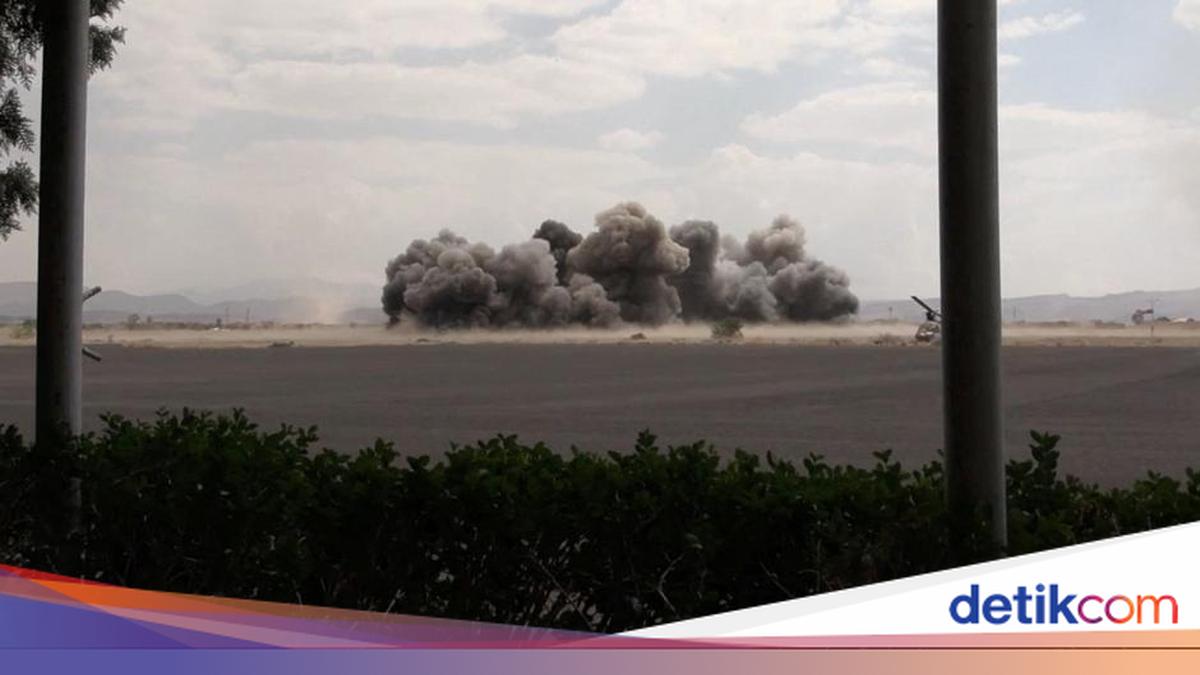
Tensions in the Middle East have escalated further after the Houthi group in Yemen threatened to expand attacks on strategic shipping lanes in the Red Sea, while Saudi Arabia increased oil exports through the Yanbu port in western Madinah in anticipation of potential disruptions in the Strait of Hormuz. At the same time, the United States reimposed a blockade on Iranian ports, triggering threats of retaliation from Tehran and increasing the risk of disruption to global energy supplies. On Wednesday (15/7), Iran’s Islamic Revolutionary Guard Corps (IRGC) warned that if pressure on Iran continues, energy export routes in the region will not be safe for anyone. “Energy exports in the region must be enjoyed by all parties in the world, or not at all,” the IRGC statement said, as quoted by the IRNA news agency. A day earlier, on Tuesday (14/7), US President Donald Trump also warned that Washington was ready to increase pressure on Iran if negotiations were not resumed. “I will keep the energy targets for last, but eventually we will hit the energy targets,” Trump said in an interview with Fox News. Amid the growing threat to the Strait of Hormuz, Saudi Arabia is increasing oil shipments through the Yanbu port on the Red Sea coast. Signal Ocean data showed oil loadings at Yanbu reached approximately 4.7 million barrels per day on Sunday (12/7), nearing the terminal’s maximum capacity. This increase makes Yanbu the kingdom’s primary export route when shipments through the Persian Gulf are disrupted by the Iran-US conflict. According to shipping industry sources, Yanbu has almost no additional capacity to increase exports if the situation worsens. “Yanbu has been operating near maximum capacity in recent weeks. There are concerns that the Houthis will open a new front, but there is almost no room left to increase shipment volumes,” a shipping industry source told Reuters. Reuters also reported that Saudi Arabia is considering expanding the capacity of its pipeline network to the Red Sea coast so that oil exports can be carried out without passing through the Strait of Hormuz. However, the increased export activity has also raised new concerns. A number of industry players believe the Yanbu port could become a target for the Houthi group if the conflict continues to expand. The threat is not limited to the Strait of Hormuz. Analysts believe Iran could use the Houthi group in Yemen to disrupt the Bab el-Mandeb Strait, the narrow channel connecting the Red Sea to the Gulf of Aden and one of the world’s most important trade arteries. On Monday (13/7), a senior Houthi official stated that the group was ready to close the Bab el-Mandeb Strait if Saudi Arabia continued its attacks on Yemen. The group claimed such a move could push oil prices up to 200 US dollars per barrel. Tensions rose after the Houthis fired missiles into Saudi Arabia in retaliation for airstrikes on Sanaa International Airport. The incident ended an unofficial ceasefire that had lasted about four years between Riyadh and the Iran-backed group. According to International Crisis Group senior analyst Ahmed Nagi, the incident was not just about one flight from Iran. “The Houthis are testing new boundaries. If they succeed, they will become more confident, increase their demands, and try to push past other limits,” he said. Chatham House researcher Farea al-Muslimi said Saudi Arabia has been relatively restrained in the Iran-US conflict, but the situation will be different if Riyadh’s influence in Yemen begins to be threatened. Meanwhile, Yemeni political analyst Abdel-Bari Taher assessed that the country remains highly vulnerable to being used as an arena for regional power rivalries. “The region is now in a situation of total confrontation. Yemen is a highly vulnerable environment for conflict because it is divided by armed groups and does not have full control over its maritime or airspace,” he said. On Wednesday (15/7), the United States reimposed a blockade on Iranian ports after accusing Tehran of attacking commercial ships around the Strait of Hormuz. US Central Command (CENTCOM) stated its military struck dozens of Iranian military targets over approximately seven hours. Iran retaliated for the attack by launching missiles at several countries hosting US forces, including Bahrain, Kuwait, and Jordan. Iran condemned Washington’s actions and threatened to expand disruptions to energy exports in the region. “Oil and gas exports from this region will either take place for all parties or will not take place for anyone,” the IRGC stressed. Iran’s Ambassador to the United Nations, Amir Saeid Iravani, also blamed Washington for the latest escalation. “The United States is the aggressor, not the victim,” he said. On the other hand, Trump said attacks on Iran would continue if Tehran did not return to the negotiating table. “You’d better make a deal, or you will have nothing left,” Trump said. The rising tensions in the Strait of Hormuz and the potential for disruption in the Bab el-Mandeb Strait are fuelling concerns in global energy markets. Both routes are major corridors for world oil trade. Analysts warn that if both routes are disrupted simultaneously, the impact will be felt not only by countries in the region but also by international energy markets and supply chains.