
Middle East Tensions Escalate, Sending Global Oil Prices Soaring as US and Others Respond
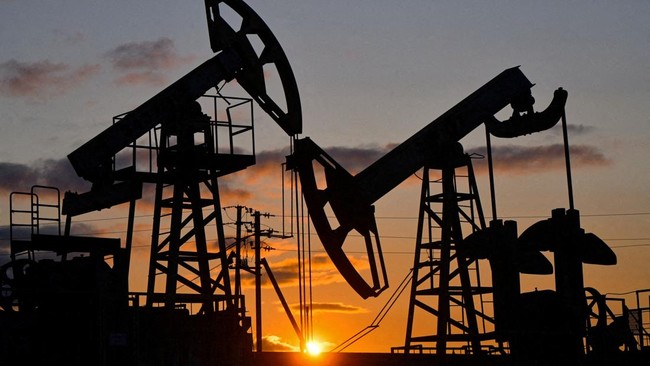
Global oil prices surged in the final session of the week, pushing Brent to its highest level in nearly six months amid growing concern about energy supplies from the Middle East.
According to Refinitiv data, benchmark Brent crude closed 3.14% higher at US$116.72 a barrel on Friday (23 October 2026). This was its highest level since 29 April 2026.
The US benchmark, West Texas Intermediate (WTI), also rose sharply, gaining 3.82% to US$103.27 a barrel.
The gains extended the positive run for both benchmarks. Over the week of 19–23 October 2026, Brent rose 6.24%, while WTI gained 1.83%. Both benchmarks recorded weekly increases for the third consecutive week.
Middle East attacks drive oil prices higher
The sharp rise in global oil prices was closely linked to renewed security tensions in the Middle East.
A series of attacks by Iran-backed Houthi groups on areas of Saudi Arabia has heightened market concerns about possible disruptions to oil supplies from the region. Fears have grown because the attacks have targeted not only strategic locations but also energy facilities.
Saudi Arabia is one of the world’s largest oil producers and exporters. Disruptions to its production or shipments could therefore have a significant impact on global supply.
Adam Turnquist, head of cross-asset strategy at LPL Financial, said concerns about supply disruptions were the main factor driving prices higher.
“Supply disruption fears are driving prices higher after Iran-backed Houthi groups launched a series of attacks in Saudi Arabia, including on energy infrastructure,” Turnquist said, according to Reuters.
The situation became more concerning after Saudi oil giant Saudi Aramco ordered the evacuation of its headquarters in Dhahran on Thursday (22 October 2026).
The office is in the Gulf region, not far from Bahrain. The evacuation order came as fighting between Saudi Arabia and the Yemen-based Houthi group intensified.
The developments have led market participants to reassess the risk of disruptions to Middle Eastern oil production and distribution, particularly if the conflict continues to spread.
News of an oil spill in United Arab Emirates (UAE) waters also added to market concerns.
The UAE Ministry of Climate Change and Environment reported an oil spill from a tanker off the coast of Umm Al Quwain.
Local authorities have not disclosed the cause of the spill or the identity of the tanker involved.
Oil shipping routes come under scrutiny
Concern is growing not only about production facilities but also about the security of oil shipping routes from the Middle East.
One area in focus is the Strait of Hormuz, a strategic shipping route connecting the Persian Gulf with international energy markets.
A number of recent attacks on commercial vessels in the area have raised fears that oil shipments could once again be disrupted.
On 9 October 2026, the large tanker Gem No. 2 was reportedly struck by an unidentified projectile about 24 kilometres west of Al Jazeera in the UAE.
According to data from a Washington-based maritime security research organisation, October 2026 has seen the highest number of attacks on commercial vessels in the Strait of Hormuz and surrounding waters since records began in 2017.
Andrew Lipow, president of Lipow Oil Associates, said the rise in attacks on tankers was a major source of concern for the market.
“The market is concerned about continuing Iranian attacks on tankers, which have increased over the past week,” Lipow said, according to Reuters.
He added that although the volume of oil passing through the Strait of Hormuz had recently increased, the situation remained highly changeable.
“Although the volume of oil passing through the Strait of Hormuz has increased, that could change at any time,” he said.
The concern is justified by the strait’s major role in global oil trade.
Data from the US Energy Information Administration (EIA) show that about 21.6 million barrels of crude oil and petroleum products passed through the Strait of Hormuz per day in the fourth quarter of 2025.
However, after the Middle East conflict intensified, the volume fell to about 4.9 million barrels per day in the second quarter of 2026.
The decline demonstrates the scale of the conflict’s impact on energy trade routes in the region.
Markets are also watching the Bab el-Mandeb Strait, at the entrance to the Red Sea.
Fighting between the Houthis and the Saudi-led coalition has renewed concerns about shipping security in the area.
If these routes are disrupted again, tankers may have to take longer alternative routes. Longer journeys can raise shipping costs and delay oil deliveries to destination countries.
This could ultimately push global oil prices higher.
US and Germany begin drawing on oil reserves
As concerns about energy supplies mount, several countries have begun taking steps to maintain oil availability in the market.
On Friday (23 October 2026), the US Department of Energy announced that it had authorised an emergency exchange of up to 400,000 barrels of crude from the Strategic Petroleum Reserve (SPR).
The measure is intended to address supply disruptions affecting Phillips 66’s refinery in Lake Charles, Louisiana.
However, the US strategic reserve is already at its lowest level since 1982, after President Donald Trump’s administration used it to address supply disruptions caused by the war with Iran.
Germany has taken a similar step.
The country’s national oil reserve manager, EBV, has begun offering supplies of diesel, heating oil and crude from its strategic reserves.
This is Germany’s first release of oil reserves since G7 countries agreed to take similar action in early October 2026.
Supply disruptions have also emerged in Libya.
The Libyan National Oil Corporation reported the closure of a pipeline valve connecting the Hamada and Tahara oilfields to the port of Zawiya.
The closure has reduced production from the two fields.
These developments show that pressure on oil supplies is coming not only from fears of further disruptions in the Middle East, but also from production and distribution problems already affecting several countries.
There are, however, efforts to increase energy supplies.
One is an agreement between the US and Russia that has enabled Russian diesel shipments to resume to the US market.
Ship-tracking data show a tanker carrying Russian diesel heading to New York. The shipment is the first since Washington and Moscow reached an export agreement in October 2026.
The agreement is part of the Trump administration’s efforts to bring down rising diesel prices, particularly ahead of the US midterm elections on 3 November 2026.
Meanwhile, the number of active oil and gas drilling rigs in the US has yet to increase.
Energy services company Baker Hughes reported that the US oil and gas rig count was unchanged for a second consecutive week, remaining at 603 in the week ending 23 October 2026.
The rig count is often used as an early indicator of potential changes in energy production in the coming months.
With the count still flat, there is no sign of an overall acceleration in drilling activity that could quickly boost supply.
Next week, global oil prices will remain heavily influenced by developments in the Middle East conflict, particularly the security of Saudi energy facilities and shipping through the Strait of Hormuz.
Market participants will also be watching whether strategic reserve releases and efforts by other countries to increase supply can ease the concerns currently supporting prices.
If attacks on energy facilities and tankers continue, fears of supply disruptions could keep oil prices elevated.
Conversely, if security improves and oil shipments resume smoothly, pressure on global supplies could ease and create scope for prices to fall.
Source: jawawa.id (https://jawawa.id/newsitem/middle-east-tensions-escalate-sending-global-oil-prices-soaring-as-us-and-others-respond-1792803045)
Originally published by CNBC Indonesia (https://www.cnbcindonesia.com/research/20261024064217-128-779071/timur-tengah-makin-membara-harga-minyak-dunia-terbang-as-cs-bertindak), translated from Indonesian